
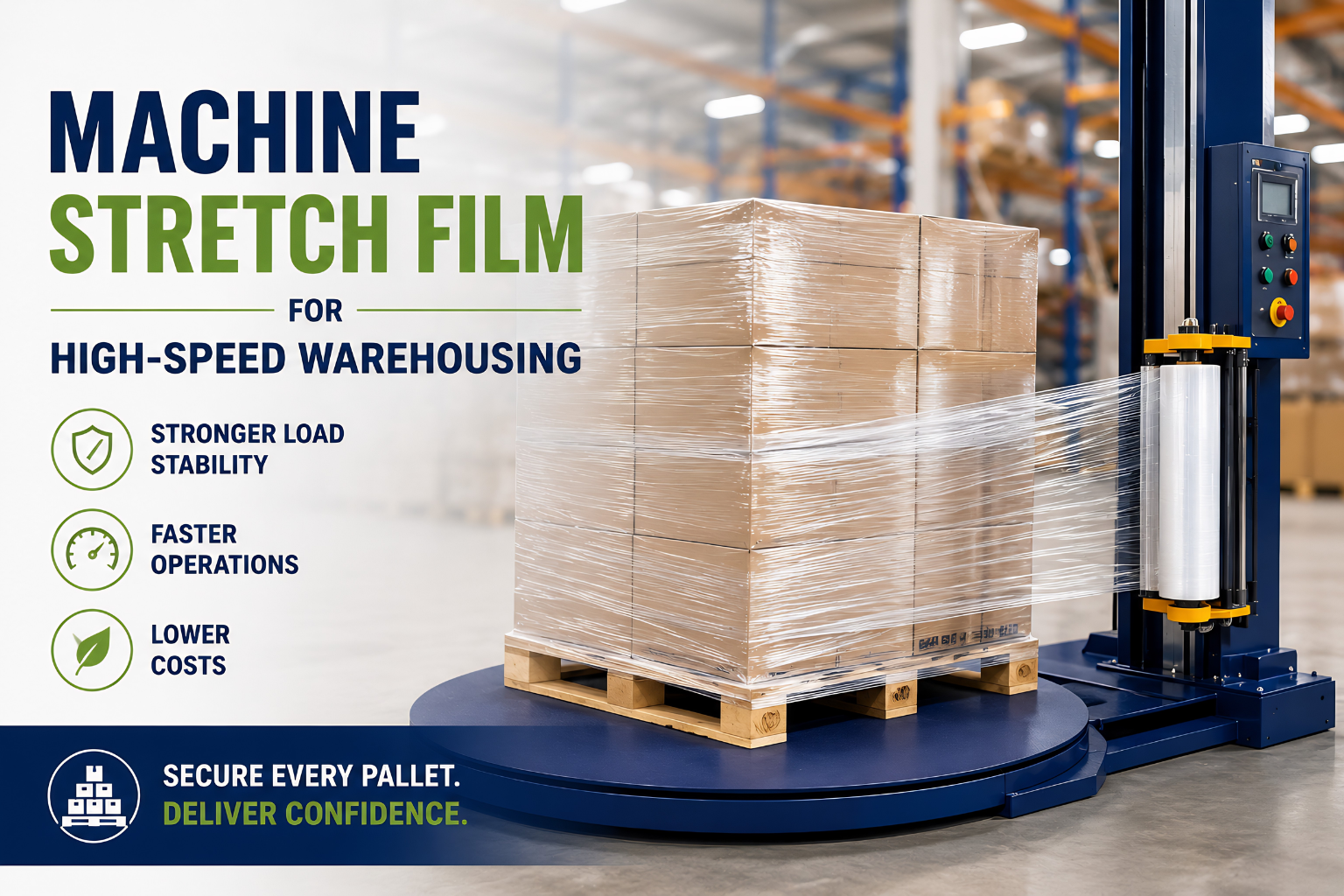
Modern warehouses operate under constant pressure. Faster dispatch schedules, higher pallet volumes, and rising transportation costs require packaging materials that can perform consistently without slowing down operations. In high-volume logistics environments, poor load stability can lead to damaged products, collapsed pallets, shipment rejection, and unnecessary packaging waste.
This is where machine stretch film plays an important role in modern warehouse packaging. Designed for automatic and semi-automatic pallet wrapping systems, machine-applied stretch film helps distribution centers improve wrapping speed, maintain load stability, and achieve more consistent packaging across shipments.
For businesses handling continuous pallet movement through conveyors, forklifts, storage racks, and long-distance transportation, choosing the right stretch film is more than a packaging decision. It can directly affect operational efficiency, product protection, transportation safety, and packaging costs.
Why High-Speed Warehousing Needs Better Load Containment
Modern warehouses are no longer simple storage facilities. They function as high-speed inventory movement centers where pallets continuously move between production, storage, dispatch, and transportation.
In these environments, packaging failures can create significant operational problems. Loose loads may shift during forklift handling, unstable cartons can collapse during stacking, and insufficient wrapping may expose products to dust, moisture, or damage during transportation.
Automatic pallet wrapping systems help address these challenges by applying stretch film with controlled and consistent tension. However, even an advanced wrapping machine cannot deliver reliable results if the film lacks the required elasticity, puncture resistance, cling, or load-holding force.
A properly engineered machine stretch film can help warehouses achieve:
- Better pallet load containment
- Faster and more consistent wrapping cycles
- Reduced film consumption
- Improved transportation safety
- More uniform pallet wrapping
- Lower risk of product damage
For large-scale logistics operations, these improvements can contribute to better packaging efficiency and more reliable deliveries.
What Is Machine Stretch Film?
Machine stretch film is a polyethylene-based packaging film manufactured specifically for use with automatic or semi-automatic pallet wrapping machines. Unlike hand-applied stretch film, machine-grade film is engineered to handle controlled tension, pre-stretching, and high-speed dispensing.
Machine stretch film is generally supplied in longer rolls, making it suitable for continuous pallet wrapping applications where consistent performance is important.
At Tilak Polypack, machine stretch films are manufactured using advanced extrusion technology to provide stretch performance, puncture resistance, and load retention for industrial packaging applications.
During wrapping, the film stretches around the pallet and creates tension that holds cartons and products together. This helps reduce load movement during storage, handling, and transportation.
How Machine Stretch Film Supports Automatic Pallet Wrapping
Automatic pallet wrapping systems are designed to improve packaging speed and consistency. In busy warehouses, manual wrapping can result in differences in film tension, overlap, and coverage from one pallet to another.
Using machine stretch film for pallet wrapping allows automated equipment to apply more consistent film tension and coverage across the load.
Consistent Load Stability
Machine-applied stretch film helps maintain controlled film tension around the pallet. Consistent tension improves load containment and reduces the possibility of products shifting during transportation.
Faster Packaging Throughput
Automatic pallet wrapping systems can process large numbers of pallets efficiently. Machine stretch film is designed for continuous dispensing and high-speed wrapping, helping reduce interruptions caused by film tearing or uneven feeding.
Reduced Material Consumption
Modern machine stretch films can provide high stretch performance while maintaining load stability. Depending on the film specification and wrapping system, higher stretch can help reduce the amount of film required per pallet.
Lower Labor Requirements
Warehouses handling large pallet volumes often use automation to reduce manual packaging work. Machine wrapping can lower labor dependency while delivering more consistent wrapping results.
Types of Machine Stretch Film Used in Warehousing
Different warehouse and logistics applications require different film characteristics. The right machine stretch film depends on factors such as pallet weight, product shape, transportation distance, storage conditions, and handling requirements.
Blown Machine Stretch Film
Blown stretch film is manufactured using blown extrusion technology and is commonly used for demanding and heavy-duty packaging applications.
Key advantages can include:
- High puncture resistance
- Strong load-holding force
- Good resistance to sharp edges
- High durability during rough handling
Warehouses handling metal components, construction materials, industrial products, or irregularly shaped loads may benefit from blown machine stretch film because of its toughness and resistance to punctures.
Cast Machine Stretch Film
Cast stretch film is commonly used on high-speed packaging lines because it provides smooth and consistent unwinding.
Key advantages include:
- Smooth machine operation
- Good transparency
- Reliable cling
- Efficient high-speed wrapping
- Consistent film thickness
Cast machine stretch film can be suitable for FMCG warehouses, retail distribution centers, and consumer goods operations where barcode scanning and visual inspection are important.
Opaque and UV Stretch Films
Some products require additional protection from sunlight or need shipment contents to remain less visible.
Opaque machine stretch films can help conceal pallet contents, while UV-resistant films can help reduce film degradation during outdoor storage and exposure.
These specialized films can be useful for:
- Agricultural products
- Outdoor storage
- Export shipments
- Industrial and chemical packaging
Anti-Static Stretch Film
Electronics manufacturers and component suppliers may require packaging solutions designed to reduce electrostatic risks.
Anti-static machine stretch film can help reduce the risk of electrostatic discharge and provide additional protection for sensitive electronic products during storage and transportation.
Key Performance Factors to Evaluate
Choosing stretch film based only on thickness or gauge can lead to poor packaging performance. Warehouse managers should evaluate the overall characteristics of the film and how they match the wrapping machine and load.
Load Retention Force
The film should provide sufficient holding force to keep cartons and products securely together throughout handling and transportation.
Puncture Resistance
Sharp product edges, uneven cartons, and heavy loads can cause film damage. Good puncture resistance helps reduce film breaks during wrapping and handling.
Stretch Capacity
Higher stretch capability can help reduce film consumption while maintaining effective pallet containment when properly matched to the wrapping system.
Cling Performance
Good cling allows multiple film layers to bond effectively, helping keep the wrapped load secure without requiring additional adhesives.
Machine Compatibility
Not every stretch film performs the same way on every wrapping machine. Film specifications should be matched to machine speed, pre-stretch capability, load characteristics, and wrapping requirements.
Common Packaging Challenges in Fast-Moving Distribution Centers
High-speed distribution centers can experience several packaging problems that affect operational efficiency and transportation reliability.
One common issue is film breakage during wrapping cycles. This can occur when the film cannot withstand the tension or pre-stretch level required by the wrapping machine.
Another challenge is inconsistent load containment. If the film does not provide sufficient holding force, cartons and products may shift during forklift handling, loading, unloading, or transportation.
Rising packaging costs can also become a concern. Overwrapping pallets to compensate for poor film performance increases material consumption without necessarily improving load stability.
Using the appropriate pallet wrapping film can help reduce these problems by improving wrapping consistency, load containment, and material efficiency.
Machine Stretch Film vs. Manual Wrapping
Manual wrapping can still be suitable for small-scale operations or occasional pallet wrapping. However, it becomes less efficient when warehouses need to process hundreds or thousands of pallets every day.
Manual wrapping depends heavily on operator technique. Film tension, overlap, and coverage can vary between workers, resulting in inconsistent pallet stability.
Machine wrapping provides several advantages:
| Factor | Manual Wrapping | Machine Stretch Film |
|---|---|---|
| Wrapping Speed | Slower | High-speed |
| Film Consistency | Variable | More consistent |
| Labor Requirement | Higher | Lower |
| Material Usage | Less optimized | More optimized |
| Load Stability | Variable | More consistent |
| Large-Volume Suitability | Limited | Excellent |
For distribution centers handling large pallet volumes, automatic pallet wrapping can improve packaging consistency and help streamline warehouse operations.
Industry Applications of Machine Stretch Film
Machine stretch film is used across a wide range of industries because of its versatility and ability to secure palletized products during handling and transportation.
Logistics and Warehousing
High-volume logistics operations require durable stretch film that can maintain pallet stability during frequent handling and transportation.
Food and Beverage
Stretch film can help protect packaged food and beverage products from dust, dirt, moisture, and handling-related exposure while keeping pallet loads organized.
Manufacturing
Manufacturing facilities use machine stretch film to secure raw materials, components, finished products, and heavy palletized loads.
Retail Distribution
Clear and tinted stretch films can support product identification, pallet organization, and warehouse sorting.
Electronics
Anti-static stretch films can provide an additional packaging option for electronics and sensitive components where electrostatic risks need to be considered.
How to Select the Right Machine Stretch Film
Industrial buyers should evaluate their specific packaging requirements before selecting a stretch film.
Important considerations include:
- Pallet weight
- Product shape and dimensions
- Transportation distance
- Storage conditions
- Wrapping machine compatibility
- Required puncture resistance
- Required stretch performance
- Outdoor exposure
- Required load-holding force
The right stretch film for pallet wrapping should be selected based on the load, wrapping equipment, transportation conditions, and required packaging performance.
Tilak Polypack offers machine stretch films in different widths, thicknesses, and core sizes to support a variety of warehouse and industrial packaging applications.
Specialized options, including UV protection, VCI, and anti-static solutions, can also be considered for application-specific packaging requirements.
Sustainability in Warehouse Packaging
Sustainability has become an increasingly important consideration in industrial packaging procurement.
Many warehouses are looking for ways to reduce packaging waste without compromising pallet stability. Modern machine stretch films can support this objective through improved film engineering, higher stretch efficiency, and downgauging where appropriate.
Tilak Polypack also offers biodegradable and recycled-content stretch film solutions designed to help businesses address their packaging sustainability goals.
Using a high-performance film that achieves the required load stability with less material can also help reduce overall plastic consumption per pallet.
Why Industrial Buyers Choose Tilak Polypack
Warehouse operators and industrial procurement teams typically look for consistent product quality, reliable supply, suitable specifications, and technical support when selecting a packaging film supplier.
Tilak Polypack focuses on these requirements by offering:
- Multiple machine stretch film configurations
- Custom widths and thicknesses
- Reliable supply capabilities
- Industrial-grade packaging performance
- Technical expertise in stretch wrapping applications
The company manufactures stretch films for demanding warehousing and logistics environments where packaging consistency can directly affect transportation efficiency and product protection.
Businesses looking for reliable pallet wrapping solutions can explore Tilak Polypack’s machine stretch film options for industrial packaging applications.
Conclusion
As warehouse operations become faster and increasingly automated, packaging performance plays an important role in maintaining operational efficiency. Poor pallet stability can lead to transportation damage, inventory loss, packaging waste, and higher operating costs.
Machine stretch film helps address these challenges by providing reliable load containment, consistent wrapping performance, and compatibility with automatic pallet wrapping systems.
For warehouses handling continuous pallet movement, selecting the right stretch film is more than a packaging decision. It is an operational decision that can influence transportation safety, packaging efficiency, and overall logistics performance.
Tilak Polypack offers machine stretch film solutions designed for industrial applications where durability, efficiency, and reliable load security are essential.