
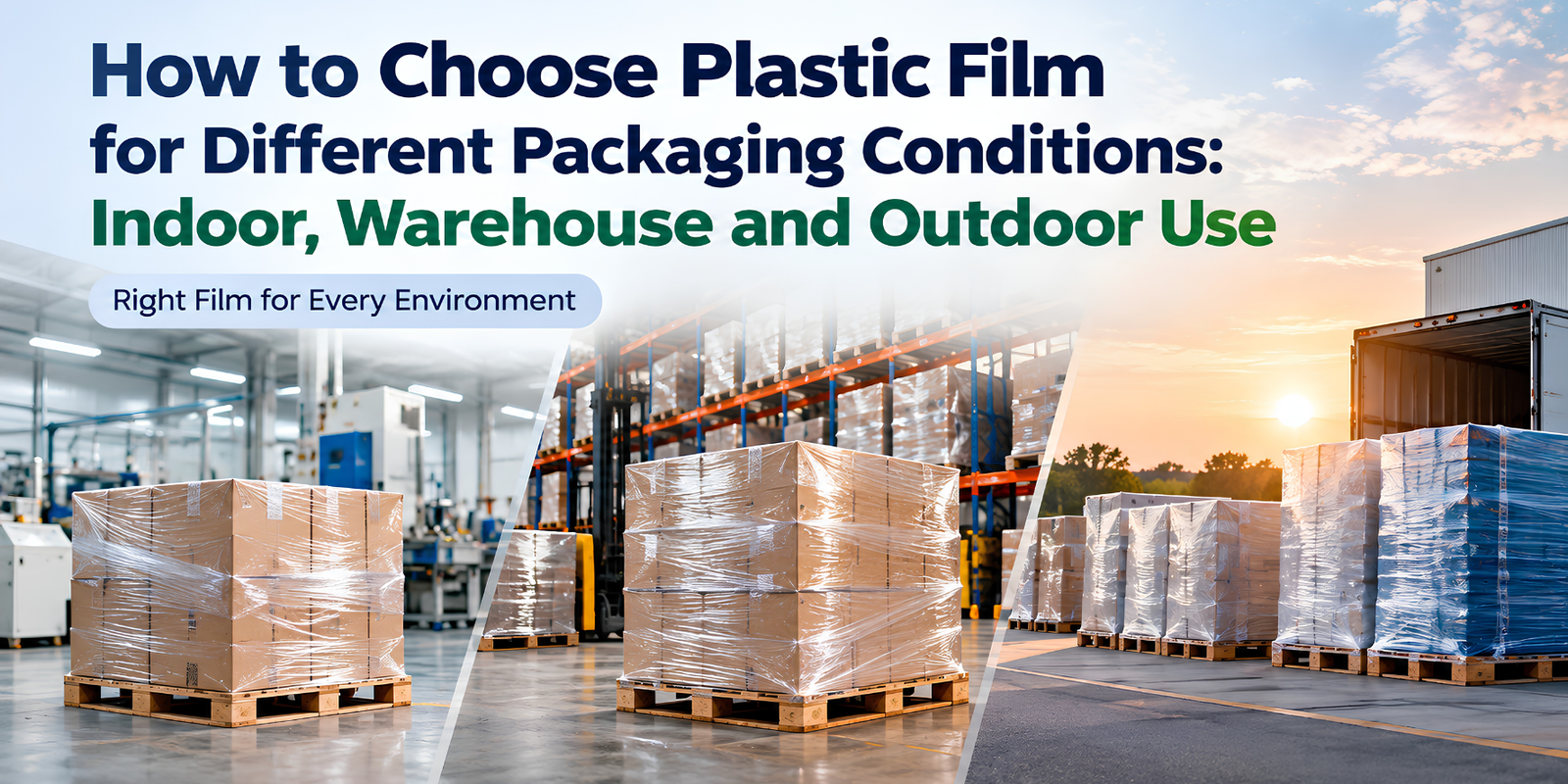
Choosing the right plastic film for packaging depends on more than the product being wrapped. The environment where the film will be used also matters. A pallet wrapped inside a manufacturing facility may have very different requirements from one stored in a warehouse for several weeks or left outdoors before transportation. Factors such as storage conditions, handling, wrapping method, load type and environmental exposure should all be considered before selecting a film.
For B2B packaging operations, choosing film according to the actual application can help improve wrapping consistency and provide suitable protection during handling, storage and transportation. Tilak Polypack offers different stretch-film options, including manual, machine, pre-stretch, VCI, coreless, recycled and other specialized films for different packaging requirements.
Why Packaging Conditions Matter
Plastic film is used across many different packaging environments, but the conditions are not always the same. Indoor packaging may mainly require reliable wrapping and load containment, while warehouse applications can involve repeated handling and longer storage. Outdoor applications may introduce additional exposure to sunlight, moisture and changing temperatures.
Before selecting a film, businesses should consider:
- Where will the packaged goods be stored?
- How long will the load remain wrapped?
- Will the load be handled manually or by machine?
- Will it remain indoors or be exposed to outdoor conditions?
- Is the load regular, irregular, heavy or lightweight?
Answering these questions first makes it easier to identify the appropriate film type.
Choosing Plastic Film for Indoor Packaging
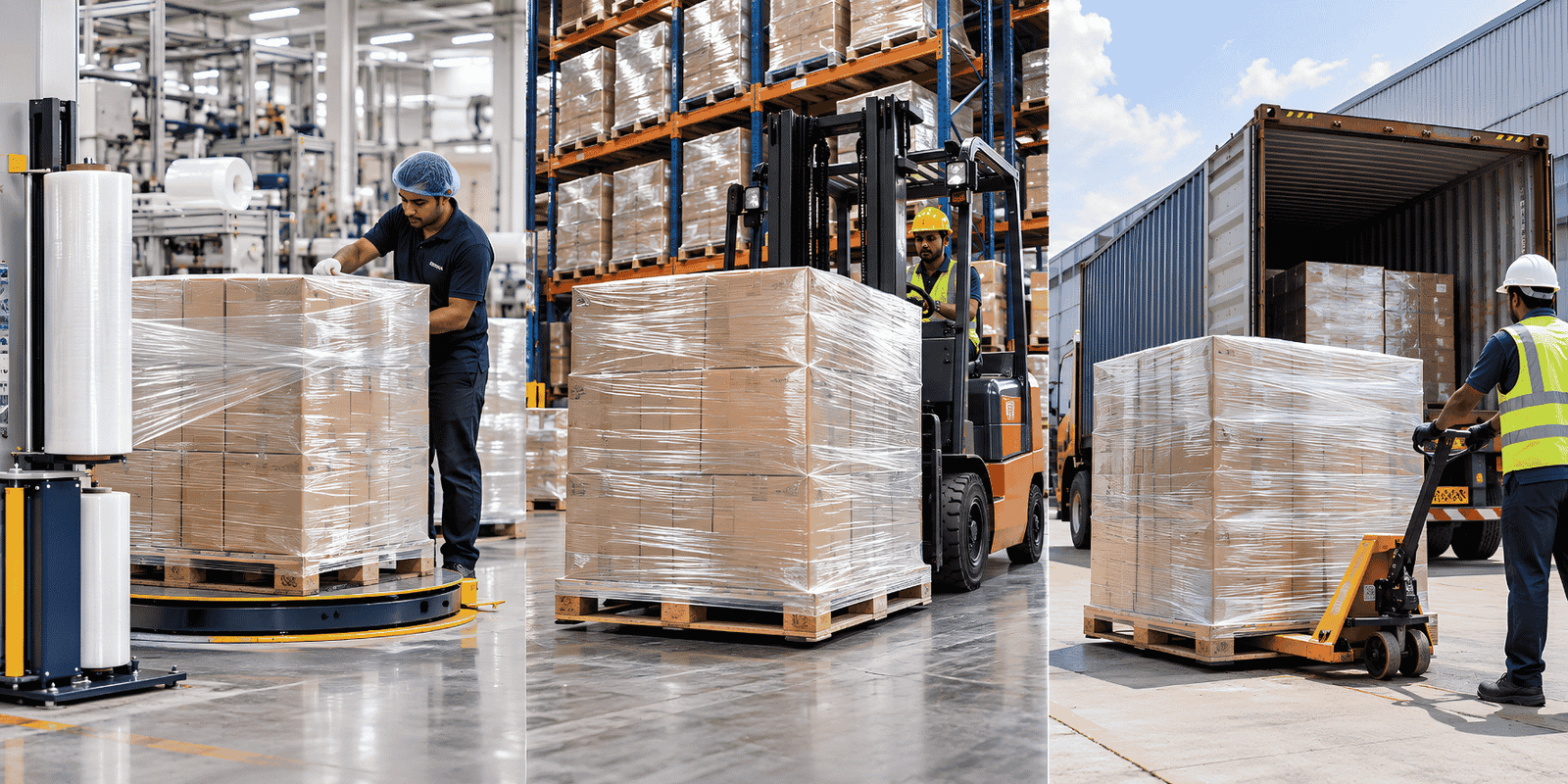
Indoor packaging is usually easier to control because the products are protected from direct weather exposure. However, the type of operation still affects film selection. A small manufacturing facility using manual wrapping may need a different solution from a large distribution center using automated wrapping equipment.
For manual packaging, ease of handling and consistent stretching are important because the operator controls the wrapping process. Manual stretch film can be used for palletized products, bundled goods and general load protection.
For automated operations, machine stretch film may be more appropriate. Businesses should consider the wrapping machine, film performance, load dimensions and required containment rather than selecting film only by thickness.
The main factors for indoor applications include:
- Manual or machine application
- Load size and shape
- Required containment
- Wrapping frequency
- Need for clear product visibility
Selecting Film for Warehouse Storage
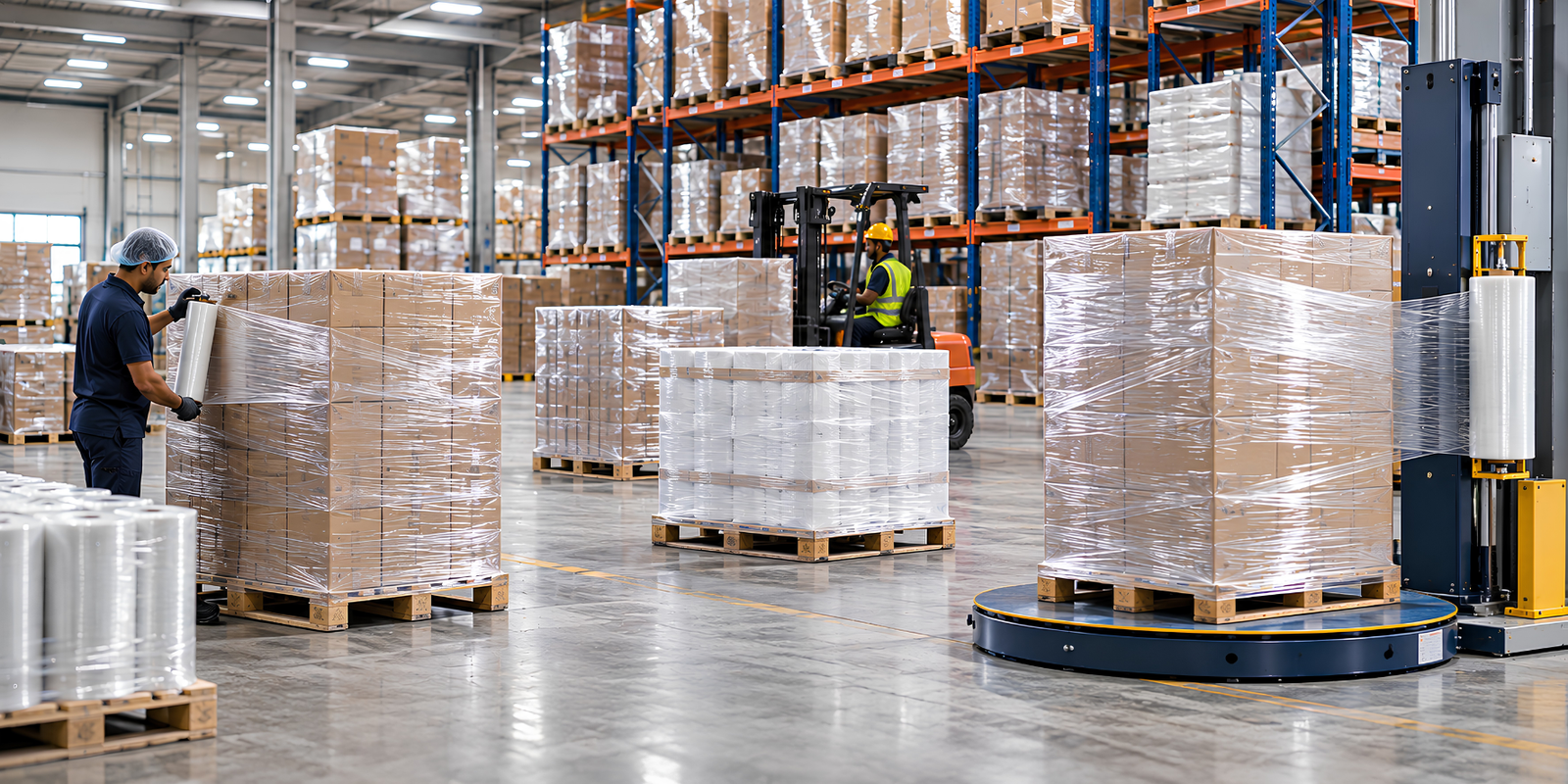
Warehouse packaging often requires the film to remain around the load for longer periods. Pallets may be moved several times by forklifts, stored in racks or transferred between production and dispatch areas. This makes load stability and consistent wrapping especially important.
Clear stretch film can also be useful when businesses need to inspect pallet contents without removing the wrapping. For larger operations, machine stretch film or pre-stretch film may be considered depending on the wrapping equipment and operating process.
Warehouse teams should therefore look at the complete application instead of choosing film based on one specification. Load type, storage duration, handling frequency and wrapping method all influence the selection.
Choosing Plastic Film for Outdoor Use
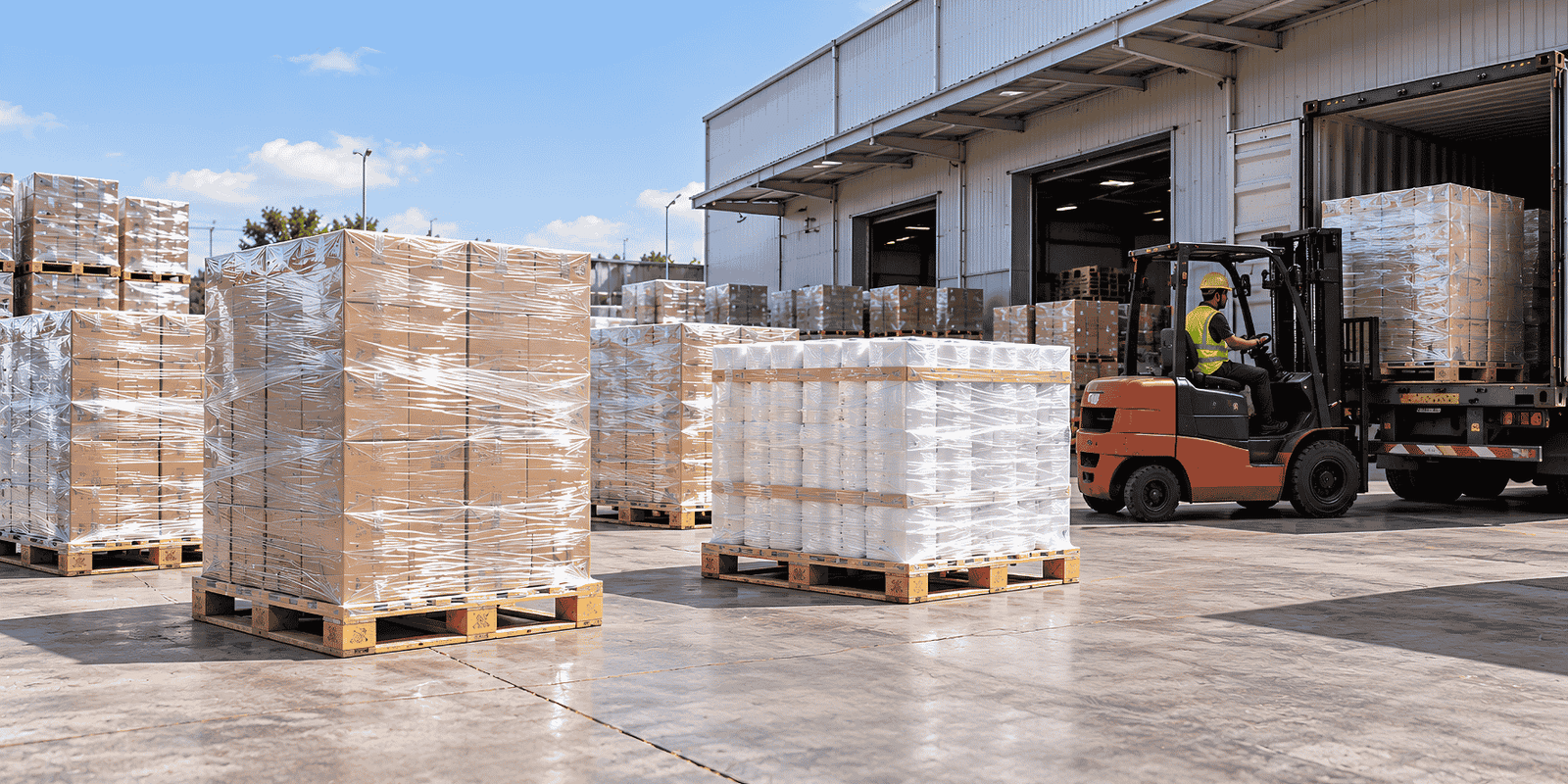
Outdoor packaging requires additional consideration because packaged goods may be exposed to sunlight, moisture and changing temperatures. The requirements will depend on how long the load remains outside and whether it is simply waiting for dispatch or will spend a significant part of its journey in outdoor conditions.
Some stretch-film options are available with characteristics such as UV protection, which may be relevant for applications where exposure to sunlight is expected. Opaque films can also be considered where concealing the contents is important.
Outdoor packaging should also be viewed together with pallet preparation. Irregular loads, projecting products and unevenly arranged cartons can create additional challenges during wrapping. Good load configuration and the correct wrapping technique remain important regardless of the film selected.
How Load Type Affects Film Selection
The load itself is one of the most important parts of the decision. A pallet containing uniform cartons can behave differently from a pallet containing irregular industrial components. Heavy loads may require different containment considerations from lightweight products, while sharp edges can create additional challenges during wrapping.
Businesses should review:
- Product weight and dimensions
- Shape of the load
- Load stability
- Sharp or projecting edges
- Expected movement during transportation
- Manual or automated wrapping
This is why there is no single plastic film that is automatically suitable for every application.
When Specialized Film May Be Needed
Some applications require more specific film characteristics. For example, VCI stretch film can be used for applications involving metal products where corrosion protection is an important consideration. Agricultural applications can require specialized stretch-film solutions, while businesses with particular sustainability objectives may consider recycled or biodegradable stretch-wrap options.
The key is to begin with the packaging requirement. Once the business understands the application, storage environment and handling conditions, it becomes easier to determine whether a general-purpose film or a specialized film is appropriate.
Indoor vs Warehouse vs Outdoor Packaging
The easiest way to approach film selection is to compare the actual packaging environment.
Indoor packaging:
Focus on the load, wrapping method, operator requirements and containment.
Warehouse storage:
Consider storage duration, load stability, repeated handling, visibility and wrapping consistency.
Outdoor packaging:
Consider environmental exposure, storage duration, sunlight and transportation conditions in addition to the normal load requirements.
This simple approach helps packaging teams avoid choosing a film only because it worked for a different application.
Common Mistakes When Choosing Plastic Film
One common mistake is selecting a film only by thickness. Thickness is one specification, but it does not describe the entire packaging application. A film must also be suitable for the load, wrapping method and environment.
Another mistake is using the same film for every application without reviewing changes in storage or transportation conditions. A business may use one film successfully inside a warehouse but have different requirements when the same type of load is stored outdoors or transported over longer distances.
It is also important not to separate film selection from wrapping technique. Load arrangement, wrapping pattern, machine settings and operator consistency can all affect the final result.
Final Considerations
Choosing plastic film for packaging conditions should begin with the actual application. Businesses should identify where the load will be wrapped, how it will be stored, how often it will be handled and whether it will experience indoor or outdoor exposure.
For indoor applications, the focus is generally on efficient wrapping and load containment. Warehouse applications require additional attention to storage and repeated handling, while outdoor applications may require consideration of environmental exposure and specialty film characteristics.
Tilak Polypack provides a range of stretch-film solutions for different applications, including manual stretch film, machine stretch film, pre-stretch film, VCI stretch film, coreless stretch film and other specialized options. Businesses can explore plastic stretch film solutions according to their specific packaging conditions and operational requirements.