
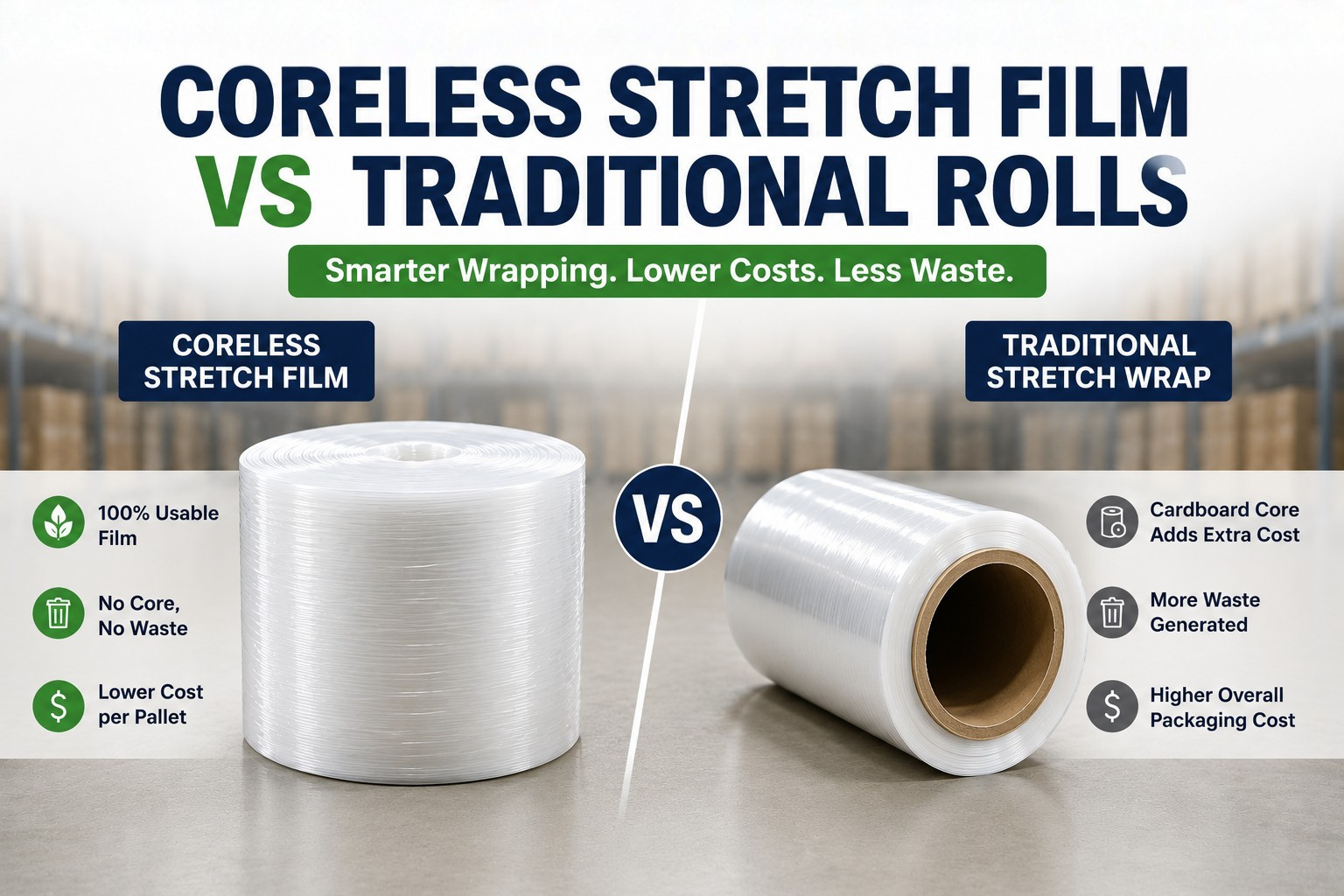
Industrial packaging operations are constantly under pressure to reduce material costs, improve load stability, and streamline warehouse efficiency. For manufacturers, logistics providers, and distribution centers, even small improvements in pallet wrapping can create significant savings over time. This is where coreless stretch film has started gaining attention across the packaging industry.
Unlike conventional stretch wrap rolls that rely on cardboard cores, coreless systems eliminate unnecessary material while improving handling efficiency and reducing packaging waste. For businesses evaluating long-term packaging performance, the comparison between coreless and traditional stretch wrap goes far beyond simple material replacement.
This article explores the practical differences between the two systems, including packaging efficiency, operational costs, sustainability impact, and warehouse usability, helping industrial buyers make informed packaging decisions.
Understanding Coreless Stretch Film
Coreless stretch film is designed without the traditional cardboard core found inside standard stretch wrap rolls. Instead, the film itself forms the roll structure, allowing companies to use nearly 100% of the purchased material.
Many coreless films are also pre-stretched during manufacturing. This improves holding force while reducing the amount of film required to secure a pallet. In practical warehouse operations, this means fewer roll changes, lower film consumption, and improved wrapping consistency.
The elimination of cardboard cores may appear like a small design modification, but it directly affects:
- Material utilization
- Shipping weight
- Storage efficiency
- Waste disposal
- Operator handling
For high-volume packaging environments, these factors collectively influence operational efficiency.
What Makes Traditional Stretch Wrap Different?
Traditional stretch wrap has been the standard solution in industrial packaging for decades. These rolls include a cardboard core that supports the film during manufacturing, transport, and dispensing.
Conventional rolls are widely compatible with existing manual dispensers and automatic pallet wrapping machines. Many operations continue using them because of equipment familiarity and established procurement systems.
However, traditional stretch wrap introduces additional non-usable material into the packaging process. Every roll includes cardboard waste that eventually requires disposal or recycling. Over time, this adds handling costs and waste management requirements, especially in large warehouses processing hundreds of rolls monthly.
While traditional stretch wrap still performs effectively for many packaging applications, companies focused on lean packaging operations are increasingly evaluating alternatives that reduce unnecessary material usage.
Material Usage and Packaging Efficiency Comparison
One of the biggest differences between the two systems is overall packaging efficiency.
Coreless Stretch Film Improves Material Utilization
With traditional rolls, a portion of the purchase cost goes toward the cardboard core rather than usable film. Coreless designs eliminate this issue entirely. According to Tilak Polypack’s product specifications, businesses benefit because “100% of cost is used” without additional paper cores.
In large-scale packaging environments, this becomes financially meaningful. Consider a warehouse wrapping thousands of pallets each month. Reducing non-functional packaging material lowers:
- Material purchasing costs
- Transportation weight
- Waste disposal expenses
- Roll storage space
Additionally, pre-stretched coreless films often require less film per pallet load while maintaining holding strength. This directly contributes to better packaging efficiency.
Traditional Stretch Wrap Uses More Supporting Material
Traditional rolls remain effective for heavy-duty applications, but they inherently include secondary packaging components. The cardboard core increases total roll weight and creates extra handling requirements.
For businesses operating multiple distribution centers or export facilities, this additional packaging waste becomes more noticeable over time.
Cost Analysis: Coreless vs Traditional Rolls
Cost comparisons should never focus only on roll pricing. Industrial buyers need to evaluate total operational cost.
Direct Packaging Material Costs
Coreless stretch film typically reduces film consumption because of pre-stretch characteristics and improved load retention performance. Less film is needed to achieve pallet stability, particularly for standard warehouse loads.
Over time, this lowers cost per wrapped pallet.
Traditional stretch wrap may initially appear cheaper on a per-roll basis in some markets, but higher material consumption and waste generation can offset those savings.
Freight and Storage Savings
Coreless rolls are lighter because they eliminate cardboard centers.
This creates measurable advantages in:
- Bulk transportation
- Internal warehouse movement
- Storage density
- Packaging line replenishment
Lighter rolls also reduce operator fatigue during manual wrapping operations.
Waste Disposal Costs
Warehouses generating large quantities of cardboard cores must manage recycling or disposal systems. While individual cores seem insignificant, the cumulative waste volume becomes substantial in high-throughput packaging facilities.
Coreless systems simplify this process by removing cardboard waste entirely.
Warehouse Handling and Operator Productivity
Packaging efficiency is not only about material usage. Labor productivity also matters.
Easier Roll Handling
Coreless stretch film rolls are lighter and easier to maneuver during repetitive packaging tasks. Tilak Polypack highlights that lightweight rolls reduce labor intensity and operator fatigue.
This becomes especially valuable in:
- Manual pallet wrapping
- Multi-shift warehouse operations
- Fast-moving distribution centers
- Export packaging units
Reduced fatigue often improves wrapping consistency and decreases handling-related injuries.
Faster Roll Changes
Since coreless designs focus on maximizing usable film, operators may experience fewer interruptions from roll replacements depending on film length and application setup.
In logistics environments where packaging speed directly affects dispatch timelines, reducing downtime supports operational flow.
Sustainability and Waste Reduction Benefits
Sustainability has become an important factor in industrial procurement decisions, especially for exporters and large manufacturers working with environmental compliance programs.
Lower Packaging Waste
Traditional rolls generate continuous cardboard waste. Coreless stretch film removes that waste stream entirely.
For businesses with sustainability reporting requirements, this contributes toward:
- Reduced landfill waste
- Lower packaging material consumption
- Cleaner warehouse operations
- Better recycling efficiency
Reduced Transportation Impact
Lighter packaging materials improve transportation efficiency by lowering shipment weight across the supply chain.
Although the difference per roll may appear small, large-scale packaging operations often move thousands of rolls annually. The cumulative freight reduction becomes operationally relevant.
Supporting Sustainable Packaging Initiatives
Many companies are shifting toward lean packaging systems that minimize secondary materials. Coreless film aligns well with these initiatives because it removes unnecessary components without compromising pallet security.
Best Industrial Applications for Coreless Stretch Film
Coreless stretch film performs especially well in operations prioritizing efficiency and waste reduction.
Manufacturing Facilities
Manufacturers shipping finished goods in high volumes often benefit from reduced packaging consumption and improved pallet stabilization.
Applications include:
- FMCG packaging
- Industrial component packaging
- Textile exports
- Pharmaceutical logistics
- Automotive parts shipping
Warehousing and Distribution
Distribution centers handling daily outbound pallet movement require fast and consistent load containment.
Coreless systems support:
- Faster wrapping operations
- Reduced operator fatigue
- Lower material handling costs
- Simplified waste management
Export Packaging
Exporters often focus heavily on packaging optimization because freight costs significantly affect profitability.
The reduced weight and efficient film usage of coreless systems make them attractive for international shipping operations.
When Traditional Stretch Wrap Still Makes Sense
Despite the advantages of coreless systems, traditional stretch wrap still has valid industrial applications.
Existing Machine Compatibility
Some automatic wrapping machines are specifically configured for traditional core-based rolls. Converting equipment may require adjustments or dispenser changes.
Extremely Heavy Industrial Loads
Certain heavy-duty applications may still prefer traditional high-gauge films depending on machine setup and pallet characteristics.
Procurement Standardization
Large organizations with established packaging procurement systems may continue using conventional stretch wrap for operational consistency across facilities.
The best choice depends on operational priorities rather than trends alone.
Choosing the Right Stretch Film for Your Packaging Line
Selecting between coreless stretch film and traditional stretch wrap requires evaluating several operational factors:
Load Characteristics
Consider:
- Pallet weight
- Product shape
- Load stability
- Transportation distance
Irregular or sharp-edged products may require specialized film thickness regardless of roll type.
Packaging Volume
High-volume packaging operations often gain the greatest benefit from reduced waste and improved material utilization.
Labor Conditions
Manual wrapping environments may see stronger productivity improvements from lightweight coreless rolls.
Sustainability Goals
Businesses aiming to reduce packaging waste or improve ESG reporting may prefer coreless systems because they eliminate cardboard waste entirely.
Working with an experienced Tilak Polypack coreless stretch film manufacturer can help businesses identify the most suitable film thickness, width, and wrapping configuration for their application.
Tilak Polypack offers various industrial specifications including multiple widths, thicknesses, colors, and specialty additives such as UV protection, VCI, and antistatic properties.
Conclusion
The comparison between coreless stretch film and traditional rolls ultimately comes down to operational priorities.
For businesses focused on packaging efficiency, waste reduction, and lower long-term operating costs, coreless systems offer meaningful advantages. Reduced cardboard waste, lighter rolls, improved handling, and better material utilization make them highly suitable for modern warehouse and logistics operations.
Traditional stretch wrap still remains relevant for certain machine configurations and heavy-duty applications, but many industrial buyers are now moving toward leaner packaging systems that improve both sustainability and operational performance.
As packaging costs and environmental considerations continue shaping industrial procurement decisions, coreless stretch film is becoming an increasingly practical solution for manufacturers, warehouses, and exporters looking to optimize their packaging process.