
Introduction
Beverage manufacturers operate in one of the most demanding packaging environments in modern industry. Products frequently move through automated production lines, warehouse storage systems, distribution centers, retail networks, and long transportation routes before reaching consumers. During this journey, packaging must protect products from shifting, impact damage, contamination, and handling stress while maintaining operational efficiency. This is where collation shrink film has become an essential packaging solution for beverage producers worldwide.
Whether transporting bottled water, soft drinks, juices, dairy beverages, or specialty drinks, manufacturers need a packaging system capable of securely bundling multiple units into stable packs without significantly increasing packaging costs. Effective beverage shrink wrap solutions help companies maintain product integrity, improve warehouse handling, reduce damage claims, and optimize logistics performance. Understanding how shrink packaging works and why it is widely adopted across beverage operations can help procurement managers, packaging engineers, and production teams make better packaging decisions.
Understanding Collation Shrink Film
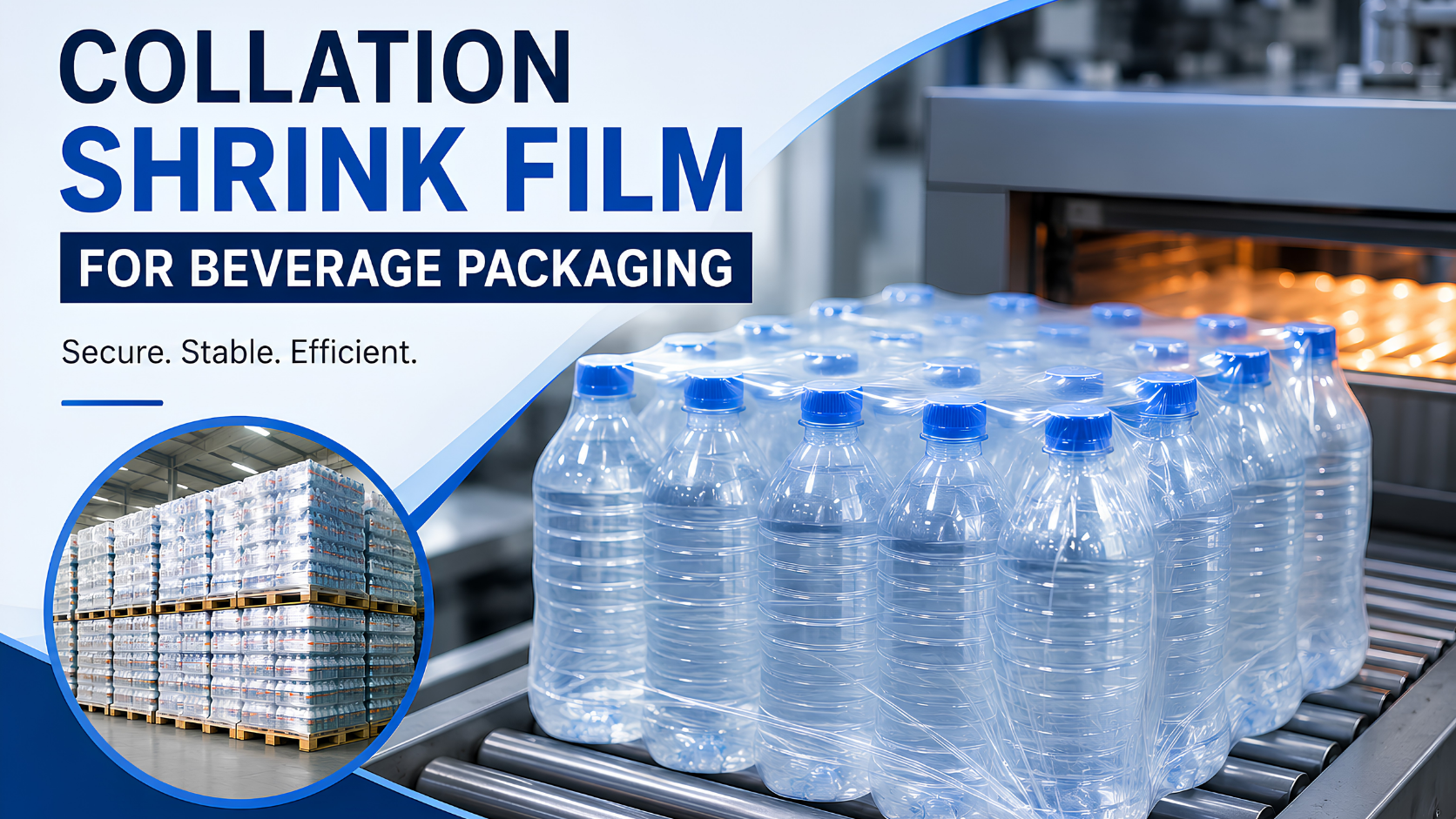
Collation shrink film is a specialized packaging film designed to bundle multiple products together into a secure unit using controlled heat shrinkage. The film is wrapped around grouped products such as bottles, cans, cartons, or containers and then passed through a shrink tunnel where heat causes the film to contract tightly around the package.
Unlike standard retail shrink packaging used for individual products, collation shrink film is engineered specifically for multi-pack transportation and distribution applications. The primary objective is not merely product presentation but maintaining bundle integrity throughout the supply chain. The film creates a tight, durable package that keeps products securely grouped while allowing visibility of the packaged items.
In beverage manufacturing facilities, automated packaging lines often bundle six, twelve, twenty-four, or even larger quantities of bottles and cans. Once shrunk, these bundles become easier to transport, stack, palletize, and distribute. The result is a packaging system that balances protection, efficiency, and cost control.
The effectiveness of collation shrink film depends on proper material selection, film thickness, shrink properties, and machine compatibility. When correctly specified, the packaging performs consistently across production, storage, transportation, and retail handling stages.
Why Beverage Manufacturers Prefer Collation Shrink Film
The beverage industry faces unique logistical challenges because products are typically heavy, high-volume, and frequently transported over long distances. Individual bottles and cans can easily shift during handling if not properly secured, increasing the risk of package failure and product damage.
Collation shrink film addresses these challenges by creating stable, compact bundles that remain intact throughout transportation cycles. Warehouse operators benefit from easier material handling because bundled products can be moved quickly using conveyors, forklifts, and pallet systems. Retailers also appreciate the convenience of receiving products in organized multipacks.
Another important advantage is packaging efficiency. Beverage production facilities often run at extremely high speeds, making packaging consistency critical. Shrink packaging systems can integrate seamlessly with automated production lines, allowing manufacturers to maintain productivity without sacrificing package quality.
From a procurement perspective, collation shrink film can often provide a more economical alternative to heavier secondary packaging solutions. Manufacturers can achieve product protection while reducing packaging material consumption and simplifying packaging operations.
Key Material Characteristics That Make It Suitable for Beverage Packaging
The demanding nature of beverage distribution requires packaging materials that can withstand considerable stress. One of the most important characteristics of collation shrink film is its mechanical strength. Beverage bundles can become quite heavy, particularly when containing multiple bottles or large-volume containers. The film must resist tearing, punctures, and stretching throughout transportation and storage.
Controlled shrink performance is equally important. Uniform shrinkage ensures that the film conforms tightly around the product bundle without creating weak points or excessive tension. Consistent shrink characteristics contribute directly to package stability and appearance.
Transparency provides another operational benefit. Clear film allows warehouse personnel, distributors, and retailers to identify products quickly without opening packaging. Product visibility also supports branding efforts when printed packaging designs are incorporated into the film.
Moisture resistance plays a significant role in beverage packaging operations. Distribution environments often expose products to varying temperatures, humidity levels, and occasional water contact. Properly specified shrink packaging helps protect bundled products against these environmental conditions while maintaining package integrity.
Common Beverage Packaging Applications
Collation shrink film is widely used across virtually every beverage category. Bottled water manufacturers frequently rely on shrink packaging to bundle multiple units for retail and wholesale distribution. The film provides sufficient strength to support the weight of large water packs while maintaining stability during transportation.
Soft drink producers use beverage shrink wrap extensively for cans and PET bottle multipacks. These products often travel through complex distribution networks involving multiple handling points, making bundle integrity particularly important.
Juice manufacturers benefit from shrink packaging because it accommodates various bottle shapes and container sizes. The flexibility of the film allows packaging systems to adapt to changing product portfolios without requiring significant modifications.
Dairy beverage producers often face additional logistical challenges related to refrigerated distribution environments. Properly selected collation shrink film performs reliably under these conditions while supporting efficient transportation and storage.
Energy drinks, flavored beverages, sports drinks, and specialty beverage manufacturers similarly utilize shrink packaging to improve handling efficiency and ensure products arrive in optimal condition.
Impact on Warehouse and Distribution Operations
Warehouse efficiency is directly influenced by packaging performance. Stable beverage bundles reduce handling difficulties and improve operational flow throughout storage and distribution facilities.
When products arrive as securely wrapped units, warehouse personnel can move, stack, and organize inventory more efficiently. Palletization processes become more predictable because bundles maintain their shape and dimensions during handling.
Distribution centers processing large volumes of beverage products benefit from faster throughput when packaging remains intact. Damaged bundles can create significant operational disruptions, including repackaging requirements, inventory discrepancies, and shipment delays.
Load stability is particularly important during transportation. Securely bundled products are less likely to shift during transit, reducing the risk of pallet collapse or product damage. This contributes to improved delivery performance and fewer customer complaints.
For export shipments involving extended transportation periods, packaging reliability becomes even more critical. Properly designed shrink packaging helps maintain bundle integrity throughout international logistics operations involving ports, warehouses, containers, and multiple transportation modes.
Cost Efficiency Compared to Traditional Outer Packaging
Many beverage manufacturers evaluate packaging solutions based not only on protection performance but also on overall operational cost. Collation shrink film offers several economic advantages when compared to traditional corrugated packaging systems.
Reducing reliance on corrugated outer packaging can lower material costs while simplifying packaging operations. The lighter weight of shrink film may also contribute to transportation efficiencies, particularly when shipping large volumes of products.
Space utilization is another important consideration. Shrink-packaged bundles often occupy less space than equivalent corrugated packaging configurations, allowing manufacturers and distributors to optimize warehouse capacity.
The packaging process itself can become more efficient because automated shrink systems typically require fewer packaging components. This simplification can reduce inventory management complexity and improve production line efficiency.
While every operation requires its own cost analysis, many beverage manufacturers find that collation shrink film provides a practical balance between protection, operational efficiency, and packaging expenditure.
Operational Considerations When Selecting Collation Shrink Film
Selecting the appropriate film requires careful evaluation of operational requirements. Film thickness should align with product weight, transportation conditions, and handling expectations. Heavier beverage bundles generally require stronger film structures capable of maintaining stability throughout the supply chain.
Machine compatibility is equally important. Packaging equipment specifications influence film performance, shrink characteristics, and overall packaging quality. Consistent results depend on matching film properties to production line capabilities.
Bundle configuration should also be considered during material selection. Different product arrangements create varying stress points within the package. Packaging engineers must ensure the selected film provides sufficient support for the intended bundle design.
Transportation conditions deserve particular attention. Products distributed through challenging logistics environments may require enhanced packaging performance to withstand vibration, impact, stacking pressure, and environmental exposure.
Manufacturers evaluating packaging options often compare multiple solutions before selecting the most appropriate material. In many cases, high-performance LDPE shrink film provides the combination of strength, flexibility, and shrink characteristics needed for demanding beverage applications.
Industrial Packaging Lessons from Other Sectors
Although beverage packaging represents one of the largest applications for collation shrink film, valuable insights can also be drawn from other industries.
FMCG manufacturers frequently use shrink packaging to improve handling efficiency and reduce packaging complexity across high-volume distribution networks. Similar principles apply within beverage operations.
Pharmaceutical packaging facilities emphasize consistency, traceability, and package integrity. Their focus on reliable packaging performance reinforces the importance of material quality and process control.
Chemical manufacturers often transport heavy products requiring robust packaging solutions. Their experience demonstrates the importance of selecting films capable of maintaining load stability under demanding conditions.
Textile producers and consumer goods manufacturers also benefit from shrink packaging technologies that simplify warehousing and improve transportation efficiency. These cross-industry applications highlight the versatility and operational value of collation shrink packaging systems.
Why Packaging Performance Matters in Beverage Supply Chains
Packaging decisions influence far more than product appearance. They affect manufacturing efficiency, warehouse productivity, transportation reliability, product protection, and customer satisfaction. A packaging failure occurring at any point in the supply chain can create additional costs, operational disruptions, and potential damage to customer relationships.
Collation shrink film has become a preferred packaging solution because it addresses many of the practical challenges faced by beverage manufacturers. By securely bundling products, improving handling efficiency, supporting load stability, and reducing packaging complexity, it contributes to smoother operations throughout the supply chain.
For beverage producers seeking reliable packaging performance, the focus should remain on selecting materials that align with product characteristics, distribution requirements, and operational goals. When properly implemented, shrink packaging can become a valuable component of an efficient and resilient beverage distribution strategy.