
Introduction
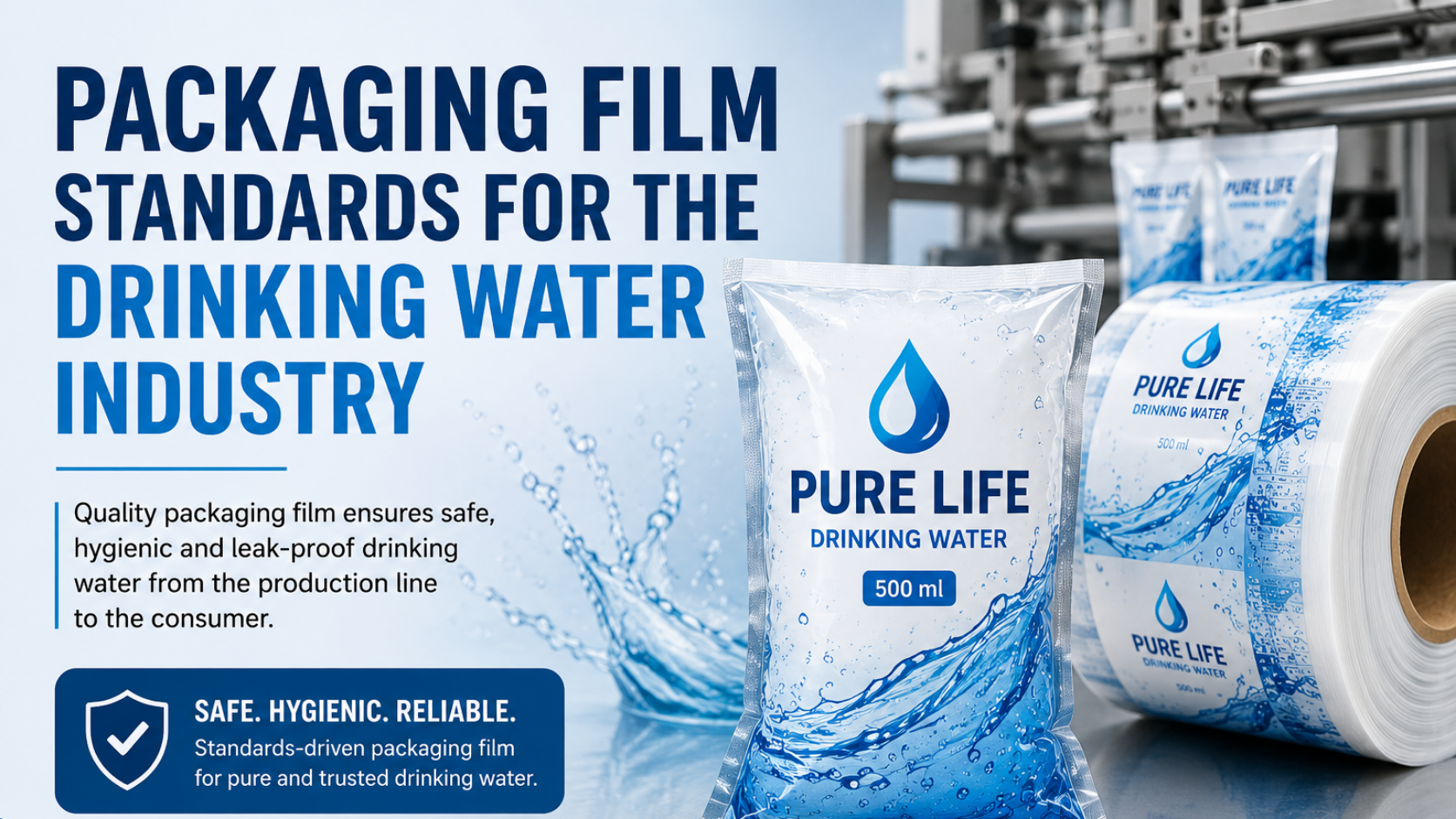
The drinking water packaging sector operates under strict expectations for hygiene, safety, consistency, and product integrity. While water purification systems often receive significant attention, the packaging material itself plays an equally important role in protecting product quality from the filling line to the final consumer. Selecting the right water packaging film is not simply a purchasing decision; it is a critical compliance and operational requirement that affects sealing performance, contamination control, transportation durability, and brand reputation.
Manufacturers of drinking water pouches frequently focus on production output and filling efficiency, but packaging failures often originate from poor-quality film, inconsistent raw materials, or inadequate manufacturing controls. Even minor weaknesses in film quality can result in leakage, contamination risks, customer complaints, and product rejection during distribution. Understanding packaging film standards helps procurement managers, plant operators, quality assurance teams, and packaging professionals make informed decisions that support both regulatory compliance and operational reliability.
Understanding Water Packaging Film and Its Role in Drinking Water Safety
Water packaging film serves as the primary protective barrier between purified drinking water and the external environment. The film must maintain product safety throughout storage, transportation, retail handling, and consumer use. Unlike many other packaging applications, drinking water packaging has very limited tolerance for contamination risks because consumers expect the product to remain hygienic and safe throughout its shelf life.
A high-quality packaged drinking water film must deliver several performance characteristics simultaneously. It must provide reliable sealing on automatic pouch packing machines, resist punctures during handling, maintain dimensional stability during production, and remain free from contaminants that could affect water quality. These requirements become even more important in high-volume operations where packaging lines may produce thousands of pouches per hour.
In practical manufacturing environments, packaging film performance directly impacts machine efficiency. Films with inconsistent thickness or poor sealing characteristics often cause production interruptions, increased wastage, seal failures, and reduced line speeds. As a result, packaging film standards influence both product safety and manufacturing productivity.
Regulatory and Food Safety Requirements for Drinking Water Packaging
Food-contact packaging materials are expected to comply with strict safety requirements designed to prevent harmful substances from migrating into packaged products. Since drinking water is consumed directly without further processing, packaging materials must be manufactured using carefully selected raw materials that meet food-contact requirements.
One of the most important considerations is the use of virgin food-grade polymers. Virgin material offers greater consistency, purity, and traceability compared to recycled alternatives. For drinking water applications, manufacturers typically prefer food-grade LDPE because of its excellent sealing properties, flexibility, and suitability for hygienic packaging operations.
Migration control is another critical aspect of compliance. Packaging materials should not release substances that alter the taste, odor, appearance, or safety of the packaged water. This requires careful control over raw materials, additives, pigments, and printing inks used during film production. Reliable suppliers implement documented quality control procedures to verify that finished films meet applicable food-contact requirements.
Quality documentation also plays an important role during supplier qualification. Water packaging companies increasingly require certificates, material declarations, and production traceability records before approving packaging materials for commercial use. These practices support regulatory compliance while reducing operational risk.
Material Specifications That Define Quality Water Packaging Film
The performance of water pouch packaging largely depends on material selection and film construction. LDPE remains one of the most widely used materials because it provides a balance of flexibility, sealability, durability, and processing efficiency.
Film thickness is a major specification that influences performance. Thinner films may reduce material consumption but can increase the risk of punctures and seal failures if not properly engineered. Thicker films generally offer improved durability but may increase packaging costs and affect machine settings. Manufacturers typically select film thickness based on pouch size, filling volume, transportation requirements, and expected handling conditions.
Seal strength is particularly important in drinking water packaging. Weak seals can lead to leakage during warehousing, transportation, or retail handling. Strong sealing performance helps maintain product integrity while reducing product losses throughout the supply chain. Consistent seal performance also supports higher production speeds by minimizing machine stoppages and rejected pouches.
In addition to seal strength, a quality food grade film should provide good tensile properties, tear resistance, puncture resistance, and dimensional stability. These characteristics contribute to reliable operation in demanding packaging environments.
Critical Performance Standards for Packaged Drinking Water Film
Industrial packaging operations place significant stress on water pouches throughout their lifecycle. Filled pouches are stacked, transported, loaded, unloaded, and stored under varying environmental conditions. Packaging films must withstand these stresses without compromising product safety.
Mechanical strength is one of the most important performance indicators. Films with adequate tensile strength are better able to resist stretching and deformation during filling and handling operations. This becomes particularly important in large-scale distribution systems where products may travel long distances before reaching consumers.
Puncture resistance is another critical requirement. Water pouches frequently come into contact with crates, pallets, transportation equipment, and warehouse surfaces. A puncture-resistant film reduces the likelihood of product damage and leakage throughout the supply chain.
Seal integrity must remain consistent under changing temperatures and transportation conditions. Poor-quality films may exhibit seal degradation, resulting in leaks that damage adjacent products and increase product losses. Reliable water packaging film is designed to maintain sealing performance even under demanding operational conditions.
Manufacturing Quality Control Standards
Consistent product quality begins with rigorous manufacturing controls. Reputable film manufacturers implement quality assurance procedures at every stage of production, from raw material inspection to finished roll evaluation.
Raw material verification ensures that incoming polymers meet specified quality requirements before entering production. This process helps maintain consistency in mechanical properties, appearance, and sealing performance.
During film extrusion, manufacturers monitor processing parameters such as temperature profiles, thickness distribution, and material flow characteristics. Continuous monitoring helps identify variations before they affect finished product quality. Advanced production facilities often use automated measurement systems to maintain tight dimensional tolerances.
Finished film rolls undergo inspection for thickness consistency, sealing characteristics, print quality, and physical defects. These quality checks help ensure that the film performs reliably on automatic pouch packing machines and supports uninterrupted production.
Hygiene Standards in Water Packaging Film Production
Hygiene control is fundamental to drinking water packaging. Even high-quality raw materials can become unsuitable if manufacturing environments are not properly controlled. Packaging film intended for drinking water applications should be produced under strict cleanliness protocols designed to minimize contamination risks.
Effective hygiene programs include equipment cleaning procedures, personnel hygiene requirements, controlled handling practices, and protected storage conditions. Manufacturers must also ensure that finished rolls are packaged and transported in a manner that preserves cleanliness until they reach the customer.
Storage practices are equally important. Packaging films should be stored in clean, dry environments away from excessive heat, moisture, dust, and chemicals. Improper storage can affect film performance and increase contamination risks before production even begins.
For water packaging facilities, maintaining hygiene standards throughout the supply chain helps protect product quality while supporting regulatory compliance objectives.
Printing Standards for Branded Water Pouch Packaging
Brand identification and regulatory labeling are essential components of drinking water packaging. Printed films must provide clear, durable graphics while maintaining food-contact safety requirements.
Rotogravure printing is commonly used for water pouch applications because it delivers consistent image quality, sharp text reproduction, and excellent durability. High-quality printing ensures that branding, batch information, manufacturing details, and regulatory markings remain legible throughout distribution.
Ink selection is another important consideration. Printing systems used for food packaging applications should be carefully selected to prevent contamination risks while maintaining print durability. Poor-quality inks may fade, smear, or compromise packaging appearance during transportation and storage.
For commercial water brands, packaging graphics also contribute to consumer confidence. Consistent print quality reinforces perceptions of product quality and operational professionalism.
Transportation and Warehouse Performance Requirements
The distribution environment presents numerous challenges for packaged drinking water products. Filled pouches are often transported in bulk quantities through warehouses, distribution centers, retail channels, and export supply chains.
Temperature fluctuations, stacking pressure, mechanical handling, and transportation vibrations all place stress on packaging materials. A well-designed water packaging film must maintain structural integrity throughout these conditions to prevent leakage and product damage.
Warehouse storage practices also influence packaging performance. Excessive stacking heights can increase load pressure on lower layers, while poor palletization practices may create localized stress points that contribute to packaging failures. Procurement teams should evaluate packaging films based on expected storage and transportation conditions rather than material cost alone.
Export shipments present additional challenges because products may encounter extended transit times, varying climates, and multiple handling stages. In these situations, durable packaging materials help reduce operational risk and protect product quality.
Common Compliance Mistakes Made by Water Packaging Plants
Many packaging-related issues originate from decisions intended to reduce short-term costs. One common mistake involves selecting lower-grade materials that may not provide adequate performance for drinking water applications. While initial procurement costs may appear attractive, poor-quality films often generate higher overall costs through leakage, downtime, wastage, and customer complaints.
Improper storage practices represent another frequent issue. Exposure to dust, moisture, sunlight, or extreme temperatures can affect film quality before production begins. Even compliant materials may experience performance problems if storage conditions are not properly managed.
Supplier qualification is equally important. Packaging plants should evaluate manufacturing capabilities, quality control systems, documentation practices, and supply consistency before approving packaging material suppliers. Long-term reliability often provides greater value than minimal short-term savings.
Selecting a Reliable Water Packaging Film Supplier
Choosing the right supplier requires more than comparing prices. Water packaging companies should assess technical expertise, production infrastructure, quality systems, and supply chain reliability when evaluating potential partners.
A qualified supplier should demonstrate consistent manufacturing capabilities, documented quality controls, and the ability to provide technical support when needed. Transparency regarding raw materials, production processes, and testing procedures also contributes to supplier credibility.
Companies seeking dependable packaging performance often prioritize suppliers capable of delivering consistent roll quality, reliable sealing characteristics, and customized specifications that match operational requirements. Businesses looking for specialized water packaging film solutions should evaluate manufacturing experience, food-grade material expertise, and long-term supply stability before making procurement decisions.
For manufacturers requiring customized LDPE drinking water packaging solutions, the dedicated water packaging film product page provides additional information about material specifications, customization options, and production capabilities.
Conclusion
Packaging film standards play a critical role in the safety, efficiency, and reliability of drinking water packaging operations. From food-contact compliance and hygiene control to seal integrity and transportation performance, every aspect of film quality influences the final product delivered to consumers.
Organizations that prioritize standards-based procurement typically experience fewer packaging failures, improved production efficiency, stronger regulatory compliance, and greater confidence throughout their supply chains. By understanding the technical and operational requirements associated with drinking water packaging, manufacturers can make informed decisions that support both product safety and long-term business performance.