
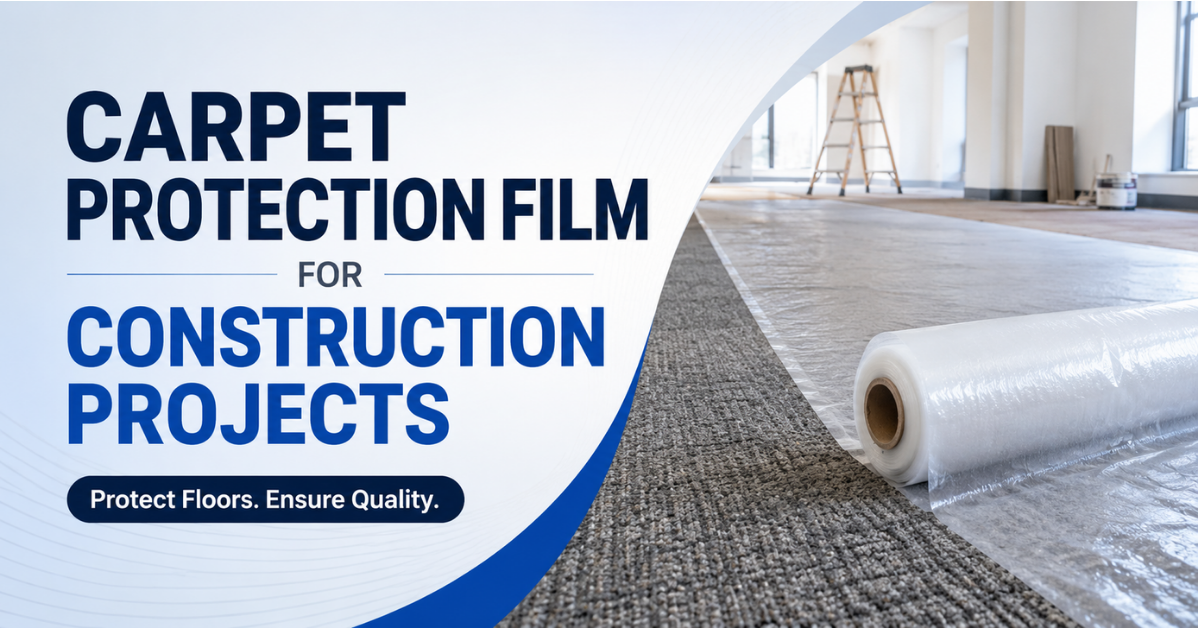
Construction and renovation projects involve constant movement of workers, tools, equipment, and building materials. While the primary focus is often on completing structural work efficiently, protecting finished surfaces is equally important. Carpets installed before project completion are especially vulnerable to dust, paint spills, moisture, heavy foot traffic, and accidental damage. Even minor surface contamination can lead to expensive cleaning, repairs, or complete carpet replacement, increasing project costs and delaying handover.
This is where carpet protection film plays a vital role. Designed as a temporary protective covering, it helps preserve carpeted areas throughout construction, remodeling, painting, and interior finishing work. Unlike conventional dust sheets that can shift during use, a quality carpet protection film adheres securely to the carpet surface, creating a stable barrier against dirt, debris, and everyday job site hazards. This not only protects the flooring but also improves workplace safety by reducing movement and trip hazards.
For contractors, builders, painters, facility managers, and renovation professionals, selecting the right temporary surface protection solution contributes to better project quality, cleaner worksites, and fewer post-construction issues. In this guide, we’ll explore how carpet protection film works, where it is most effective, the benefits it offers throughout construction projects, and the best practices that help maximize its performance.
Why Carpet Protection Matters During Construction
Construction environments are among the harshest conditions for finished flooring. As multiple trades work simultaneously, carpets can quickly become exposed to dirt, dust, paint splashes, adhesive residue, moisture, and continuous pedestrian traffic. Once contaminants penetrate carpet fibers, restoration often becomes difficult and costly. Preventing damage is considerably more efficient than repairing it after project completion.
Temporary protection also supports the overall quality of a construction project. Clients expect newly installed carpets to remain in pristine condition until handover, especially in residential developments, hotels, healthcare facilities, commercial offices, educational institutions, and retail spaces. Protecting these finished surfaces demonstrates professionalism while reducing the likelihood of disputes over damage.
Another important consideration is project efficiency. Construction schedules rarely allow additional time for deep carpet cleaning or replacement before occupancy. Effective temporary surface protection minimizes these risks, helping contractors deliver cleaner projects on schedule while maintaining higher customer satisfaction.
What Is Carpet Protection Film?
Carpet protection film is a temporary self-adhering polyethylene film designed specifically to safeguard carpeted floors during construction, painting, remodeling, transportation, and maintenance activities. It creates a protective barrier that helps prevent dust, dirt, moisture, spills, and debris from coming into direct contact with carpet fibers throughout the project.
Unlike loose protective coverings that require constant repositioning, carpet protection film adheres securely to most carpet surfaces using a specially formulated low-tack adhesive. The reverse-wound construction allows installers to roll the film across the floor quickly, simplifying installation while reducing labor time.
High-quality carpet protection film is engineered to resist tearing under normal construction traffic while remaining easy to remove after the project is complete. When properly applied and removed according to manufacturer recommendations, it helps protect carpets without leaving adhesive residue, allowing the finished flooring to retain its appearance.
Key Benefits of Carpet Protection Film for Construction Projects
Reliable Protection Against Dirt, Dust, and Debris
Construction generates significant amounts of airborne dust and loose debris. Fine particles can settle deep within carpet fibers, making thorough cleaning challenging even after the project ends. Carpet protection film acts as an effective barrier, helping prevent contaminants from reaching the carpet surface throughout different construction phases.
This protection becomes particularly valuable during drywall installation, sanding, painting, electrical work, plumbing, interior finishing, and renovation projects where dust generation is unavoidable. Maintaining cleaner flooring reduces final cleanup efforts while preserving the appearance of newly installed carpets.
Helps Reduce Surface Damage
Heavy foot traffic is unavoidable on active construction sites. Workers carrying tools, ladders, equipment, and materials repeatedly walk across finished flooring, increasing the risk of abrasion and everyday wear.
A durable floor protection film helps minimize this exposure by providing an additional protective layer between construction activity and the carpet itself. This temporary barrier contributes to maintaining the original condition of the flooring until the project is completed.
Improved Job Site Safety
Loose protective sheets can bunch up, slide, or shift as workers move throughout the building. Besides reducing protection, they may also introduce unnecessary trip hazards.
Self-adhering carpet protection film remains securely positioned throughout normal project activities. Because it stays in place, workers can move confidently without frequently repositioning protective coverings, supporting a cleaner and safer working environment.
Faster Installation and Removal
Construction schedules are driven by efficiency. Protective materials that require extensive taping or adjustment can increase labor costs and slow progress.
Reverse-wound carpet protection film simplifies installation by allowing crews to roll it directly across carpeted areas. Once work is complete, the film can be removed efficiently, reducing cleanup time before project handover.
Common Construction Applications
Carpet protection film is suitable for a wide variety of construction and renovation environments where preserving finished flooring is essential.
Some of the most common applications include:
- Residential construction and remodeling
- Commercial office fit-outs
- Hotel renovation projects
- Educational institutions
- Healthcare facilities
- Retail store construction
- Painting and decorating projects
- Interior refurbishment
- Property maintenance work
- Facility upgrades
In each of these environments, maintaining clean and undamaged carpets contributes to improved project quality while helping avoid unnecessary replacement or restoration expenses.
Carpet Protection Film vs. Traditional Floor Coverings
Many construction teams continue using cardboard sheets, drop cloths, plastic tarps, or fabric dust sheets to protect flooring. While these materials may provide basic coverage, they often shift during use and require additional taping to remain in place.
Carpet protection film offers several practical advantages over conventional methods. Its self-adhering design minimizes movement, reducing the need for constant adjustment during active construction. Because the adhesive is positioned on the outside of the reverse-wound roll, installation is straightforward and can be completed efficiently across large carpeted areas.
Traditional coverings may also leave exposed sections of carpet as workers move equipment across the site. By contrast, a properly installed floor protection film provides continuous surface coverage, helping maintain consistent protection throughout the construction process.
Best Practices for Using Carpet Protection Film
Proper installation plays a significant role in achieving effective temporary protection. Before applying the film, ensure that the carpet surface is reasonably clean and dry. Removing loose dust and debris allows the adhesive to perform more effectively while reducing the possibility of trapping abrasive particles beneath the film.
Install the film by rolling it evenly across the carpet without excessive stretching. Avoid wrinkles or air pockets that could affect coverage or create uneven walking surfaces. During installation, ensure that adjoining sections overlap appropriately where necessary to maintain continuous protection.
Construction managers should also inspect protected areas periodically throughout long-duration projects. If portions of the film become damaged through unusually heavy traffic or sharp equipment, replacing affected sections helps maintain consistent protection until project completion.
Finally, remove the film promptly once construction activities have concluded and follow the manufacturer’s application and removal recommendations to achieve the best results.
Choosing the Right Carpet Protection Film
Not every temporary protection product performs equally in demanding construction environments. Buyers should evaluate several practical considerations before selecting a solution for their projects.
Durability is an important factor because construction sites experience constant foot traffic and movement of equipment. A polyethylene film designed to resist tearing can provide more reliable protection throughout the project lifecycle.
Ease of installation also affects labor efficiency. Reverse-wound rolls and self-adhering designs simplify application while reducing installation time across large floor areas. Additionally, buyers often prefer products that remove cleanly after use without leaving adhesive residue when used as recommended.
Working with an experienced manufacturer also contributes to product consistency and dependable supply. Companies handling large commercial or international projects benefit from sourcing materials from suppliers capable of meeting ongoing project requirements with consistent quality standards.
For projects requiring dependable temporary carpet protection, explore Tilak Polypack’s carpet protection film solution, designed to help protect carpeted surfaces from dirt, debris, moisture, abrasion, and construction traffic during building, renovation, and decorating work.
Conclusion
Protecting finished carpets during construction is an important part of delivering high-quality projects. Dust, debris, paint, moisture, and continuous foot traffic can quickly damage newly installed flooring, leading to unnecessary cleaning costs, repairs, and project delays. Using carpet protection film provides an effective temporary barrier that helps preserve carpet appearance throughout construction, remodeling, painting, and maintenance activities.
Beyond protecting valuable flooring, carpet protection film contributes to cleaner worksites, improved efficiency, safer movement, and smoother project completion. Its self-adhering design, tear-resistant polyethylene construction, and straightforward installation make it a practical solution for contractors, builders, painters, facility managers, and renovation professionals across residential, commercial, healthcare, education, and hospitality projects.
Selecting a quality temporary surface protection solution is a proactive investment in project quality and customer satisfaction. By incorporating carpet protection film into construction best practices, businesses can minimize avoidable damage, reduce post-project cleanup, and deliver finished spaces that meet client expectations from the moment the protective film is removed.