
Introduction
Think about almost any product you purchase today whether it’s a new shirt, electronic accessories, pharmaceutical products, food items, or industrial components. Before reaching the customer, these products are often protected inside a transparent poly bag. Although poly bags are one of the most commonly used packaging materials across the world, many businesses still ask an important question:
What are poly bags made of?
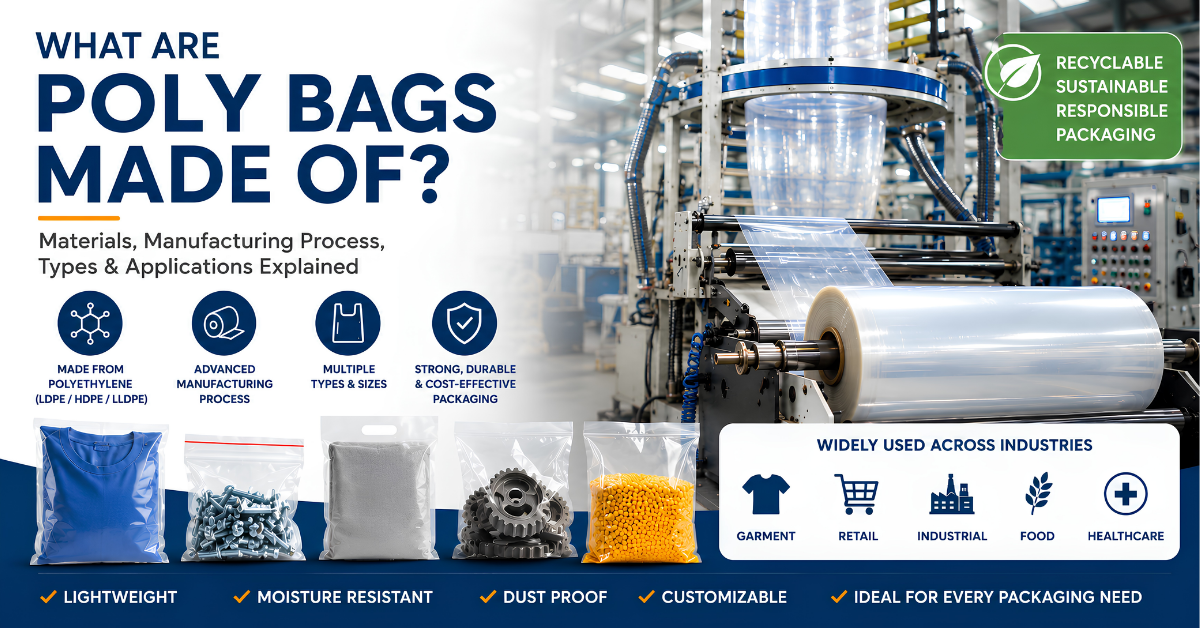
The answer goes beyond simply saying “plastic.” Modern poly bags are manufactured using different grades of polyethylene, each designed for specific packaging applications. The type of material used directly influences the bag’s strength, flexibility, transparency, moisture resistance, and overall performance.
For manufacturers, wholesalers, retailers, and exporters, understanding these materials helps in selecting packaging that protects products while reducing costs and improving operational efficiency.
In this guide, we’ll explain the materials used to manufacture poly bags, how they are produced, the different types available, and how to choose the right option for your packaging needs.
Understanding Poly Bags
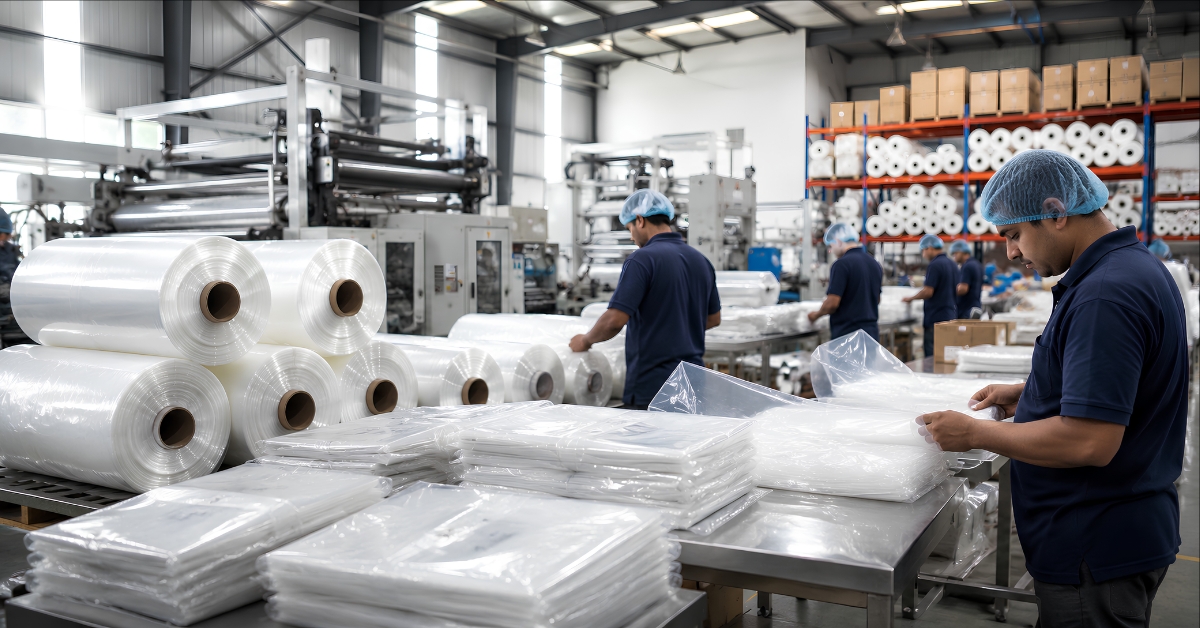
Poly bags, also known as polyethylene bags, are flexible packaging bags manufactured from polyethylene resin. These bags are widely used for product protection and are available in different specifications, including packing polythene solutions designed for various industrial, retail, and commercial packaging applications.
Unlike rigid plastic containers, poly bags are produced as thin films that can be heat-sealed into different sizes and shapes. Their versatility makes them suitable for protecting products from dust, moisture, dirt, and minor physical damage during storage and transportation.
Today, poly bags are used across industries including food processing, garment manufacturing, pharmaceuticals, automotive components, retail, agriculture, and logistics.
What Material Are Poly Bags Made Of?
Most poly bags are manufactured using three primary types of polyethylene.
Instead of choosing a single material for every application, manufacturers select the most suitable polymer based on the product’s packaging requirements.
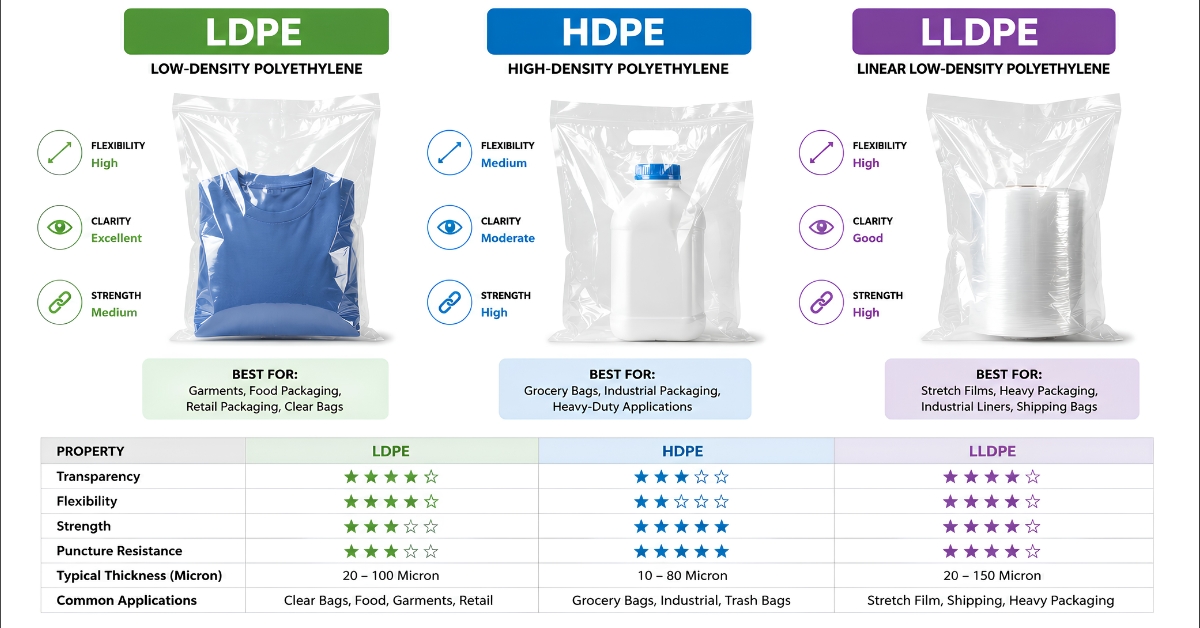
LDPE (Low-Density Polyethylene)
LDPE is one of the most common materials used in clear packaging bags. It is soft, flexible, and highly transparent, making it ideal when product visibility is important.
Common applications include:
- Garment packaging
- Food packaging
- Retail packaging
- Transparent poly bags
- Protective packaging
Advantages:
- Excellent clarity
- Flexible structure
- Moisture resistant
- Easy heat sealing
- Lightweight
HDPE (High-Density Polyethylene)
HDPE offers higher strength and stiffness than LDPE. It is commonly used where durability and puncture resistance are more important than transparency.
Applications include:
- Grocery bags
- Industrial packaging
- Heavy-duty carry bags
- Waste collection bags
Advantages:
- Higher tensile strength
- Better puncture resistance
- Lower material weight
- Cost-effective for heavy applications
LLDPE (Linear Low-Density Polyethylene)
LLDPE combines flexibility with excellent stretchability. It is widely used in industrial packaging and stretch film manufacturing.
Applications include:
- Stretch film
- Heavy-duty liners
- Industrial packaging
- Shipping applications
Advantages:
- High elongation
- Excellent tear resistance
- Better load holding capacity
- Improved puncture strength
Material Comparison
| Property | LDPE | HDPE | LLDPE |
|---|---|---|---|
| Transparency | Excellent | Moderate | Good |
| Flexibility | High | Medium | High |
| Strength | Medium | High | High |
| Moisture Resistance | Excellent | Excellent | Excellent |
| Typical Uses | Garments, Food | Grocery, Industrial | Stretch Film |
How Are Poly Bags Manufactured?
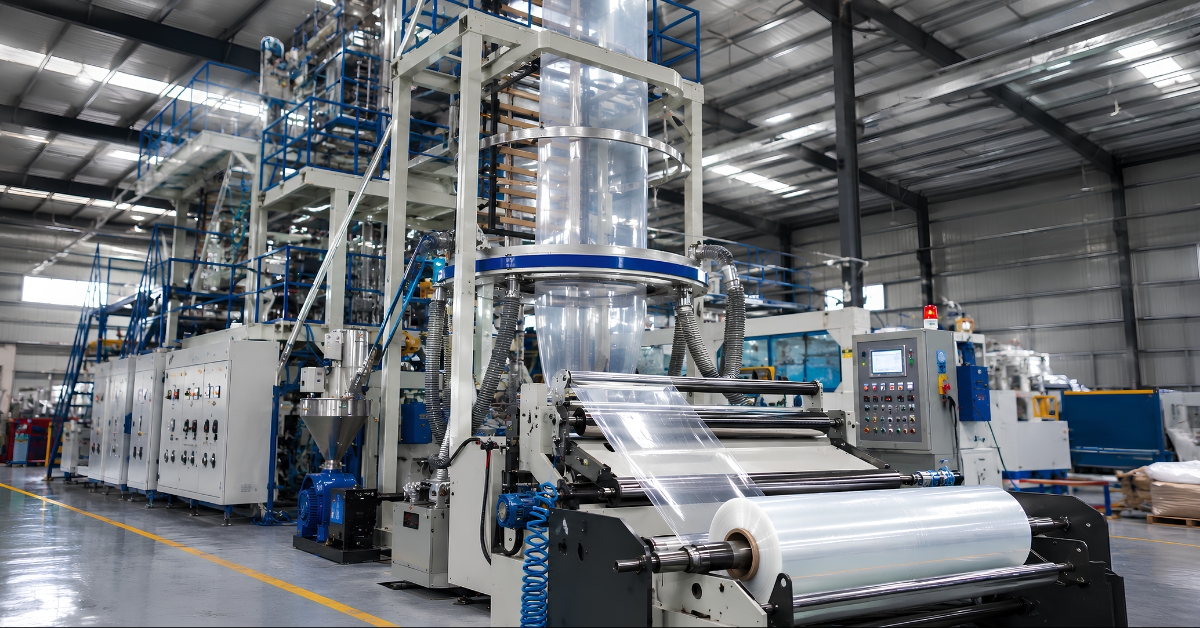
The manufacturing process begins with polyethylene resin pellets. These small plastic granules are heated until they melt and are then processed through an extrusion system.
During blown film extrusion, compressed air inflates the molten plastic into a thin tubular film. As the material cools, it forms a continuous sheet that is wound onto large rolls.
These rolls are later converted into finished bags through cutting, sealing, printing, and quality inspection processes.
Modern manufacturing equipment ensures consistent thickness, excellent sealing strength, and uniform transparency.
Manufacturing Process
| Step | Description |
|---|---|
| Raw Material | Polyethylene resin pellets |
| Extrusion | Plastic is melted |
| Film Blowing | Tubular film is formed |
| Cooling | Film solidifies |
| Printing | Branding or product information |
| Cutting | Film converted into bag sizes |
| Heat Sealing | Bottom and side sealing |
| Inspection | Quality check before dispatch |
Types of Poly Bags
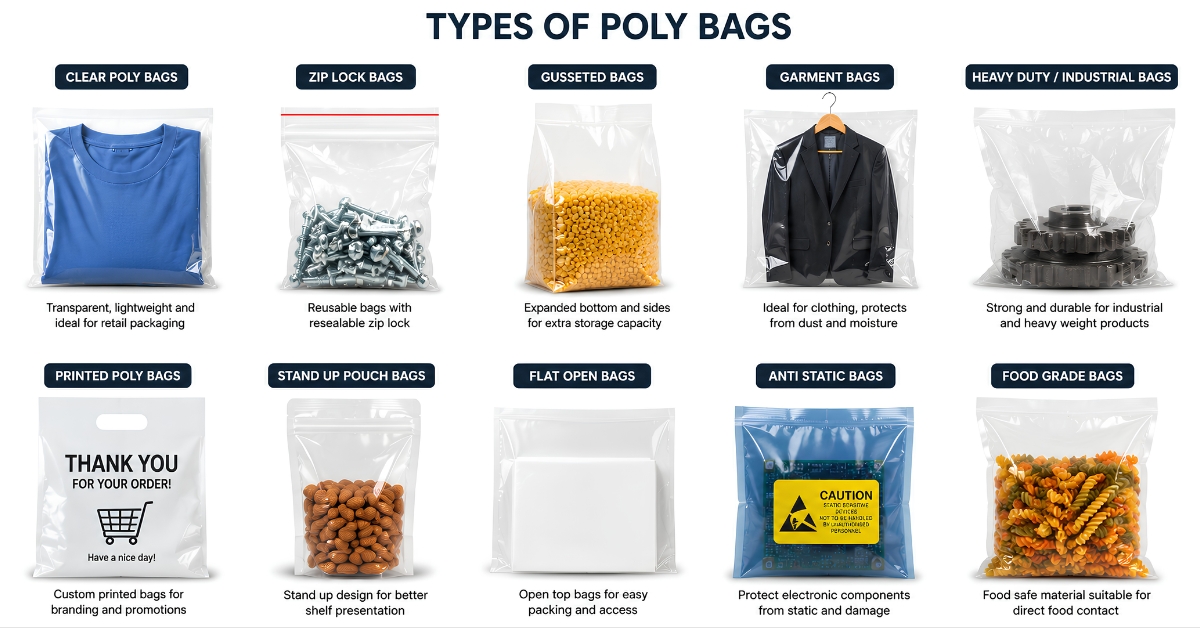
Poly bags are available in various designs depending on the packaging application.
Clear Poly Bags
Ideal for displaying products while protecting them from contamination.
Food Grade Poly Bags
Manufactured using food-safe polyethylene suitable for direct food contact.
Garment Poly Bags
Used by textile manufacturers for shirts, trousers, sarees, and apparel packaging.
Gusseted Poly Bags
Provide additional storage capacity for bulky products.
Zip Lock Bags
Reusable bags with resealable closures for convenient storage.
Heavy Duty Industrial Bags
Designed for packaging machinery parts, chemicals, and industrial products.
Applications of Poly Bags
The popularity of poly bags comes from their ability to adapt to almost every industry.
| Industry | Common Application |
|---|---|
| Food | Snacks, bakery, frozen foods |
| Garments | Shirts, trousers, sarees |
| Pharmaceutical | Medical supplies |
| Retail | Shopping bags |
| Electronics | Component packaging |
| Agriculture | Seed packaging |
| Industrial | Spare parts packaging |
How to Choose the Right Poly Bag
Selecting the right poly bag depends on several factors.
The weight of the product is one of the first considerations. Lightweight garments require flexible LDPE bags, whereas industrial components often demand stronger HDPE or LLDPE materials.
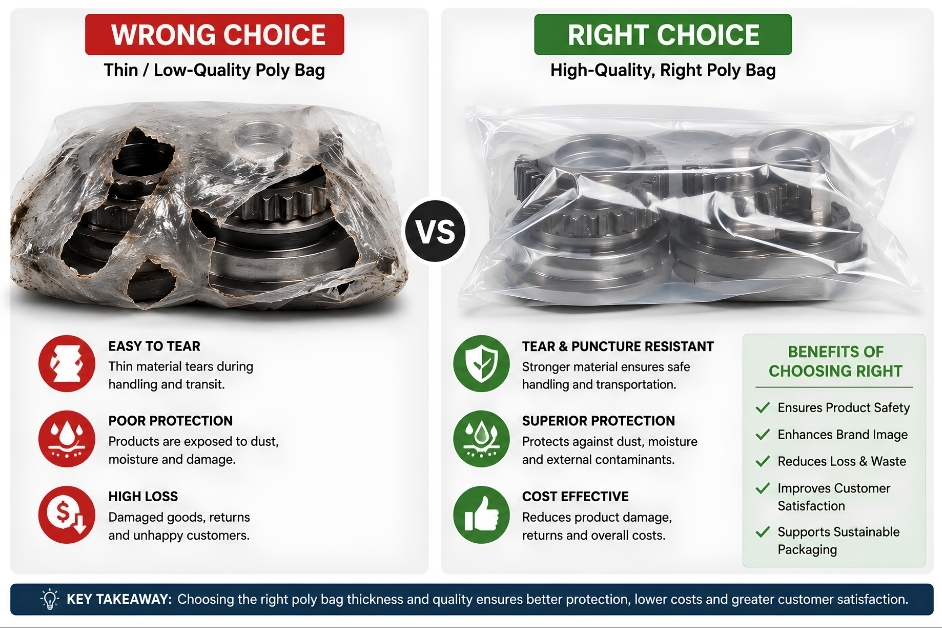
Bag thickness also plays a significant role. Thicker bags provide better puncture resistance but increase material costs. Choosing the correct micron ensures optimal protection without unnecessary expense.
Transparency is another important factor. Retail products often benefit from clear packaging that allows customers to view the product before purchase.
Businesses should also consider food safety requirements, storage conditions, printing needs, and sealing methods before finalizing the packaging solution.
Common Mistakes When Selecting Poly Bags
Many businesses purchase packaging based solely on price. While cost is important, choosing the wrong material can result in damaged products, higher returns, and increased packaging waste.
Common mistakes include:
- Choosing insufficient thickness for heavy products
- Using non-food-grade bags for food applications
- Ignoring puncture resistance requirements
- Selecting the wrong sealing method
- Overlooking storage conditions
Working with an experienced manufacturer helps businesses choose packaging that balances protection, performance, and cost.
Are Poly Bags Recyclable?
Most poly bags made from polyethylene are recyclable where suitable collection and recycling systems exist. Many manufacturers also incorporate recycled content into certain industrial packaging products to reduce environmental impact.
Businesses can further support sustainability by selecting the appropriate bag thickness, minimizing unnecessary material usage, and partnering with responsible packaging manufacturers.
Frequently Asked Questions
Are poly bags made from PVC?
No. Most poly bags are manufactured from polyethylene (PE), not PVC.
Which material is better, LDPE or HDPE?
LDPE is preferred for flexibility and transparency, while HDPE offers greater strength for heavy-duty applications.
Why are clear poly bags transparent?
Clear poly bags are typically made from LDPE, which naturally provides excellent clarity.
Can poly bags be customized?
Yes. Manufacturers can produce poly bags in various sizes, thicknesses, colors, and printed designs to meet specific packaging requirements.
Conclusion
Poly bags play an essential role in modern packaging by providing lightweight, durable, and cost-effective protection for products across multiple industries. While they may appear simple, the choice of material—whether LDPE, HDPE, or LLDPE—has a significant impact on packaging performance, product safety, and operational efficiency.
Understanding the differences between these materials enables businesses to make informed decisions based on product weight, required transparency, strength, and end-use applications. Choosing the right poly bag not only protects your products but also helps optimize packaging costs and improve customer satisfaction.
At Tilak Polypack, we manufacture high-quality clear polythene packing bags tailored to diverse industrial, retail, garment, and food packaging requirements. Our solutions are available in multiple sizes, thicknesses, and custom specifications to meet your unique packaging needs. Whether you require standard bags or fully customized packaging, our team can help you select the right solution for your business.