
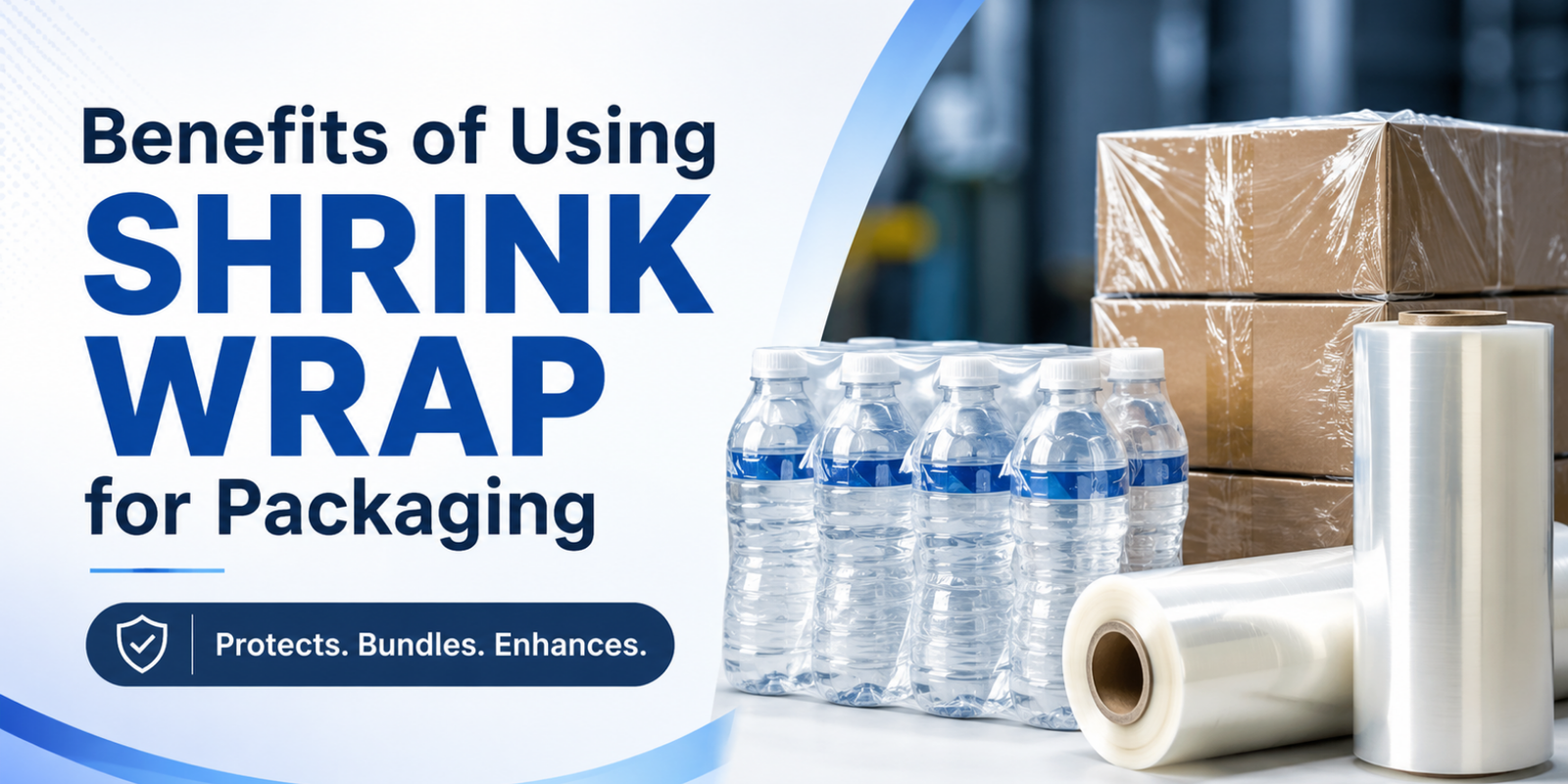
Shrink wrap is a versatile packaging film used to protect, bundle, display, store, and transport a wide range of products. When heat is applied, the film conforms closely to the product, creating a secure and compact protective layer.
For manufacturers, retailers, distributors, and other businesses, shrink wrap can provide several practical benefits, including product protection, improved presentation, secure bundling, and efficient handling. The right shrink film should be selected according to the product, packaging process, equipment, and required level of protection.
What Is Shrink Wrap?
Shrink wrap is a plastic packaging film that contracts when exposed to controlled heat. During the packaging process, the film is placed around or over a product and then heated so that it shrinks closely around the item.
This creates a neat, fitted package while helping keep products together and reducing exposure to dust, dirt, and surface contact.
Shrink film is available in different thicknesses, widths, film types, and formats to suit different packaging requirements.
Key Benefits of Shrink Wrap
1. Protects Products During Handling and Storage
One of the main benefits of shrink wrap is the protective barrier it provides around a product.
A properly applied shrink film can help reduce exposure to:
- Dust and dirt
- Surface contact
- Minor handling damage
- Moisture exposure, depending on the film and application
- Scuffing of labels and product surfaces
For products that are handled frequently or stored for extended periods, shrink wrapping can provide an additional layer of protection without adding bulky outer packaging.
2. Keeps Products Securely Bundled
Shrink wrap can hold multiple products together as a single package. This makes it useful for multipacks, promotional bundles, bottle packs, and other grouped products.
Instead of using separate boxes, ties, or loose outer coverings, shrink film can create a compact bundle that is easier to handle, store, and transport.
For businesses handling high volumes of products, consistent bundling can also make inventory movement and packing operations more efficient.
3. Creates a Clean and Professional Appearance
Product presentation is important in retail and commercial packaging.
Clear shrink film allows product labels, colors, branding, and other visual details to remain visible while giving the package a smooth and finished appearance.
This makes shrink wrap useful for:
- Retail products
- Promotional multipacks
- Bottle bundles
- Consumer goods
- Product kits
- Small packaged items
A consistent shrink-wrapped package can also help create a more organized appearance across a product range.
4. Reduces Unnecessary Packaging Bulk
Shrink film conforms closely to the shape of the packaged product. This can help businesses avoid using oversized outer packaging when a protective film layer is sufficient for the application.
A compact package can be easier to handle, stack, display, and transport.
However, shrink film should not be considered a replacement for protective cushioning when products are fragile or require additional impact protection.
5. Helps With Shipping and Storage
Shrink wrap can be useful for preparing products for storage and transportation.
When multiple products are bundled together, the film can help keep them organized during handling and reduce unwanted movement.
For shipping applications, the appropriate film can help protect products from dust and surface contact while keeping grouped items together.
The film should always be selected according to the product weight, package shape, transportation conditions, and required level of protection.
6. Provides Visible Package Integrity
A tightly sealed shrink package can make signs of damage, tearing, or broken seals easier to notice.
This can be particularly useful for retail products where customers expect packaging to remain intact before purchase.
For businesses, visible package integrity can also help identify damaged packaging during storage, handling, or distribution.
Common Applications of Shrink Wrap
Shrink wrap is used across many industries because it can be adapted to different product sizes, shapes, and packaging requirements.
Retail Packaging
Clear shrink film can protect products while keeping their appearance visible to customers. It is commonly used for individual products, multipacks, promotional bundles, and retail-ready packaging.
Bottle and Multipack Packaging
Shrink wrap can group bottles and similar products into stable multipacks. It can help keep units aligned while protecting labels and creating a clean presentation.
Food Packaging
Certain shrink films are designed for specific food-contact applications. When packaging food products, businesses should always confirm that the selected film is suitable and approved for the intended application.
Industrial Packaging
Industrial shrink film can be used for larger products, heavier bundles, and demanding packaging environments. Film selection should consider product size, weight, handling conditions, and equipment.
Shipping and Storage
Shrink film can provide an additional protective layer around products prepared for storage or transportation. It can also help keep grouped items together during handling.
Small Product Packaging
Smaller products such as cosmetics, stationery, accessories, kits, and other retail items can benefit from compact shrink packaging.
How to Choose the Right Shrink Wrap
Choosing the right shrink film starts with understanding what the packaging needs to accomplish.
Consider the following factors before selecting a film.
Product Size and Shape
Measure the product and consider the amount of film required for wrapping, sealing, and shrinking. The film should provide adequate coverage without creating unnecessary material waste.
Packaging Purpose
Determine whether the primary purpose is:
- Product protection
- Bundling
- Retail presentation
- Shipping
- Storage
- Tamper visibility
The intended purpose will influence the type and specifications of film required.
Film Thickness and Strength
Different products require different levels of film strength and thickness. Consider the product weight, shape, handling conditions, and risk of puncture or tearing when selecting LDPE shrink film for your packaging application.
Clarity and Appearance
For retail applications, film clarity can be important because customers may need to see the product, labels, colors, or branding through the packaging.
Equipment Compatibility
Make sure the shrink film is compatible with the packaging equipment being used, such as:
- Heat sealers
- Heat guns
- Shrink tunnels
- Manual packaging systems
- Semi-automatic systems
- Automatic packaging lines
Testing the film with the actual product and equipment can help identify problems such as wrinkles, poor sealing, or tearing before full-scale production.
Application Requirements
If the product will be exposed to food-contact conditions, freezing, heat, frequent handling, or demanding transportation environments, these requirements should be considered before selecting the film.
Shrink Wrap vs. Stretch Wrap
Shrink wrap and stretch wrap are both used in packaging, but they work differently.
Shrink wrap uses heat to contract around a product and create a fitted package. It is commonly used for retail products, multipacks, bottles, and products that require a finished appearance.
Stretch wrap is stretched mechanically around products or pallet loads. It is commonly used to stabilize products for storage and transportation.
The right option depends on the packaging objective. Businesses should consider the product type, packaging process, equipment, required protection, and final application before choosing between shrink film and stretch film.
How to Use Shrink Wrap Efficiently
Efficient shrink wrapping depends on matching the film, product, and equipment.
Before starting large-scale packaging, businesses should:
- Select a film suitable for the product.
- Confirm the required film dimensions and thickness.
- Check compatibility with the packaging equipment.
- Test the film on the actual product.
- Check sealing and shrinking performance.
- Look for excessive wrinkles, tearing, or weak seals.
- Adjust the packaging process before increasing production volume.
Testing is especially important for businesses moving from manual packaging to higher-volume production.
Choose the Right Shrink Film for Your Packaging Needs
The right shrink film can help businesses improve product protection, presentation, bundling, storage, and handling efficiency. However, film selection should always be based on the actual packaging application rather than choosing a film only by price or thickness.
Consider the product, packaging process, equipment, required protection, and production volume before selecting a shrink film.
For businesses looking for reliable packaging film solutions, Tilak Polypack can help identify a suitable film specification based on the intended application and packaging requirements.
Conclusion
Shrink wrap remains a practical packaging solution for businesses that need products to be protected, securely bundled, and presented in a clean and consistent format.
From retail products and bottle multipacks to industrial goods and shipping applications, the right shrink film can support more efficient packaging and handling.
The best results come from selecting a film that matches the product, application, equipment, and production requirements. Testing the film before scaling up can also help businesses achieve consistent packaging performance while reducing material waste and operational issues.