
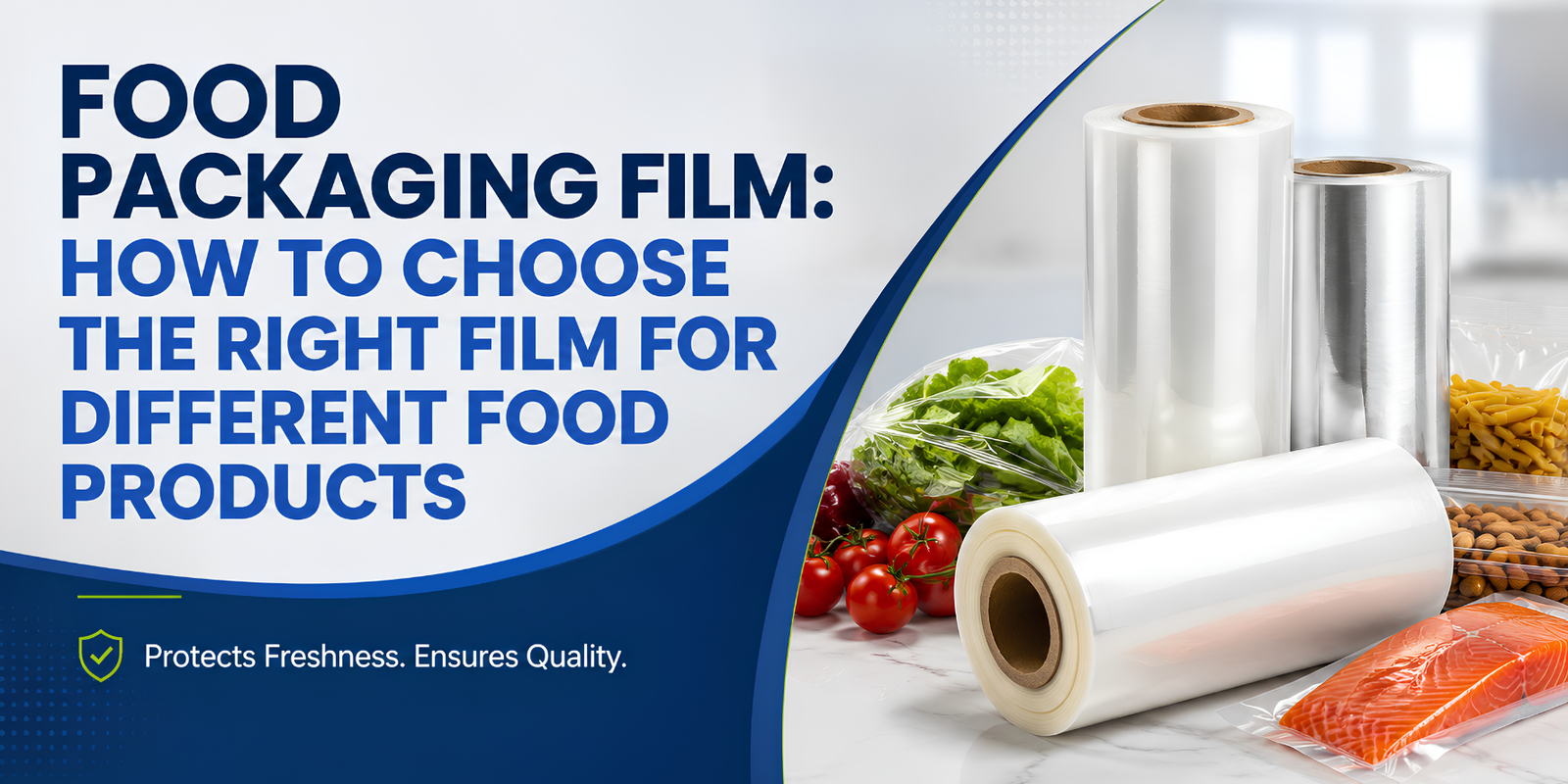
Food packaging film plays a critical role in protecting food products throughout processing, storage, transportation, and distribution. The right packaging film does much more than simply cover a product. It helps protect food from moisture, oxygen, contamination, light, handling damage, and other external factors that can affect product quality and shelf life. For food manufacturers and packaging companies, selecting the appropriate food packaging film therefore requires a clear understanding of the product being packaged, the required level of protection, the packaging process, and the conditions the finished package will experience during storage and transportation.
Different food products have very different packaging requirements. A film that works well for dry food products may not provide the barrier, sealing performance, or mechanical strength required for fresh food, dairy products, frozen products, snacks, or liquid foods. Packaging decisions must therefore be based on the characteristics of the food as well as the packaging equipment and final application. Choosing the right film structure can improve packaging performance, reduce product losses, support longer shelf life, and create a more reliable packaging process for manufacturers.
What Is Food Packaging Film?
Food packaging film is a flexible plastic film or multilayer film structure used to package and protect food products. Depending on the application, these films can be supplied in rolls for automated packaging equipment or converted into bags, pouches, and other flexible packaging formats. Food packaging films can be engineered with different combinations of flexibility, strength, transparency, sealability, moisture resistance, and barrier properties to meet the requirements of specific food products.
In industrial food packaging, the film is selected according to the conditions the product will face from the moment it is packed until it reaches the customer. A product that contains moisture, oil, oxygen-sensitive ingredients, or volatile aromas may require a different packaging structure from a dry product with a long storage period. The packaging film must also work effectively with the manufacturer’s filling and sealing equipment. Consistent film thickness, reliable sealing characteristics, appropriate mechanical strength, and compatibility with the packaging process are all important factors when selecting a packaging material.
For this reason, food packaging film should not be treated as a one-size-fits-all material. The most suitable solution depends on the food product, filling process, storage environment, transportation conditions, and required shelf life.
Why Choosing the Right Food Packaging Film Matters
The primary purpose of food packaging is to maintain product quality while protecting the contents from external influences. During transportation and storage, packaged food can be exposed to humidity, temperature changes, oxygen, light, mechanical stress, and repeated handling. If the packaging material does not provide adequate protection, the product may lose quality before it reaches the end customer.
A properly selected packaging film can help create a more effective barrier between the food and its surrounding environment. Moisture-sensitive products, for example, may require strong moisture resistance, while products that are sensitive to oxidation may need a packaging structure with appropriate oxygen-barrier performance. Products containing oils or fats can also require materials that maintain their integrity when exposed to the contents over an extended period.
Packaging performance also affects production efficiency. A film with consistent characteristics can support stable forming, filling, and sealing operations, helping manufacturers maintain reliable production speeds and reduce packaging defects. In high-volume food production, even small improvements in film performance can have a significant effect on operational efficiency and material consumption.
Different Food Products Require Different Packaging Films
The correct film structure depends heavily on the type of food being packaged. Fresh food, frozen food, dairy products, dry foods, snacks, and liquid products each create different packaging challenges. Understanding these differences is essential when choosing packaging film for commercial food production.
Packaging Film for Fresh Food
Fresh food products often contain significant amounts of moisture and may be sensitive to oxygen and contamination. Packaging must therefore provide suitable protection while maintaining the appearance and quality of the product. Fresh vegetables, prepared foods, meat products, and other perishable foods may require films with appropriate moisture resistance, sealing performance, and barrier characteristics.
For these applications, manufacturers should consider how the packaging interacts with the product during storage. The film must maintain package integrity while providing the required protection against the external environment. Depending on the product and packaging format, the film structure may also need to support modified-atmosphere or other specialized packaging processes.
Packaging Film for Dairy Products
Dairy products such as milk and other liquid or semi-liquid foods require packaging materials that can provide reliable seals and maintain package integrity throughout handling and transportation. Liquid products place additional demands on the packaging because even a small sealing defect can result in leakage and product loss.
The selected film must therefore be compatible with the filling and sealing equipment while providing sufficient mechanical strength for transportation and distribution. For high-volume dairy applications, consistent film performance is particularly important because packaging lines operate continuously and require stable material characteristics.
Packaging Film for Frozen Foods
Frozen food packaging must withstand demanding storage and transportation conditions. Low temperatures can affect the behavior of packaging materials, while frozen products may also have sharp edges or irregular shapes that create additional mechanical stress.
A suitable film should maintain its integrity at the expected storage temperature and provide sufficient resistance to puncture and tearing. Reliable sealing is equally important because damaged or poorly sealed packaging can allow moisture and air to enter the package, potentially affecting the product during frozen storage.
Packaging Film for Dry Foods
Dry food products such as grains, powders, flour, cereals, and other shelf-stable products generally require strong protection against moisture and contamination. Moisture entering the package can affect texture, quality, and shelf life, making moisture resistance an important consideration.
Depending on the product and expected storage period, manufacturers may also require protection against oxygen, aromas, or other environmental factors. Film selection should therefore consider both the product’s sensitivity and the expected distribution conditions. For products that require higher barrier performance, multilayer or laminated structures can provide additional functionality by combining different material properties within a single packaging structure.
Packaging Film for Snacks and Processed Foods
Snacks and processed foods often require packaging that protects against moisture and oxygen while maintaining an attractive appearance. Products such as chips, biscuits, confectionery, and other processed foods can lose their desired texture when exposed to moisture or oxygen over time.
In these applications, the film structure can have a direct influence on shelf-life performance. Packaging manufacturers may use multilayer structures to combine barrier properties, mechanical strength, sealability, and printability. The final structure should be selected according to the product’s sensitivity and the requirements of the packaging machine.
Packaging Film for Liquid Foods
Liquid foods create particular demands because the packaging must prevent leakage and withstand handling throughout distribution. Milk, sauces, beverages, and other liquid or semi-liquid products require consistent sealing and sufficient film strength.
The packaging film must also be compatible with the filling process. High-speed filling lines require materials that can be processed consistently without creating unnecessary downtime or sealing problems. For manufacturers handling large production volumes, selecting a film specifically suited to the packaging equipment can be just as important as selecting the film based on the food product itself.
The Importance of Film Structure in Food Packaging
One of the most important considerations when selecting food packaging film is the structure of the film itself. Different polymers and layers can provide different functions, and combining materials can create a packaging structure that offers a balance of properties that a single material may not provide on its own.
For example, one layer may contribute to mechanical strength, another may provide improved barrier protection, while another layer may provide reliable heat sealing. This approach allows packaging manufacturers to develop film structures that are specifically suited to the requirements of the packaged food.
For applications requiring laminated structures, laminated film for food packaging can provide a combination of properties designed around the packaging application. Lamination can be used to combine different film materials and create a structure with the required balance of protection, strength, appearance, and processing performance.
The appropriate structure should always be determined by the specific application rather than by selecting the thickest or most complex material available. Over-specifying a film can increase material costs without providing meaningful additional benefits, while under-specifying the material can result in packaging failures or inadequate product protection.
Key Factors to Consider When Choosing Food Packaging Film
Film selection should begin with the characteristics of the food itself. The moisture content, fat or oil content, sensitivity to oxygen, aroma requirements, physical shape, and expected shelf life can all influence the packaging specification. Products that are particularly sensitive to humidity or oxidation may require stronger barrier performance than products that are naturally more stable.
The packaging process is another major consideration. A film may perform well as a material but still be unsuitable for a particular packaging machine if its sealing behavior, coefficient of friction, thickness, stiffness, or processing characteristics are not compatible with the equipment. Manufacturers should therefore evaluate the film together with their actual packaging process rather than selecting material based only on general specifications.
Mechanical performance is also important. During filling, sealing, transportation, palletization, and handling, packaging can experience tension, compression, impact, and abrasion. The film must have sufficient strength to maintain package integrity under these conditions. For products with irregular or sharp shapes, puncture and tear resistance may become particularly important.
Transparency and appearance can also influence film selection. Some food brands require high clarity so that consumers can see the product inside the package, while other applications may prioritize printing performance or a specific surface appearance. For branded food products, the packaging material must provide both functional protection and a suitable surface for graphics and product information.
Roll Film or Finished Pouch?
Food packaging film can be supplied in roll form for manufacturers that operate automated packaging equipment, while other applications use preformed bags or pouches. Roll film can provide flexibility for high-volume packaging operations because the packaging manufacturer can form, fill, and seal the package as part of an automated process.
The appropriate format depends on the packaging machinery, production volume, product characteristics, and desired package design. Manufacturers should consider not only the film material but also how the material will be converted into the final package. Film dimensions, thickness, sealing characteristics, and roll specifications need to be compatible with the packaging equipment to achieve consistent production.
For businesses purchasing packaging materials in large quantities, working with a film supplier that understands both material performance and industrial processing requirements can help reduce compatibility issues and improve production reliability.
How to Select a Food Packaging Film Supplier
Choosing the right supplier is an important part of food packaging development. A supplier should be able to provide consistent material quality and understand the technical requirements of the intended application. Consistency is particularly important for manufacturers operating automated packaging lines, where variations in film properties can affect sealing, feeding, forming, and overall production efficiency.
The supplier should also be able to discuss the application rather than simply offering a standard film specification. Important factors include the type of food being packaged, packaging equipment, required film dimensions, thickness, sealing method, storage conditions, expected shelf life, and distribution environment. These details help determine whether a particular film structure is appropriate for the application.
For B2B buyers, production capability, customization options, quality control, technical support, and supply reliability should also be considered. A packaging film that performs well in testing but cannot be supplied consistently at the required specifications may not be a practical long-term solution.
Improving Packaging Performance Through the Right Film Selection
Selecting the right food packaging film can have an impact well beyond basic product protection. A suitable film can contribute to reliable sealing, efficient packaging-machine operation, improved product presentation, reduced packaging failures, and more consistent production.
The goal should be to find the right balance between protection, performance, material efficiency, and cost. Using more material does not automatically mean better packaging. Instead, the film structure should be engineered around the actual requirements of the product and the packaging process.
For food manufacturers and packaging buyers, this makes technical evaluation an important part of procurement. Understanding the required barrier properties, mechanical performance, sealing behavior, and processing requirements can help businesses select a film that performs consistently from production through distribution.
Conclusion
Choosing the right food packaging film requires more than selecting a plastic film based on thickness or appearance. Different food products have different requirements for moisture protection, oxygen resistance, mechanical strength, sealing performance, transparency, and shelf-life protection. Fresh foods, dairy products, frozen foods, dry foods, snacks, and liquid products can therefore require very different film structures and packaging solutions.
For B2B food manufacturers, the most effective approach is to evaluate the product, packaging process, equipment, storage conditions, transportation requirements, and desired shelf life before selecting the material. The right film structure can help protect product quality while supporting efficient and reliable packaging operations.
Tilak Polypack provides flexible packaging film solutions for a range of industrial applications, helping businesses select packaging materials according to their specific product and processing requirements. By matching film structure and performance to the actual application, food manufacturers can develop packaging that provides the protection, reliability, and efficiency required for modern food distribution.