
Introduction
Packaging is often the first physical interaction customers have with a product. Whether an item is displayed on a retail shelf or delivered through an ecommerce network, the packaging must protect the contents while maintaining a professional appearance. This is why clear packing bags continue to be one of the most widely used packaging solutions across industries.
For procurement managers, warehouse operators, and packaging professionals, the challenge is balancing product protection, operational efficiency, and cost. Selecting the wrong bag thickness or sealing option can lead to damaged products, slower fulfillment, or unnecessary packaging expenses.
This guide explains how clear polythene packing bags support modern retail and ecommerce operations, what technical factors buyers should evaluate, and how to select the right solution for different applications.
Why Clear Polythene Packing Bags Are Widely Used
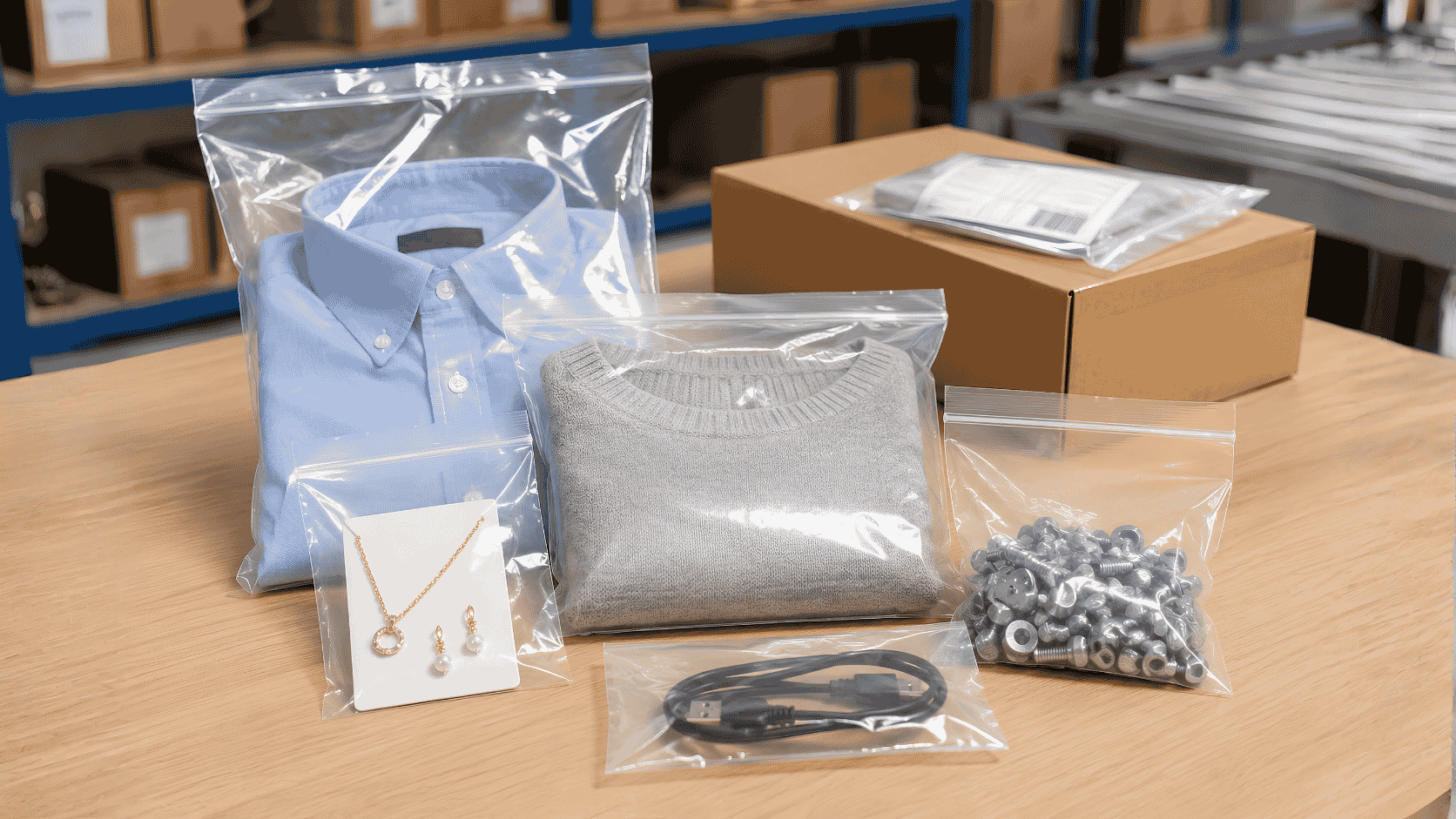
Clear polythene bags have become an industry standard because they combine visibility, lightweight construction, and reliable protection. Unlike opaque packaging, transparent bags allow products to be identified instantly without opening the package.
This simple advantage significantly improves efficiency throughout the supply chain. Warehouse personnel can verify contents faster, retailers can display products attractively, and customers receive items that are easy to inspect upon delivery.
The combination of affordability and versatility makes these bags suitable for:
- Apparel packaging
- Fashion accessories
- Jewelry
- Stationery
- Food products (using appropriate food-grade materials)
- Industrial spare parts
- Promotional items
- Electronic components with specialized additives
For businesses shipping thousands of units daily, even small improvements in packaging efficiency can reduce handling time and operational costs.
Why Material Quality Matters
Not all plastic packaging performs the same way. The quality of the resin directly affects durability, flexibility, and sealing performance.
Many industrial-grade clear packaging bags are manufactured using Low-Density Polyethylene (LDPE). LDPE offers several advantages:
- Excellent flexibility
- Good moisture resistance
- High clarity
- Tear resistance
- Lightweight construction
- Reliable sealing characteristics
Because LDPE remains flexible rather than brittle, it performs well in storage, transportation, and handling environments where packages experience repeated movement.
For food-related applications, buyers should also verify compliance with applicable food-contact standards and regulatory requirements.
Retail Packaging Requires More Than Attractive Presentation
Retail packaging serves both functional and marketing purposes. Products must remain clean while still being visible to shoppers.
Clear packaging supports merchandising by allowing customers to inspect:
- Product color
- Design
- Texture
- Size
- Overall quality
This reduces uncertainty and can improve purchasing confidence.
For clothing retailers, transparent packaging keeps garments protected from dust and moisture during transportation while allowing store staff to identify inventory quickly without repeatedly opening packages.
Similarly, gift shops and accessory brands often prefer transparent bags because the product itself becomes the primary visual element instead of the packaging.
How Clear Polythene Packing Bags Support Ecommerce Operations
Ecommerce introduces packaging challenges that differ significantly from retail display.
Products travel through:
- Picking stations
- Sorting centers
- Conveyor systems
- Delivery vehicles
- Customer handling
Every stage increases the risk of contamination or damage.
Using appropriate ecommerce bags helps protect products while maintaining low shipping weight. Since shipping costs often depend on dimensional weight and package mass, lightweight packaging can contribute to better logistics efficiency.
For fulfillment centers processing large order volumes, standardized bag sizes also simplify inventory management and packing workflows.
Choosing the Right Clear Polythene Packing Bags
Selecting packaging should begin with understanding the product rather than simply choosing the lowest-cost option.
Product Dimensions
An oversized bag may allow excessive movement, increasing the risk of wrinkles or damage. A bag that is too small may place stress on seams and seals.
Measure:
- Length
- Width
- Height
- Product flexibility
before determining bag dimensions.
Thickness Selection
Thickness influences durability and appearance.
Lighter bags may be suitable for lightweight products, while heavier industrial items require thicker materials to resist punctures and tearing.
Procurement teams should balance:
- Protection requirements
- Material cost
- Shipping weight
- Storage efficiency
instead of assuming thicker is always better.
Seal Type
Different operations require different closure systems.
Common options include:
- Adhesive seals
- Resealable closures
- Zip-lock mechanisms
- Heat sealing
- Perforated tear strips
High-volume ecommerce businesses often prefer adhesive closures because they simplify packing operations and reduce processing time.
Meanwhile, resealable options are useful when products may need repeated access during storage or distribution.
Understanding Slip Characteristics
An often-overlooked specification is the slip property of packaging film.
Low Slip
Low slip bags provide better grip during manual handling. This makes them useful in operations where workers pack products individually.
High Slip
High slip bags slide more easily through automated machinery and conveyor systems, improving processing efficiency in large-scale packaging environments.
The correct choice depends on whether packaging operations are primarily manual or automated.
Special Features for Industrial Applications
Modern packaging requirements often extend beyond basic storage.
Manufacturers can incorporate specialized additives depending on the application.
Anti-Static Properties
Electronic components are vulnerable to electrostatic discharge. Anti-static bags help reduce this risk during handling and transportation.
UV Protection
Products stored for extended periods or transported under sunlight may benefit from UV inhibitors that help reduce material degradation.
Freezer Compatibility
Certain formulations incorporate additives such as Ethyl Vinyl Acetate (EVA), improving flexibility under low-temperature conditions for freezer applications.
Common Applications Across Industries
One reason clear polythene packing bags remain popular is their adaptability across sectors.
Apparel Industry
Garments remain protected from dust and moisture while staying visible for inventory identification.
Jewelry and Accessories
Small products require packaging that offers cleanliness without hiding design details.
Food Packaging
When manufactured using appropriate food-grade materials, clear bags provide hygienic storage while allowing product visibility.
Industrial Components
Small spare parts, fasteners, and maintenance kits are easier to organize and identify using transparent packaging.
Warehousing and Distribution
Warehouse teams benefit from faster stock verification because contents are immediately visible without opening each package.
This reduces handling time and improves inventory accuracy.
Advantages of Clear Polythene Packing Bags
From an industrial perspective, these packaging solutions offer multiple operational benefits.
They are lightweight, reducing shipping costs compared to heavier alternatives. Their transparency simplifies inventory management and retail presentation. Moisture resistance helps protect products during storage and transit, while flexible manufacturing options allow businesses to specify different sizes, thicknesses, and closure systems.
For procurement managers, standardization across product lines can simplify purchasing and warehouse management.
Practical Limitations to Consider
No packaging solution is ideal for every application.
Clear polythene bags may not provide sufficient protection for fragile products requiring structural support. Sharp-edged items may require thicker materials or secondary packaging to prevent punctures.
Similarly, products requiring barrier protection against oxygen or specialized environmental conditions may need multilayer packaging solutions rather than standard polyethylene bags.
Evaluating the complete supply chain is therefore essential before finalizing specifications.
Conclusion
Selecting the right packaging is about much more than simply containing a product. It directly influences warehouse efficiency, transportation performance, product presentation, and customer satisfaction.
For businesses managing retail distribution or ecommerce fulfillment, clear polythene packing bags offer a practical combination of visibility, durability, and cost-effectiveness. The best results come from choosing the correct material quality, dimensions, thickness, and sealing method based on the specific application rather than adopting a one-size-fits-all approach.
When evaluating suppliers, buyers should prioritize consistent manufacturing quality, technical expertise, and customization capabilities to ensure packaging performs reliably across the entire supply chain.