
Introduction
Logistics operations are under increasing pressure to improve efficiency while reducing packaging waste and environmental impact. Manufacturers, exporters, warehouse operators, and procurement teams are therefore looking for packaging solutions that can provide reliable product protection while supporting sustainability goals.
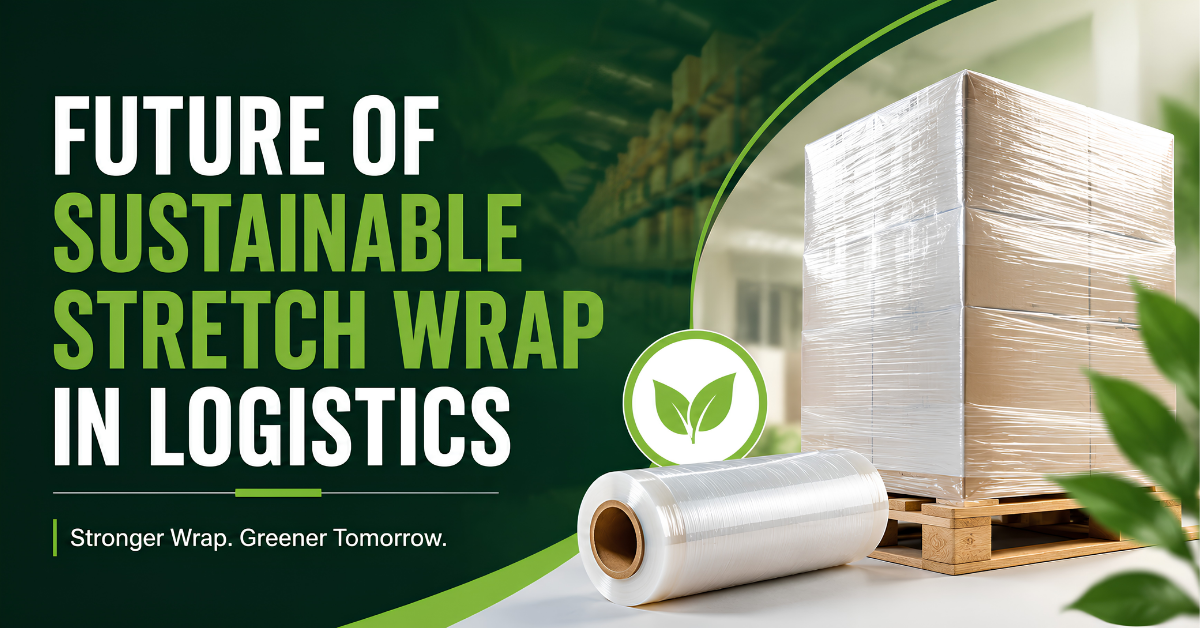
One solution receiving growing attention is sustainable stretch wrap, particularly biodegradable stretch wrap designed for pallet stabilization and logistics applications. Stretch film remains an essential packaging material for securing palletized goods during storage, handling, and transportation. From FMCG products and pharmaceutical shipments to industrial equipment and export cargo, stretch wrap helps prevent load movement, reduce contamination, and protect goods from dust, dirt, and environmental exposure.
However, the environmental impact of conventional plastic packaging has encouraged businesses to explore alternatives. As companies strengthen sustainability targets and customers increasingly expect responsible packaging practices, eco-friendly stretch film and other sustainable packaging solutions are becoming more relevant across modern supply chains.
Understanding the role of sustainable stretch wrap in logistics can help businesses evaluate new packaging options without compromising load stability, operational efficiency, or product protection.
Why Sustainability Matters in Logistics Packaging
Packaging decisions are no longer based only on product protection, material cost, and transportation efficiency. Sustainability is increasingly influencing procurement policies, customer requirements, regulatory expectations, and corporate environmental strategies.
Logistics operations can generate substantial quantities of packaging waste. Warehouses and distribution centers may wrap thousands of pallets over time, meaning that even small improvements in material efficiency can produce meaningful reductions in packaging consumption.
Large manufacturers and international businesses are also asking suppliers and logistics partners to demonstrate responsible packaging practices as part of broader environmental, social, and governance initiatives.
Export-oriented companies face additional pressure because packaging requirements and sustainability expectations can vary across international markets. Businesses are increasingly looking for sustainable packaging materials that support responsible waste management while continuing to provide the performance required for transportation and storage.
This shift is encouraging stretch film manufacturers to develop materials that combine strength, stretchability, load containment, and improved environmental characteristics.
How Biodegradable Stretch Wrap Works
Biodegradable stretch wrap is designed to perform the primary functions of conventional stretch film while incorporating material technologies intended to support degradation under specified environmental conditions.
The objective is not simply to create a film that breaks down quickly. For logistics applications, the material must remain stable throughout its intended service life. Pallet loads may remain in warehouses for weeks or months, so the film needs to maintain sufficient holding force, elasticity, puncture resistance, and protective performance during storage and transportation.
Biodegradable stretch film can be produced in different widths, thicknesses, and configurations for manual and machine wrapping applications. This allows businesses to evaluate sustainable alternatives while continuing to use established pallet wrapping processes.
Before adopting any biodegradable film, however, companies should understand the specific degradation conditions, performance specifications, disposal requirements, and application suitability of the product. Not every biodegradable film performs identically, and the right material depends on the operating environment.
Key Drivers Behind the Shift Toward Sustainable Stretch Wrap
Several factors are accelerating interest in sustainable stretch wrap across logistics and supply chain operations.
Changing Environmental Expectations
Environmental regulations and packaging policies continue to evolve in many markets. Businesses are therefore paying greater attention to the complete lifecycle of packaging materials and looking for ways to reduce waste and improve resource efficiency.
Corporate Sustainability Goals
Manufacturers and large enterprises increasingly include packaging within their broader sustainability programs. Reducing packaging waste, improving material efficiency, and selecting more responsible packaging materials can contribute to these objectives.
Customer and Buyer Requirements
Retailers, distributors, exporters, and end customers are becoming more conscious of packaging choices. Suppliers that can demonstrate measurable improvements in packaging sustainability may be better positioned when responding to customer requirements and procurement standards.
Waste Management Costs
Packaging disposal can create additional operational costs, particularly for businesses handling large pallet volumes. Improving material efficiency and adopting appropriate sustainable packaging solutions can form part of a broader strategy for managing packaging-related waste.
Together, these factors are changing how businesses evaluate packaging materials and encouraging greater interest in sustainable stretch film.
The Role of Biodegradable Stretch Wrap in Modern Supply Chains
Supply chains depend on reliable load stability to prevent product damage and maintain efficient transportation. Palletized goods can experience vibration, compression, handling impacts, and environmental exposure as they move from manufacturing facilities to warehouses, distribution centers, and final destinations.
Stretch wrap provides a protective layer around pallet loads, helping maintain load integrity throughout this process.
In manufacturing facilities, biodegradable stretch wrap can be used to secure finished products before shipment. In warehouses, it can help protect inventory from dust, dirt, and accidental contamination. During transportation, properly applied stretch film helps maintain pallet stability and reduce the risk of shifting loads.
Distribution centers can also benefit from reliable load containment. Stable pallets can reduce product damage, improve handling efficiency, and support safer warehouse operations.
For export shipments, stretch film can provide an additional protective barrier against environmental exposure during long-distance transportation and temporary storage.
As businesses place greater emphasis on supply chain sustainability, sustainable stretch wrap is likely to become a more important consideration in packaging strategies across multiple industries.
Applications of Sustainable Stretch Wrap Across Industries
The requirements for stretch film can vary significantly by industry, but the fundamental purpose remains the same: secure products effectively while providing appropriate protection during storage and transportation.
FMCG and Consumer Goods
FMCG manufacturers often handle large volumes of palletized cartons and packaged products. Stretch wrap helps maintain load stability during fast-moving distribution cycles while protecting products from dust, dirt, and handling damage.
Pharmaceutical Logistics
Pharmaceutical supply chains require careful handling, cleanliness, traceability, and product protection. Secure pallet wrapping can help reduce exposure to contamination and maintain load stability during movement between manufacturing plants, warehouses, and distribution centers.
Textile and Export Industries
Textile exporters may transport palletized goods through multiple handling stages and international destinations. Sustainable wrapping solutions can help secure these loads while supporting environmental commitments increasingly valued by international buyers.
Chemical and Industrial Products
Chemical manufacturers and industrial suppliers often handle heavy drums, containers, and irregularly shaped loads. Strong stretch film is essential for maintaining stability during transportation and storage, making film performance a key purchasing consideration.
E-Commerce Fulfillment
E-commerce fulfillment centers process high volumes of products and require efficient packaging operations. As online retail continues to expand, demand for packaging materials that combine operational performance with sustainability is expected to increase.
Performance Requirements for Future Logistics Packaging
Sustainability alone is not enough to justify a packaging material in industrial applications. Stretch film must provide reliable performance under real operating conditions.
Load Stability
Load stability is one of the most important performance requirements. Stretch film must provide sufficient holding force to keep palletized products secure during wrapping, handling, storage, and transportation.
Poor load containment can result in product damage, additional handling costs, transportation losses, and workplace safety concerns.
Puncture Resistance
Puncture resistance is particularly important when wrapping products with sharp edges, irregular shapes, or heavy components. A suitable film should withstand mechanical stress without tearing during wrapping and subsequent handling.
Protection Against Environmental Exposure
Stretch wrap can help protect palletized products from dust, dirt, and moisture exposure. Warehouses storing goods for extended periods need packaging materials that can maintain their protective properties throughout the required storage duration.
Machine Compatibility
Large warehouses and distribution centers often use automated wrapping systems to improve throughput and consistency. Sustainable stretch film must perform reliably on these systems, including during high-speed wrapping operations, if it is to achieve widespread industrial adoption.
Benefits for Warehouses and Distribution Centers
Warehouses handling large pallet volumes need packaging solutions that support both operational efficiency and sustainability objectives.
Sustainable stretch wrap can potentially be integrated into existing pallet wrapping film applications without major changes to established workflows, depending on the film specification and wrapping equipment.
Reliable pallet stability can help reduce shifting loads, product damage, and unnecessary handling. Effective wrapping can also help protect stored inventory from dust and contamination.
For businesses with sustainability reporting requirements, the use of environmentally responsible packaging can also contribute to broader supply chain sustainability initiatives.
However, the actual benefits depend on selecting the correct film specification and applying it correctly. Material reduction, stretch performance, load containment, and wrapping practices should all be evaluated together rather than considering sustainability in isolation.
Cost and Long-Term Business Value
Initial material price is often one of the first factors considered when businesses evaluate sustainable packaging alternatives. However, the true cost of packaging extends beyond the price of an individual roll.
Product damage, packaging waste, labor requirements, equipment efficiency, disposal costs, and transportation performance can all influence the overall economics of a packaging system.
For this reason, businesses should evaluate sustainable stretch wrap based on its total operational value rather than unit cost alone.
Companies that adopt responsible packaging practices may also benefit from stronger customer relationships, improved procurement positioning, and better alignment with sustainability requirements in environmentally conscious markets.
As material technologies develop and production volumes increase, sustainable packaging materials may become increasingly cost-competitive, supporting wider adoption across industrial and logistics applications.
Challenges and Practical Considerations
Although interest in sustainable stretch wrap is increasing, businesses should carefully evaluate performance before making a large-scale transition.
Not all biodegradable or sustainable films have the same characteristics. Factors such as load weight, pallet dimensions, storage duration, transportation conditions, wrapping equipment, environmental exposure, and required holding force can all influence performance.
Conduct Application Testing
Pilot testing is an important step before introducing a new film across an entire operation. Businesses can evaluate load stability, film consumption, puncture resistance, wrapping efficiency, and performance under actual transportation and storage conditions.
Select the Correct Film Specification
Film thickness, width, stretch ratio, holding force, and puncture resistance should be selected according to the application. The correct specification can help balance product protection with material efficiency.
Train Operators
Manual wrapping quality can vary depending on operator technique. Appropriate training can help ensure consistent application and reduce unnecessary film consumption.
Work With Experienced Suppliers
A successful transition often requires collaboration between packaging suppliers, procurement teams, warehouse managers, and logistics professionals. Technical guidance can help businesses select the most suitable material and identify potential operational issues before full implementation.
Emerging Trends in Sustainable Stretch Wrap
The future of sustainable stretch wrap will be shaped by advances in material science, automation, packaging efficiency, and sustainability reporting.
Improved Film Performance
Manufacturers are continuing to explore formulations that provide greater strength and stretchability while using less material. Improvements in material efficiency could help reduce packaging consumption without compromising load containment.
Automation and High-Speed Wrapping
Automated pallet wrapping systems are becoming increasingly important in large logistics and distribution operations. Future sustainable films will need to deliver consistent performance at higher wrapping speeds while maintaining reliable load stability.
Smarter Packaging Operations
Digital technologies may increasingly be integrated into packaging and logistics systems to monitor loads, improve material usage, and provide greater supply chain visibility.
Greater Sustainability Reporting
Businesses are likely to face greater expectations to measure and communicate packaging-related environmental improvements. This could increase demand for verified sustainable packaging solutions supported by clear product information and performance data.
These trends indicate that sustainable stretch film will continue to evolve as businesses seek to combine operational reliability with responsible resource management.
How Businesses Can Prepare for the Transition
Businesses considering sustainable packaging should begin by reviewing their current pallet wrapping practices, material consumption, waste levels, equipment, and performance requirements.
A structured evaluation can help identify where sustainable alternatives may provide the greatest value.
1. Review Current Packaging Practices
Assess how much stretch film is currently used, how pallets are wrapped, what types of loads are handled, and where packaging waste occurs.
2. Define Performance Requirements
Identify the required load stability, puncture resistance, film thickness, stretch performance, storage duration, and environmental protection requirements.
3. Conduct Pilot Trials
Testing a sustainable stretch film on a limited number of pallets can help determine whether it performs effectively under actual operating conditions before a wider rollout.
4. Measure Results
Compare material consumption, product damage, wrapping efficiency, equipment performance, and waste generation before and after implementation.
5. Plan for Long-Term Adoption
If the material meets operational requirements, businesses can gradually expand its use while continuing to monitor performance and sustainability outcomes.
This structured approach allows organizations to pursue more sustainable packaging without sacrificing the reliability of their logistics operations.
Conclusion
The future of logistics packaging is increasingly shaped by sustainability, operational efficiency, and responsible resource management. Sustainable stretch wrap represents one potential solution for businesses seeking to reduce the environmental impact of packaging while maintaining reliable pallet protection.
Biodegradable stretch wrap and other sustainable stretch film technologies are gaining attention across manufacturing, warehousing, export, pharmaceutical, FMCG, industrial, and e-commerce operations. However, successful adoption depends on more than environmental claims. Businesses must also consider load stability, puncture resistance, machine compatibility, material efficiency, storage conditions, and total operating costs.
As customer expectations, sustainability requirements, and packaging technologies continue to evolve, businesses that evaluate sustainable packaging options early can be better prepared for future supply chain demands.
For organizations looking for reliable packaging film for logistics, selecting the right pallet stretch wrap can be an important step toward improving load protection while supporting broader sustainability objectives.
Tilak Polypack can help businesses evaluate suitable stretch film solutions based on their application, wrapping process, and logistics requirements.