
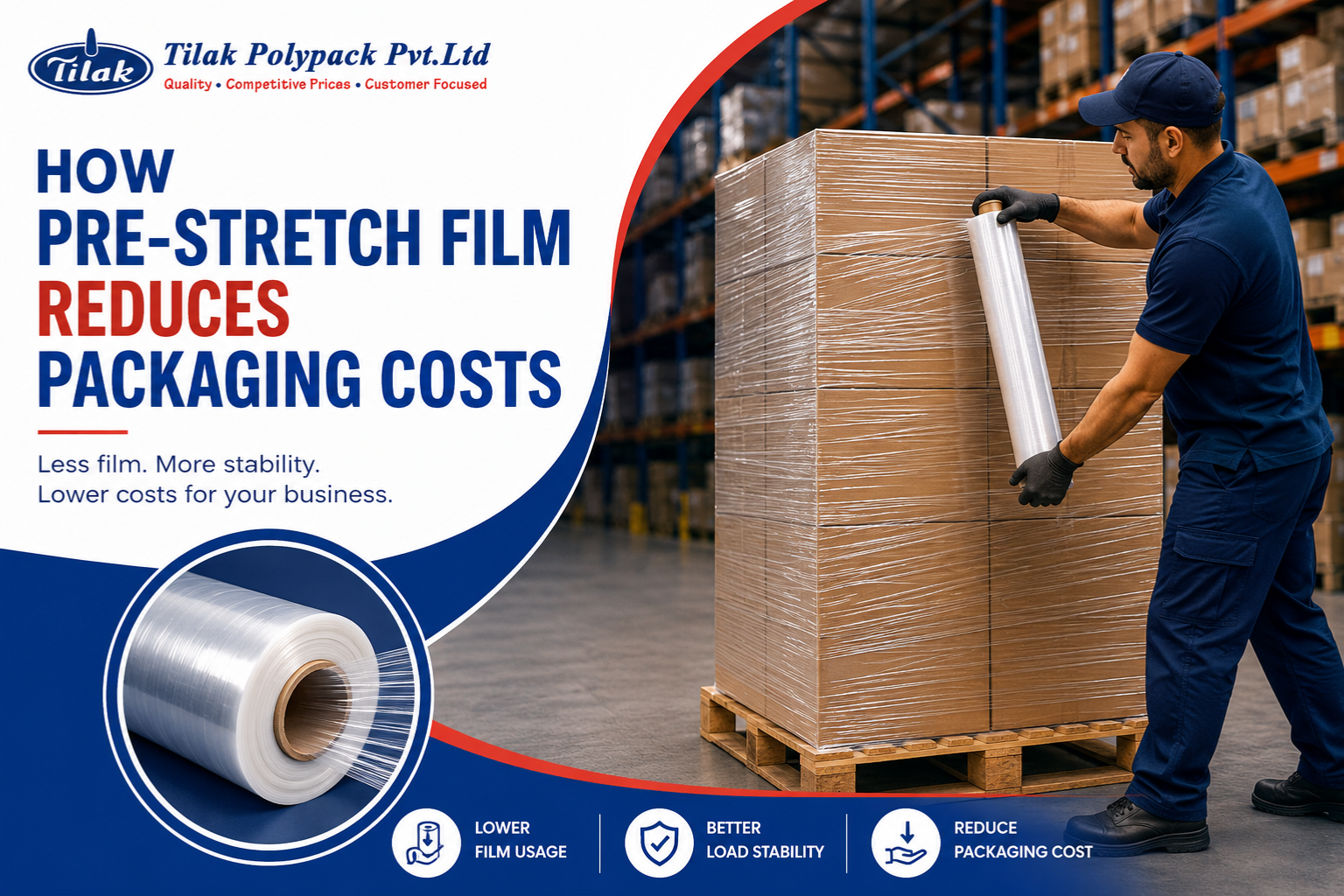
For many warehouses and manufacturing facilities, packaging material costs continue to rise even when production volumes remain stable. In most cases, the problem is not only the price of packaging materials but also how efficiently they are being used. Excess film usage, inconsistent wrapping practices, worker fatigue, and unstable pallet loads all contribute to avoidable operational expenses.
This is where pre stretch film has become an increasingly practical solution for industrial packaging operations. Unlike conventional stretch wrapping materials, pre-stretched film is engineered to provide high load stability with significantly less film consumption. The result is better packaging efficiency, lower material waste, and improved wrapping consistency across warehouse operations.
Companies focused on packaging optimization are now adopting pre-stretch technology to reduce operational costs without compromising pallet security during storage or transportation. From logistics centers to export packaging lines, pre-stretch film offers measurable stretch wrap savings while improving handling efficiency for workers and machines alike.
What Is Pre Stretch Film?
Pre stretch film is a type of stretch wrapping material that has already been mechanically stretched during the manufacturing process before it reaches the end user. Because the film has already been elongated, it requires far less force during pallet wrapping compared to standard stretch film.
The structure of pre-stretched film is typically multi-layered, allowing it to maintain strength even at thinner gauges. This combination of reduced thickness and high holding force makes it suitable for industrial load containment applications where efficiency and consistency are important.
Unlike conventional stretch film, which depends heavily on operator technique and wrapping tension, pre-stretch film delivers more uniform performance. This reduces the risk of excessive film application and uneven load containment.
In practical warehouse conditions, this means operators can wrap pallets faster with less physical effort while still maintaining reliable pallet stability during transportation.
How Pre-Stretch Technology Works
To understand the cost benefits, it helps to understand how pre-stretch technology functions.
Traditional stretch film stretches during application. Operators or wrapping machines apply force to elongate the film around a pallet load. If the film is overstretched or inconsistently applied, it can create weak spots, film breaks, or unstable loads.
Pre-stretch film works differently. The film has already been stretched close to its usable limit during production. As a result:
- The operator applies less force
- The film dispenses more easily
- Load tension remains more consistent
- Less material is required per pallet
Because the film is thinner yet engineered for strength, companies can achieve substantial packaging optimization without sacrificing load security.
For warehouses running high-volume pallet movement operations, even small reductions in film usage per pallet can create significant yearly savings.
Why Traditional Stretch Wrapping Increases Packaging Costs
Many businesses continue using standard stretch wrap without evaluating the hidden operational costs attached to it.
The most common issue is overwrapping. Operators often apply more film than necessary because traditional film requires manual stretching and tension control. This leads to excessive film consumption and inconsistent packaging quality.
Additional cost drivers include:
Labor Inefficiency
Conventional stretch film typically requires more effort to apply. Workers handling pallets manually may experience fatigue during long shifts, especially in facilities with continuous dispatch operations.
Frequent Film Breakage
Improper tension settings or inconsistent stretching can cause film tearing. Every film break interrupts workflow and increases material waste.
Unstable Loads During Transport
Poorly wrapped pallets may shift during storage or transportation. Damaged goods, collapsed pallets, and returned shipments create both direct and indirect costs.
Increased Waste Disposal
Using excess film also increases plastic waste generation. For companies managing sustainability targets or waste disposal expenses, this becomes a growing concern.
These operational inefficiencies are exactly why many industrial buyers are evaluating pre-stretch alternatives.
How Pre Stretch Film Reduces Packaging Costs
Lower Film Consumption
One of the biggest advantages of pre-stretch film is reduced material usage.
Because the film is already stretched during manufacturing, users require significantly less film to secure the same load. Many facilities observe noticeable reductions in film consumption after switching from conventional stretch wrap systems.
Thinner film combined with higher holding force improves coverage efficiency per roll. This allows more pallets to be wrapped using the same roll weight.
For procurement managers, this directly improves packaging cost control without requiring major equipment investments.
Reduced Labor Fatigue
Manual wrapping operations place physical strain on workers, especially when standard stretch film requires heavy pulling force.
Pre-stretch film is lighter and easier to apply. Operators experience less resistance during wrapping, which reduces fatigue and improves productivity during repetitive packaging tasks.
In practical warehouse environments, this often leads to:
- Faster wrapping cycles
- Reduced operator strain
- More consistent wrapping quality
- Lower risk of repetitive motion discomfort
This is particularly valuable in facilities using hand-applied stretch wrapping systems.
Faster Wrapping Operations
Efficiency matters in high-throughput logistics operations.
Pre-stretch film dispenses smoothly with minimal tension adjustment. Workers spend less time repositioning film rolls or correcting wrapping inconsistencies.
For distribution centers handling continuous pallet movement, faster wrapping directly supports improved dispatch efficiency.
Machine wrapping systems also benefit because consistent film behavior reduces interruptions caused by tearing or tension inconsistency.
Improved Load Stability
Reducing packaging costs should never compromise pallet security.
Pre-stretch film maintains strong load retention despite reduced thickness. Reinforced film structure helps stabilize cartons, bags, drums, and irregular pallet loads during transportation.
This becomes especially important for:
- Export shipments
- Long-distance transportation
- High stacking warehouses
- Mixed SKU pallet loads
Stable pallets reduce product damage claims and improve supply chain reliability.
Lower Transportation Damage
Transportation damage is often underestimated as a packaging expense.
When pallet loads shift during transit, products may become crushed, scratched, or unstable. Even minor movement can damage packaging integrity during long-distance shipping.
Because pre-stretch film provides more consistent holding force, it helps minimize movement during handling and transportation.
This improves both product protection and customer satisfaction while reducing replacement and return costs.
Reduced Waste Disposal Costs
Sustainability is becoming a purchasing factor across industrial supply chains.
Since pre-stretch film uses less material overall, facilities generate less packaging waste. Reduced plastic consumption lowers disposal volume and supports environmental packaging initiatives.
For businesses managing recycling programs or waste handling expenses, this contributes additional operational savings beyond direct film costs.
Packaging Optimization in Warehousing and Manufacturing
Packaging optimization is no longer limited to reducing packaging material prices. Modern industrial operations focus on improving the entire packaging process.
Pre stretch film supports packaging optimization by improving:
- Material efficiency
- Worker productivity
- Load containment consistency
- Warehouse throughput
- Storage management
- Transportation reliability
In automated and semi-automated facilities, consistent film performance also improves machine efficiency and reduces downtime caused by film failures.
Warehouses handling export pallets, FMCG products, industrial components, chemicals, agricultural materials, or flexible packaging products often benefit from the operational consistency pre-stretch systems provide.
Industries That Benefit Most from Pre Stretch Film
Pre-stretch film is widely used across industries where pallet stability and packaging efficiency directly impact logistics costs.
Manufacturing Facilities
Manufacturers moving finished goods between production plants and warehouses benefit from lower packaging costs and improved load protection.
Logistics and Distribution Centers
Distribution operations handling large pallet volumes gain efficiency through faster wrapping and reduced roll replacement frequency.
FMCG and Retail Supply Chains
Consumer goods shipments often require stable palletization for high-speed transportation and storage systems.
Agricultural Packaging
Agricultural products and bulk packaged materials benefit from consistent load containment during long-distance transport.
Export Packaging Operations
Export shipments face multiple handling stages. Strong and stable pallet wrapping reduces movement and transit-related damage.
Pre Stretch Film vs Conventional Stretch Film
The difference between standard stretch film and pre-stretch film goes beyond thickness.
|
Feature |
Conventional Stretch Film |
Pre Stretch Film |
|
Film Stretching |
During application |
Pre-stretched during manufacturing |
|
Material Usage |
Higher |
Lower |
|
Operator Effort |
Higher |
Lower |
|
Wrapping Consistency |
Operator dependent |
More uniform |
|
Waste Generation |
Higher |
Reduced |
|
Load Stability |
Variable |
Consistent |
|
Packaging Efficiency |
Moderate |
Higher |
For businesses focused on stretch wrap savings and operational efficiency, pre-stretch film often delivers better long-term value despite differences in upfront pricing.
Choosing the Right Pre Stretch Film for Your Operations
Selecting the right film depends on operational requirements rather than simply choosing the lowest-cost option.
Industrial buyers should evaluate:
Load Type
Heavy industrial pallets require different holding force compared to lightweight retail cartons.
Wrapping Method
Some operations use hand wrapping, while others rely on machine wrapping systems.
Transportation Conditions
Export packaging and long-distance shipments may require stronger load containment.
Warehouse Environment
Cold storage, outdoor storage, and high-humidity environments may affect film performance requirements.
Working with experienced manufacturers helps ensure film specifications match operational needs instead of causing unnecessary material usage.
Common Mistakes That Reduce Stretch Wrap Savings
Some facilities fail to achieve expected savings because of improper implementation.
Common issues include:
- Using incorrect film thickness
- Applying too many wraps
- Poor pallet stacking practices
- Incorrect machine tension settings
- Choosing film based only on price
Packaging optimization works best when film selection, pallet configuration, and wrapping technique are evaluated together.
Facilities that review their overall packaging process usually achieve far better results than those focusing only on material substitution.
Why Industrial Buyers Are Moving Toward Pre-Stretched Solutions
Industrial packaging decisions are increasingly driven by operational efficiency rather than simply purchasing lower-cost materials.
Procurement teams now evaluate:
- Total packaging cost per pallet
- Material consumption rates
- Labor efficiency
- Sustainability targets
- Transportation performance
- Warehouse productivity
Pre stretch film aligns with these operational priorities because it improves multiple areas simultaneously.
As warehouses continue adopting lean packaging practices, pre-stretch technology is becoming a preferred solution for facilities seeking long-term packaging optimization.
Tilak Polypack manufactures high-quality <a href=”/pre-stretch-film/”>pre stretch film</a> solutions designed for industrial load containment applications. Using advanced European machinery, the company supplies durable and consistent packaging films suitable for hand and machine wrapping operations across domestic and international markets.
Conclusion
Reducing packaging costs is not only about buying cheaper materials. In industrial operations, true cost reduction comes from improving efficiency, minimizing waste, and maintaining reliable load protection throughout the supply chain.
Pre stretch film helps businesses achieve these goals by lowering film consumption, improving wrapping consistency, reducing worker fatigue, and enhancing pallet stability during transportation.
For warehouses, manufacturers, exporters, and logistics providers, adopting pre-stretch packaging systems can create measurable operational savings while supporting better packaging performance across daily operations.
Companies evaluating packaging optimization strategies should consider both immediate material savings and the long-term operational advantages that pre-stretch film provides.