
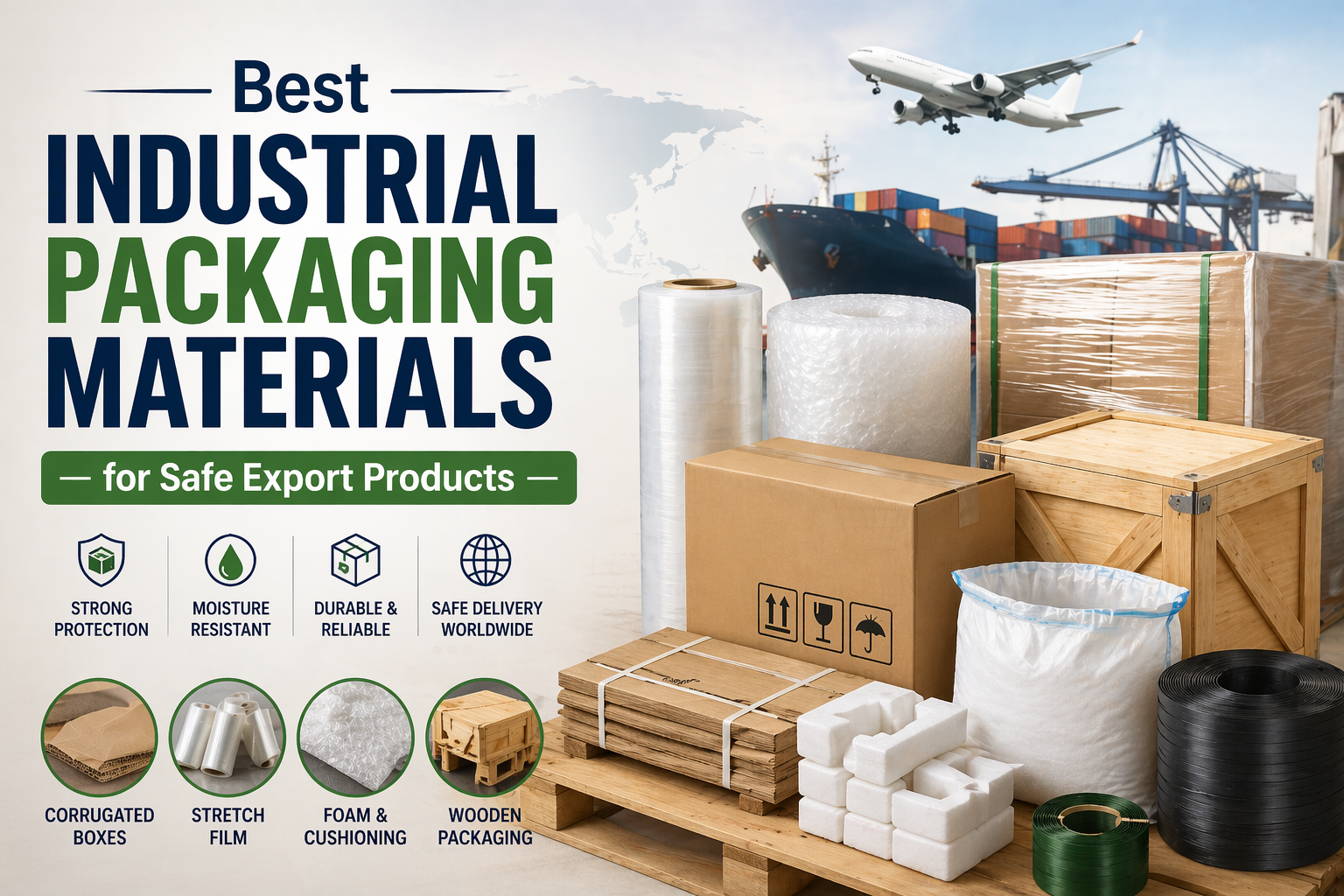
In industrial and export environments, packaging is not just a basic requirement – it is a critical factor that directly affects product safety, transportation efficiency, and customer satisfaction. Whether products are shipped domestically or internationally, they pass through multiple handling stages and are exposed to varying environmental conditions during transit.
Many businesses face challenges such as product damage, moisture exposure, and packaging failure during export. In most cases, these issues are caused by the use of unsuitable or low-quality materials. Choosing the right packaging solutions helps ensure that products reach their destination safely while maintaining quality and minimizing losses.
Using reliable materials and well-planned packaging systems allows businesses to maintain consistency, protect goods effectively, and build long-term trust with customers.
Why Packaging Material Matters in Export
Export shipments often travel long distances through sea, air, and road transport. During this journey, products are exposed to humidity, pressure, temperature changes, and repeated handling.
Proper packaging plays a key role in protecting goods from physical damage, preventing contamination, and maintaining product integrity. It also improves storage and handling efficiency, which is essential for smooth logistics operations.
Strong and dependable packaging ensures that products arrive in the same condition in which they were dispatched, which is crucial for maintaining brand reputation in competitive global markets.
Importance of Quality in Industrial Packaging Materials
Export packaging must handle heavy loads, stacking pressure, and environmental stress. Weak or inconsistent industrial packaging materials can lead to tearing, leakage, or structural failure, increasing the risk of product damage.
High-quality industrial packaging materials are designed to provide strength, durability, and resistance to external conditions. They help maintain packaging integrity throughout the supply chain. Investing in better industrial packaging materials reduces the chances of damage, improves operational efficiency, and ensures a more reliable delivery process.
Types of Industrial Packaging Materials for Export
Different products require different packaging approaches depending on their weight, shape, and sensitivity.
Plastic materials are widely used because of their flexibility and durability. Options such as LDPE and HDPE offer reliable protection and are commonly used for liners, covers, and wrapping applications. LDPE is more flexible and suitable for heavier or irregular items, while HDPE provides strength with a lighter structure for general use.
Stretch and shrink films are essential for securing goods during transportation. They stabilize pallet loads, protect against dust and moisture, and reduce movement during transit. These materials are commonly used in warehouse and export operations to maintain load stability.
Corrugated boxes remain one of the most widely used solutions for export packaging. They offer a balance of strength and lightweight structure while providing cushioning for a wide range of products. They are suitable for both industrial goods and consumer products.
Wooden packaging, including pallets and crates, is used for heavy-duty applications. These materials provide strong structural support and are ideal for transporting machinery, bulk goods, and large equipment across long distances.
Foam and cushioning materials are important for fragile products. They absorb shock and vibration, helping prevent damage during handling and transportation. These materials are commonly used for electronics and sensitive components.
Polyethylene liners and protective covers add an additional layer of safety by protecting products from moisture, dust, and contamination. They are widely used in industries that require controlled environments, such as food processing and chemicals.
Factors to Consider When Choosing Packaging Materials
Selecting the right packaging depends on several practical considerations. The type of product is one of the most important factors, as fragile items require cushioning while heavier goods need structural strength.
The method of transportation also influences packaging decisions. Sea shipments require better moisture protection, while air shipments often focus on reducing weight. Environmental conditions such as humidity and temperature changes must also be considered to ensure durability during transit.
Cost is another important factor, but it should be balanced with quality. Choosing the cheapest option may lead to higher losses over time, while investing in better materials often results in improved efficiency and reliability.
Role of Proper Packaging in Export Safety
Material selection alone is not enough to ensure safety. Proper packaging methods are equally important in maintaining product protection.
Secure sealing helps prevent leakage and exposure to external elements. Correct stacking reduces the risk of damage caused by pressure. Protective layers ensure that delicate items remain intact, while clear labeling improves handling and reduces errors during transportation.
Well-executed packaging processes contribute to smoother logistics and reduce the likelihood of damage throughout the supply chain.
Benefits of Using the Right Packaging Materials
Using suitable packaging materials reduces the chances of product damage during transit and helps maintain consistency in delivery quality. It also improves efficiency in storage, handling, and transportation, making operations more streamlined.
Over time, this leads to cost savings by reducing returns, replacements, and damage-related losses. Delivering products in good condition also enhances customer satisfaction and strengthens brand credibility.
Sustainability in Export Packaging
Sustainability is becoming an important consideration in modern packaging practices. Many businesses are adopting environmentally responsible materials and processes to reduce their impact.
Options such as recyclable plastics, paper-based materials, and reusable packaging systems are increasingly being used in export operations. These solutions not only support environmental goals but also improve brand perception in international markets.
Choosing the Right Packaging Supplier
A reliable packaging supplier plays a key role in maintaining consistency and performance. The right supplier ensures quality materials, stable production standards, and the ability to provide customized solutions based on specific requirements.
Timely delivery and dependable support are also essential for maintaining smooth operations. Working with an experienced partner helps ensure that packaging performs reliably under real-world conditions.
Final Thoughts
Industrial packaging materials are a critical part of safe export operations. The right combination of materials and packaging methods helps protect products, reduce losses, and improve overall efficiency.
By focusing on quality and suitability, businesses can ensure that their goods reach global markets safely while maintaining strong brand reliability. In export operations, packaging is not just protection – it is a key element of delivering consistent quality and building customer trust.