
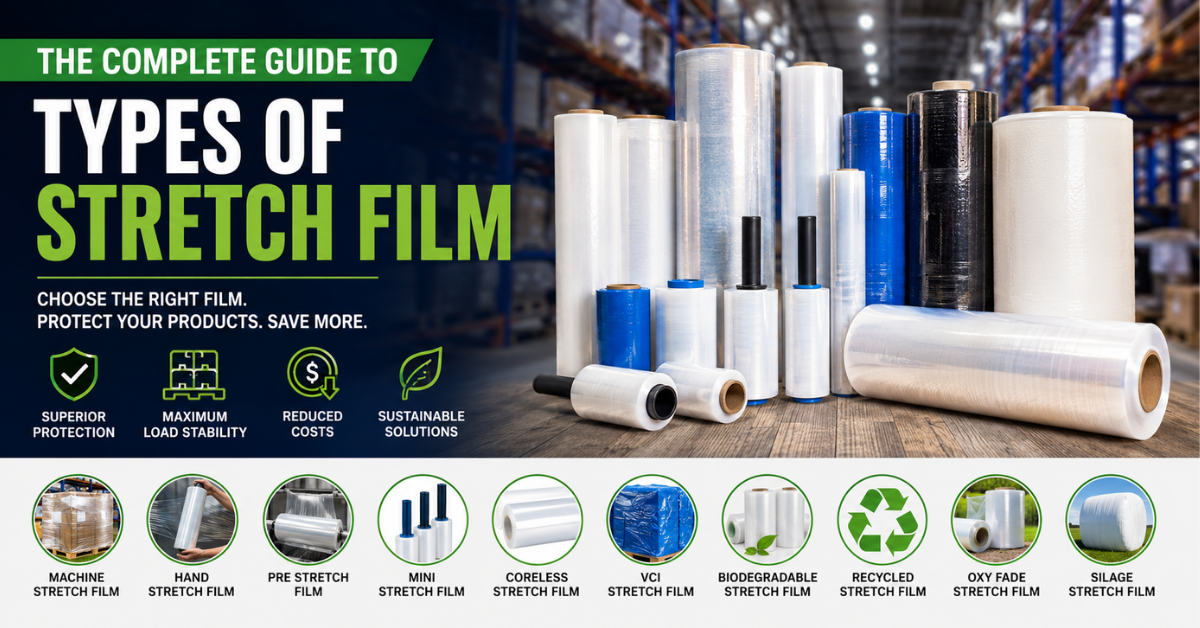
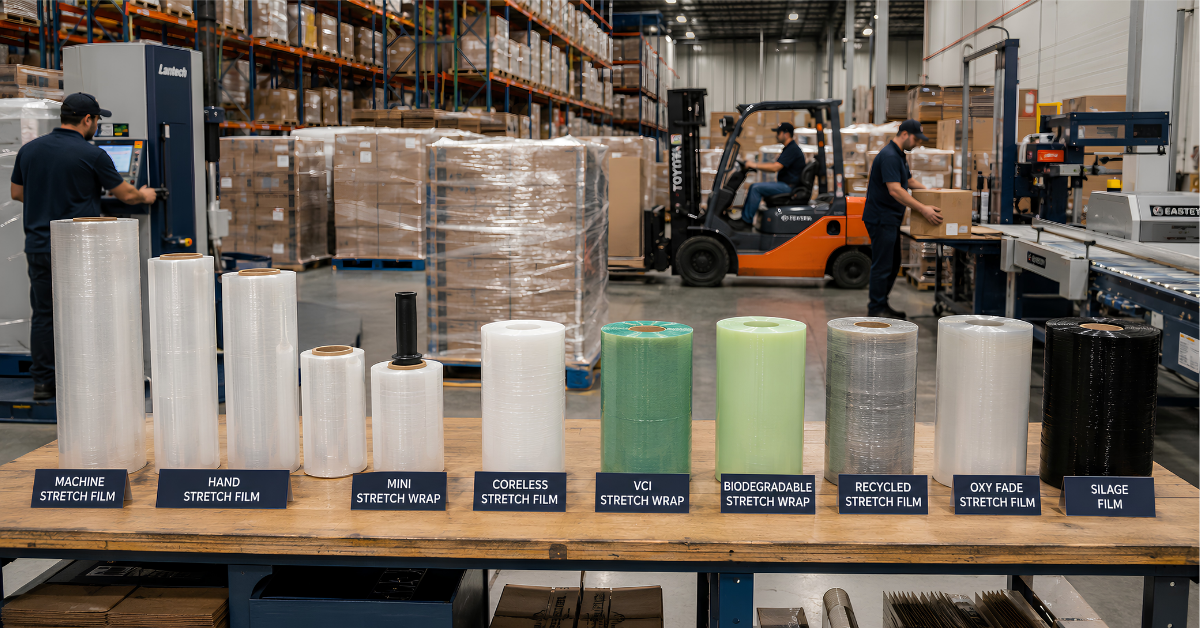
Stretch film is a highly stretchable plastic film used to secure products and pallets during storage and transportation. The main types of stretch film include machine stretch film, hand stretch film, pre-stretch film, mini stretch film, coreless stretch film, VCI stretch film, biodegradable stretch film, recycled stretch film, oxy fade stretch film, and silage stretch film. Each type is designed for specific packaging applications based on load size, handling method, and protection requirements.
Introduction
Every day, businesses transport thousands of pallets containing food products, industrial goods, pharmaceuticals, construction materials, retail products, and agricultural supplies. Without proper load containment, these products can shift during transportation, leading to damaged goods, increased logistics costs, and safety risks throughout the supply chain.
This is where stretch film plays an essential role. Stretch film is one of the most widely used packaging materials because it secures pallet loads, protects products from dust and moisture, improves handling efficiency, and reduces product movement during storage and transportation. From small warehouses wrapping a few pallets daily to large manufacturing facilities operating automated packaging lines, stretch film has become an indispensable packaging solution across almost every industry.
However, not all stretch films are designed for the same purpose. Different industries require different levels of stretchability, puncture resistance, cling performance, clarity, and machine compatibility. Choosing the wrong type of stretch film can increase material costs, reduce packaging efficiency, and compromise load stability.
In this comprehensive guide, you’ll learn about the most common types of stretch film, their advantages, ideal applications, and how to select the right option for your packaging requirements.
What Is Stretch Film?
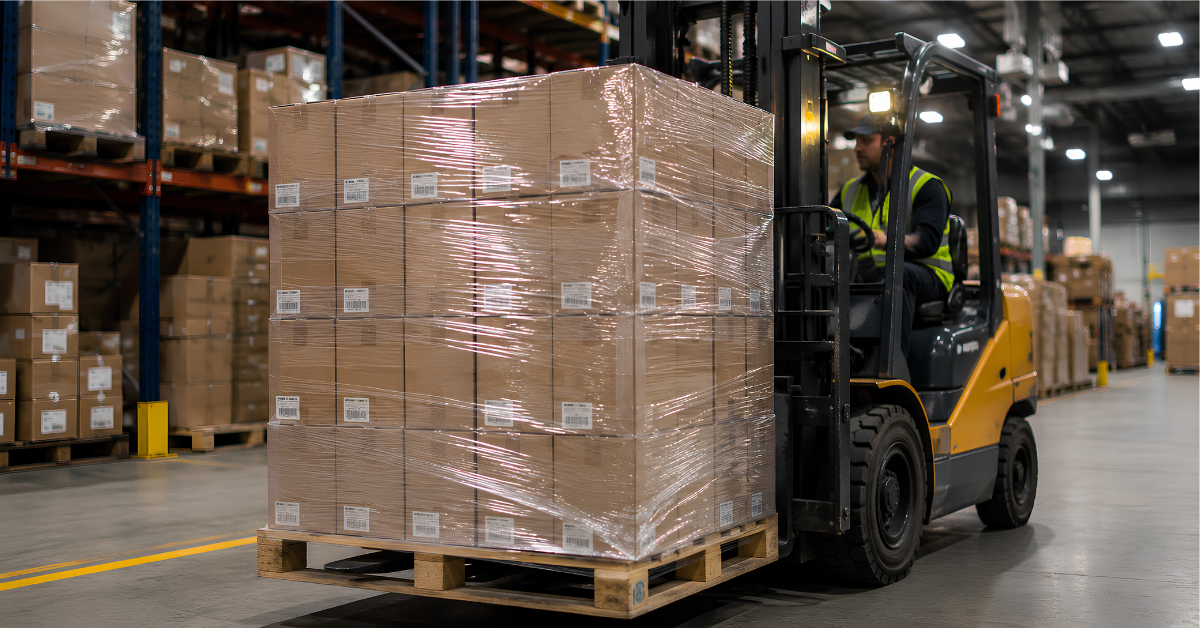
Stretch film, also known as stretch wrap, is a highly elastic polyethylene plastic film that stretches around products to keep them tightly secured. Unlike adhesive tapes or straps, stretch film sticks to itself through its natural cling properties, creating a strong and stable load without leaving residue on packaged goods.
Its primary purpose is to stabilize palletized loads during handling, storage, and transportation. As the film stretches, it creates tension around the products, preventing movement while protecting them from dirt, dust, moisture, and minor handling damage.
Stretch film is manufactured in various thicknesses, widths, and formulations to suit different industries and packaging methods. Some films are designed for manual application, while others are engineered for high-speed automated wrapping machines capable of wrapping hundreds of pallets each day.
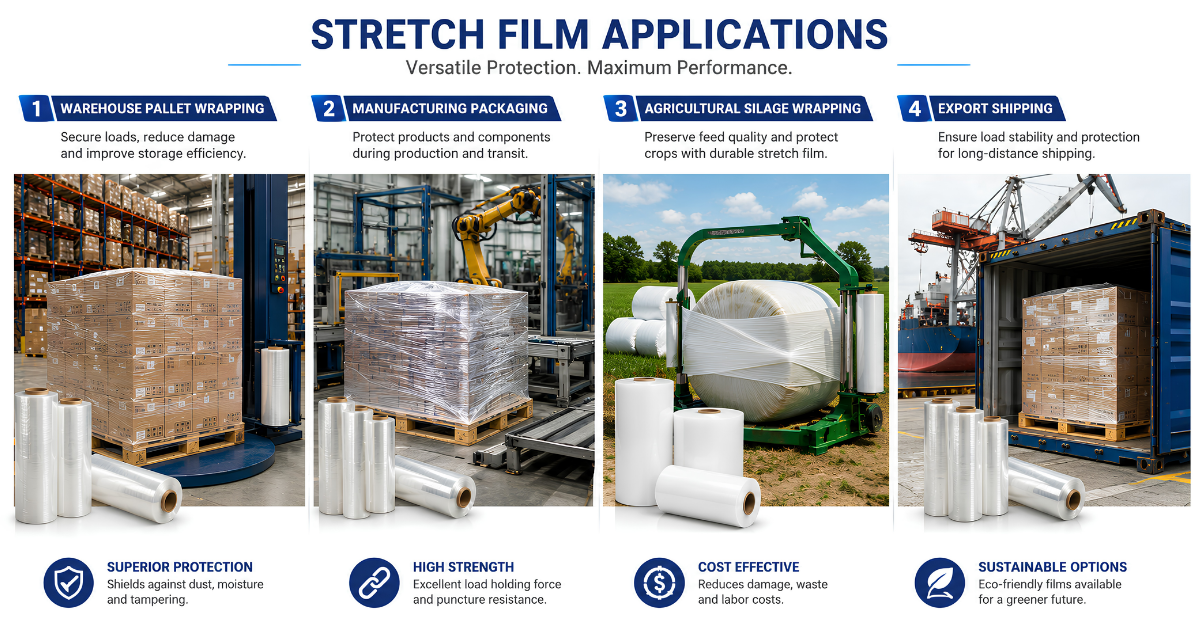
Because of its versatility, stretch film is widely used in logistics, manufacturing, warehousing, food processing, pharmaceuticals, agriculture, retail distribution, and export packaging.
Why Are There Different Types of Stretch Film?
Although all stretch films perform the same basic function of securing products, packaging requirements vary significantly across industries. A warehouse shipping lightweight consumer goods has very different packaging needs compared to a manufacturer transporting heavy machinery or an agricultural business storing silage bales outdoors.
Different stretch films are developed to solve specific packaging challenges, including:
- Manual versus machine wrapping
- Heavy-duty load containment
- High puncture resistance
- Outdoor UV exposure
- Corrosion protection for metal products
- Sustainable packaging initiatives
- Reduced packaging waste
- Faster pallet wrapping operations
- Lower packaging costs
Selecting the appropriate stretch film improves packaging efficiency, reduces material consumption, protects products more effectively, and helps businesses optimize their logistics operations.
Types of Stretch Film
While there are many specialty films available today, most industrial packaging applications rely on a core group of stretch film types. Each offers unique characteristics designed for specific products, packaging equipment, and operating environments.
The most common types of stretch film include:
- Machine Stretch Film
- Hand Stretch Film
- Pre Stretch Film
- Mini Stretch Film
- Coreless Stretch Film
- VCI Stretch Film
- Biodegradable Stretch Film
- Recycled Stretch Film
- Oxy Fade Stretch Film
- Silage Stretch Film
The following sections explain how each type works, where it is commonly used, and its key advantages.
Machine Stretch Film
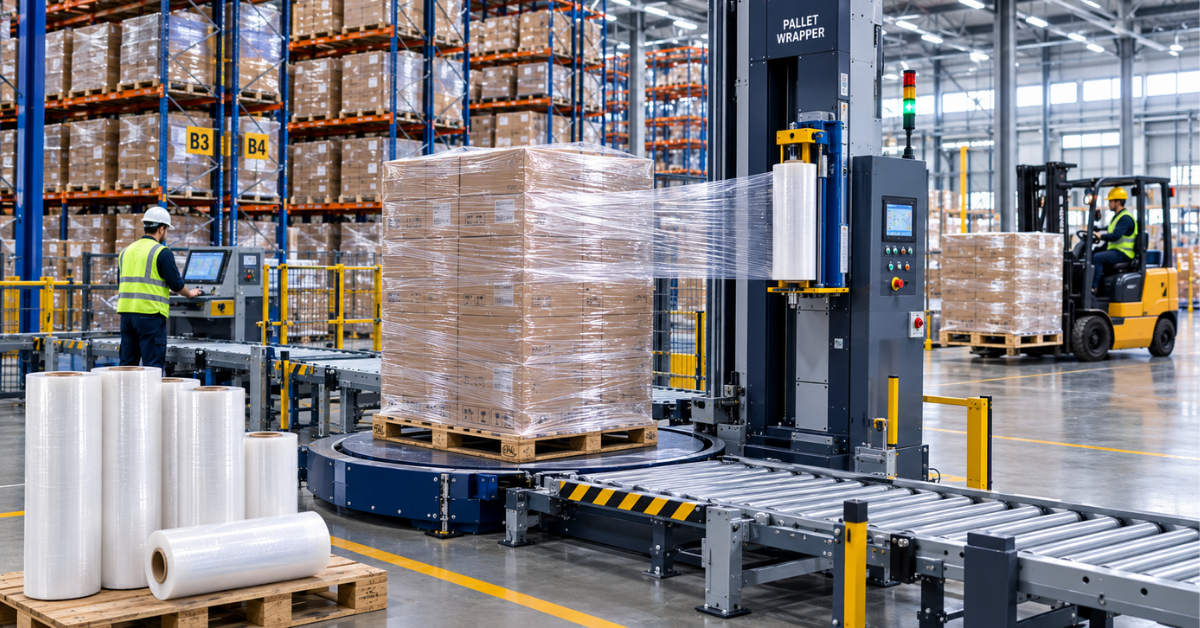
Large manufacturing facilities and distribution centers often wrap hundreds or even thousands of pallets every day. Manual wrapping in these environments would be time-consuming, inconsistent, and physically demanding. This is why machine stretch film is designed specifically for automated pallet wrapping machines.
Machine-applied stretch film offers consistent wrapping tension, improved load containment, reduced material waste, and significantly faster packaging speeds. Modern stretch wrapping machines can also pre-stretch the film before application, allowing businesses to use less material while maintaining excellent pallet stability.
Machine stretch film is commonly used in:
- Distribution centers
- Manufacturing plants
- Export packaging
- Beverage industries
- Food processing facilities
- Logistics companies
- Warehouse operations
Compared with manual wrapping, machine stretch film delivers greater consistency, improved worker safety, and lower packaging costs for high-volume operations.
Hand Stretch Film
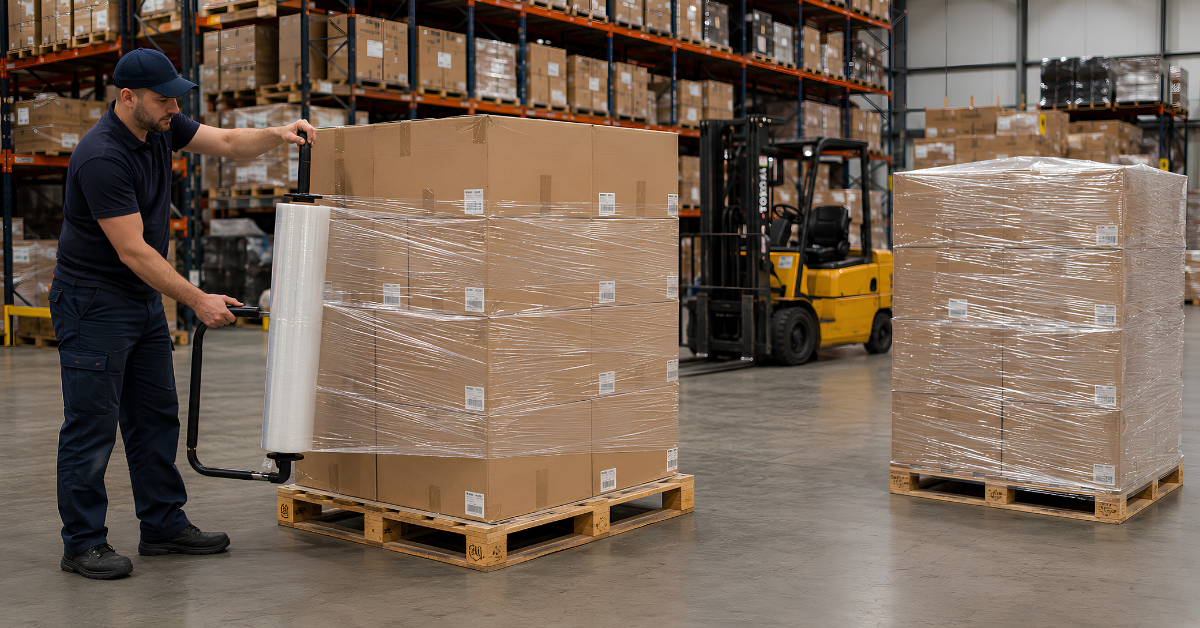
Not every business requires an automated pallet wrapping system. Small warehouses, retail distributors, local manufacturers, and businesses with lower shipping volumes often rely on manual wrapping because it provides flexibility without the investment in packaging machinery. For these applications, hand stretch film is the preferred solution.
Applied manually using a dispenser or by hand, this type of stretch film is ideal for wrapping pallets, securing cartons, bundling products, and protecting goods during storage or transportation. It offers excellent cling, flexibility, and load stability while allowing operators to wrap products of different sizes quickly and efficiently.
Hand stretch film is commonly used by:
- Small and medium-sized warehouses
- Retail distribution centers
- Furniture manufacturers
- Moving and storage companies
- Construction material suppliers
- E-commerce fulfillment businesses
Choosing the correct film thickness depends on the weight and shape of the load. Lightweight products generally require thinner films, while heavier or irregular loads benefit from thicker films that provide greater puncture resistance.
Businesses looking for a reliable manual stretch film manufacturer should choose films that offer consistent stretch performance, strong cling properties, and uniform thickness for dependable packaging results.
Advantages of Hand Stretch Film:
- Easy to apply without machinery
- Lower initial investment
- Excellent flexibility
- Suitable for low-volume packaging
- Cost-effective for small businesses
- Available in multiple widths and thicknesses
Pre Stretch Film
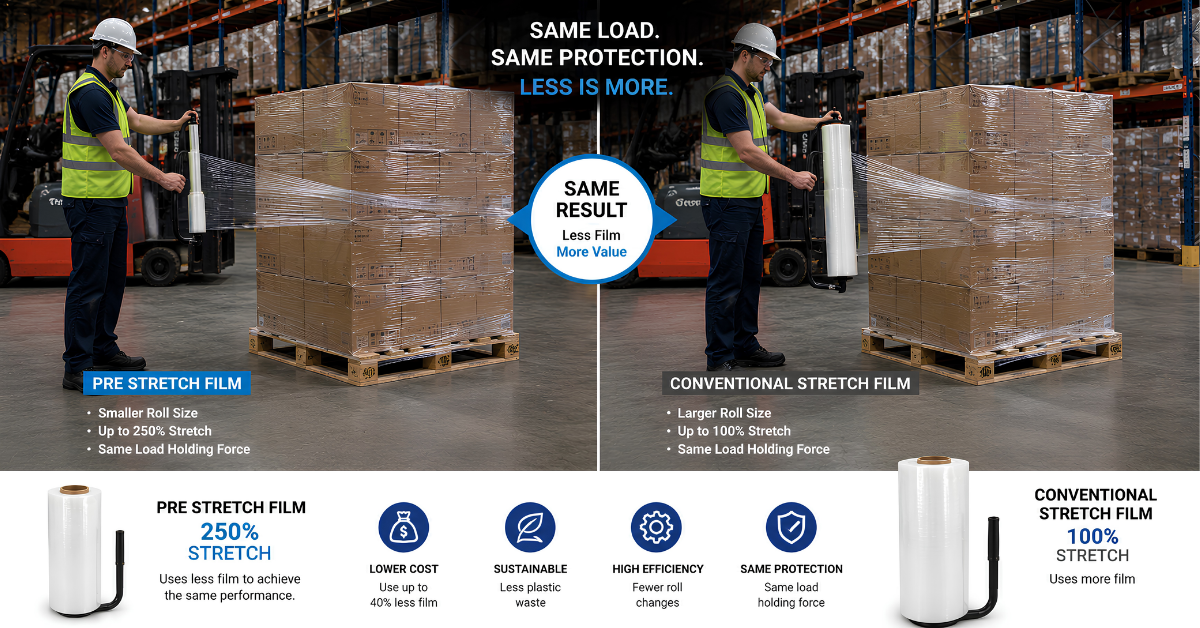
As businesses look for ways to reduce packaging costs without sacrificing load stability, pre stretch film has become one of the most efficient stretch wrapping solutions available.
Unlike conventional stretch film, pre stretch film is stretched during manufacturing before it reaches the customer. Because much of the stretching has already occurred, operators require significantly less force when wrapping products, resulting in faster application, lower worker fatigue, and reduced material consumption.
Another major advantage is packaging consistency. Since the film has already been stretched to its optimal level, businesses can achieve more uniform wrapping with less film waste compared to traditional hand-applied films.
Many logistics companies and distribution centers choose stretch films that incorporate pre-stretched technology to improve operational efficiency while lowering overall packaging costs.
Benefits of Pre Stretch Film:
- Uses less material
- Faster pallet wrapping
- Reduces operator fatigue
- Consistent wrapping force
- Lower transportation costs
- Excellent load stability
Typical Applications:
- Distribution centers
- Export packaging
- Third-party logistics (3PL)
- Warehouse operations
- Consumer goods packaging
- Manufacturing plants
Mini Stretch Film
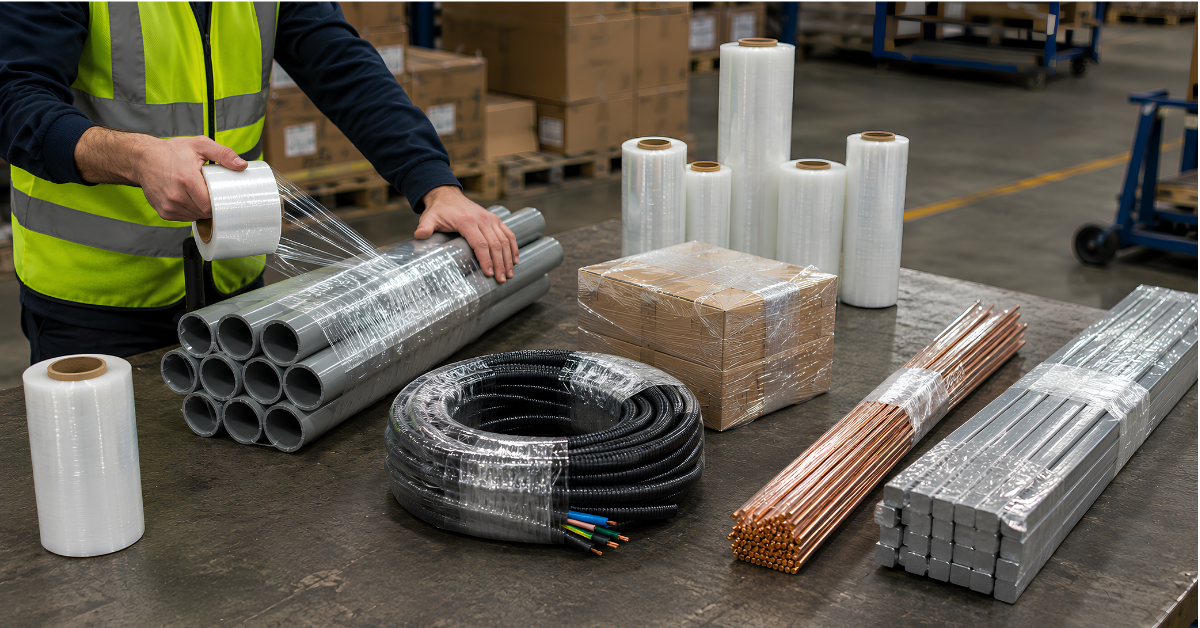
When wrapping smaller products, using a full-size stretch film roll can be inefficient and difficult to handle. Mini stretch film is specifically designed for bundling, securing, and protecting small products where precision and convenience are more important than wrapping large pallet loads.
Mini stretch film is commonly supplied in narrow roll widths, making it easy to wrap pipes, cables, metal bars, timber profiles, cartons, tools, automotive components, and other compact items. Because of its lightweight design, operators can work quickly without excessive hand fatigue.
Unlike tape, mini stretch film leaves no adhesive residue on products while providing excellent holding strength and protection against dust and moisture.
Businesses frequently use mini stretch wrap rolls for product bundling, warehouse organization, export preparation, and retail packaging where multiple small items need to remain securely grouped together.
Common Uses:
- Bundling pipes
- Steel rods
- Electrical cables
- Automotive components
- Furniture parts
- Cartons
- Hardware products
- Industrial tools
Advantages:
- Easy handling
- Excellent cling
- Faster bundling
- No adhesive residue
- Lightweight rolls
- Professional product presentation
Coreless Stretch Film
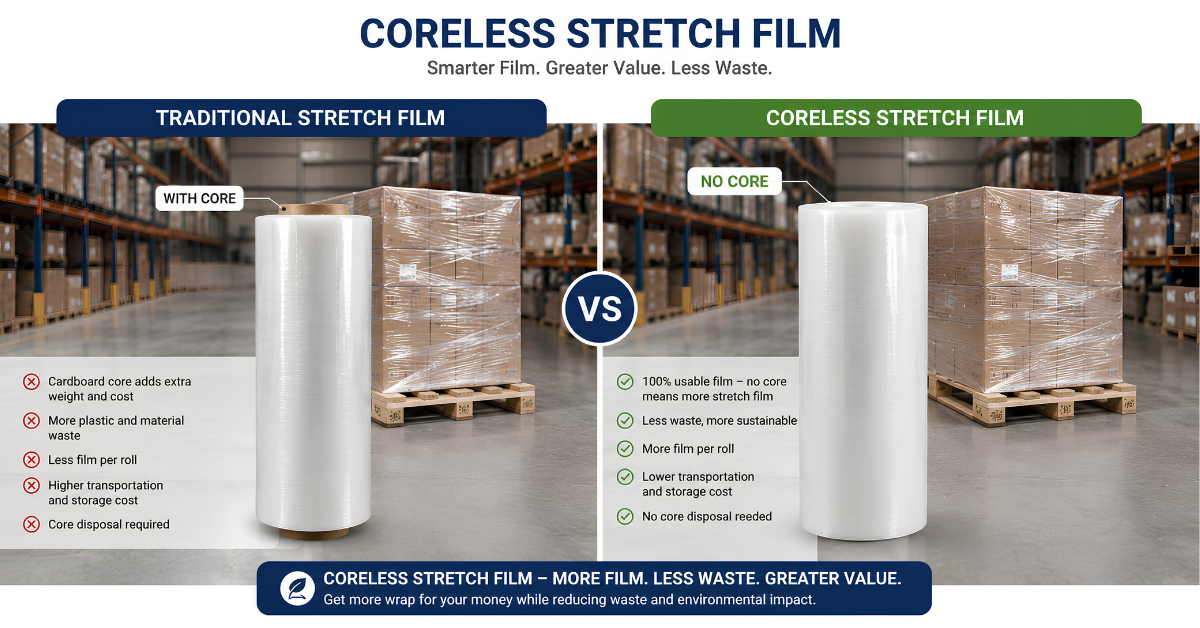
Traditional stretch film rolls use cardboard cores that eventually become waste after the film is consumed. Coreless stretch film eliminates the cardboard core entirely, providing a more sustainable and cost-efficient packaging solution.
Without a cardboard core, businesses reduce packaging waste, lower disposal costs, and maximize the usable amount of stretch film on each roll. The absence of the core also reduces storage requirements and transportation weight.
Coreless stretch film is becoming increasingly popular among manufacturers seeking sustainable packaging solutions while maintaining the same level of load security and wrapping performance as conventional stretch films.
Many companies are transitioning to coreless stretch film as part of broader waste reduction initiatives and environmental sustainability programs.
Benefits:
- Eliminates cardboard waste
- Lower transportation weight
- More usable film per roll
- Reduced disposal costs
- Supports sustainability goals
- High wrapping efficiency
Typical Applications:
- Manufacturing plants
- Distribution centers
- Food packaging
- Export packaging
- Warehouse operations
VCI Stretch Film
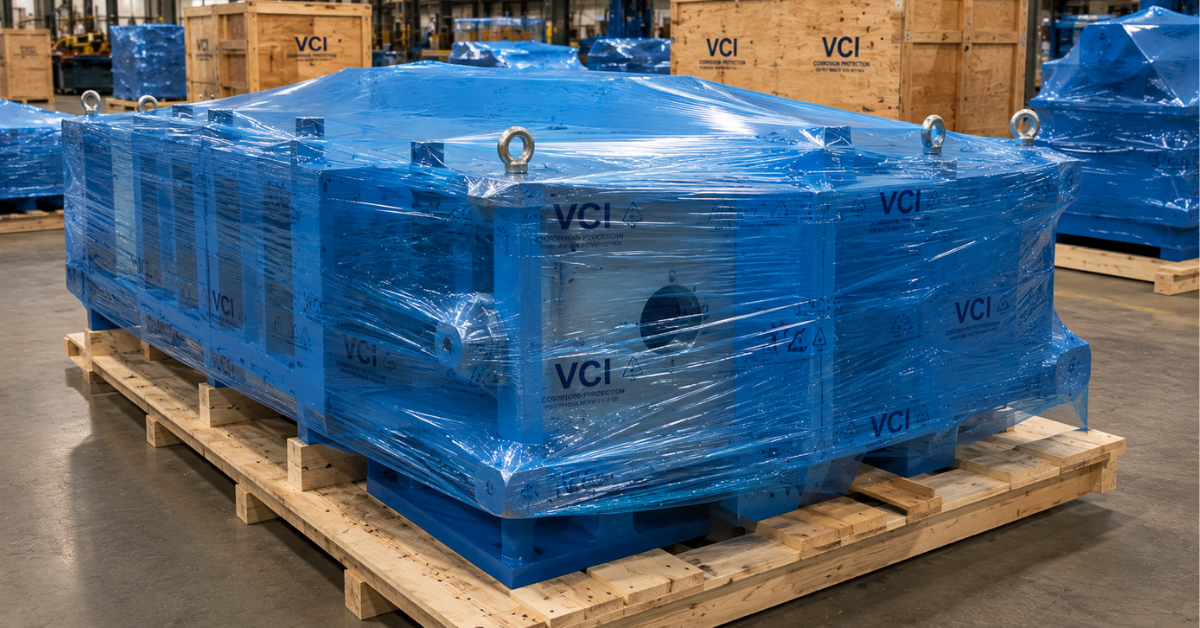
VCI (Vapor Corrosion Inhibitor) stretch film is specially designed to protect metal products against corrosion during storage and transportation.
The film slowly releases corrosion inhibitors that form an invisible protective layer over metal surfaces without affecting product quality.
Industries using VCI stretch film:
- Automotive
- Engineering
- Steel manufacturing
- Metal fabrication
- Machinery exports
It helps reduce rust damage while eliminating the need for additional protective oils or coatings.
Biodegradable Stretch Film
Many companies are working toward reducing plastic waste without compromising packaging performance.
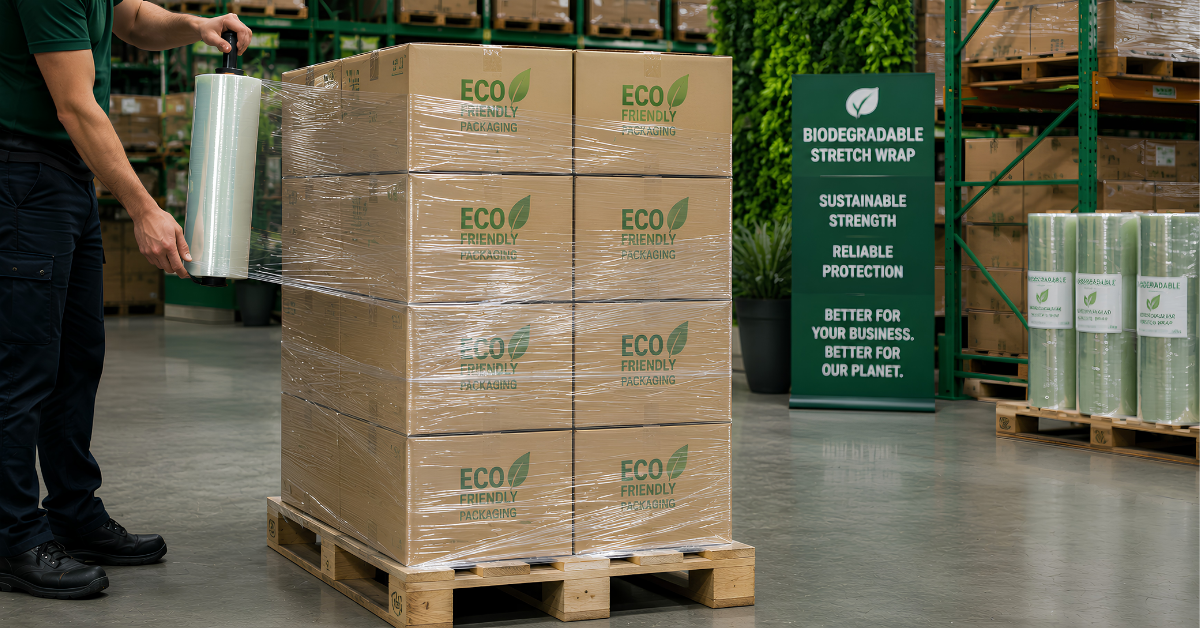
Biodegradable stretch film is manufactured using specially engineered materials that support more environmentally responsible packaging solutions while still providing load stability during transportation.
These films are suitable for companies focused on sustainability initiatives, ESG goals, and reducing their environmental impact.
Advantages:
- Reduced environmental footprint
- Lower long-term waste
- Suitable for green packaging programs
- Helps meet sustainability objectives
Recycled Stretch Film
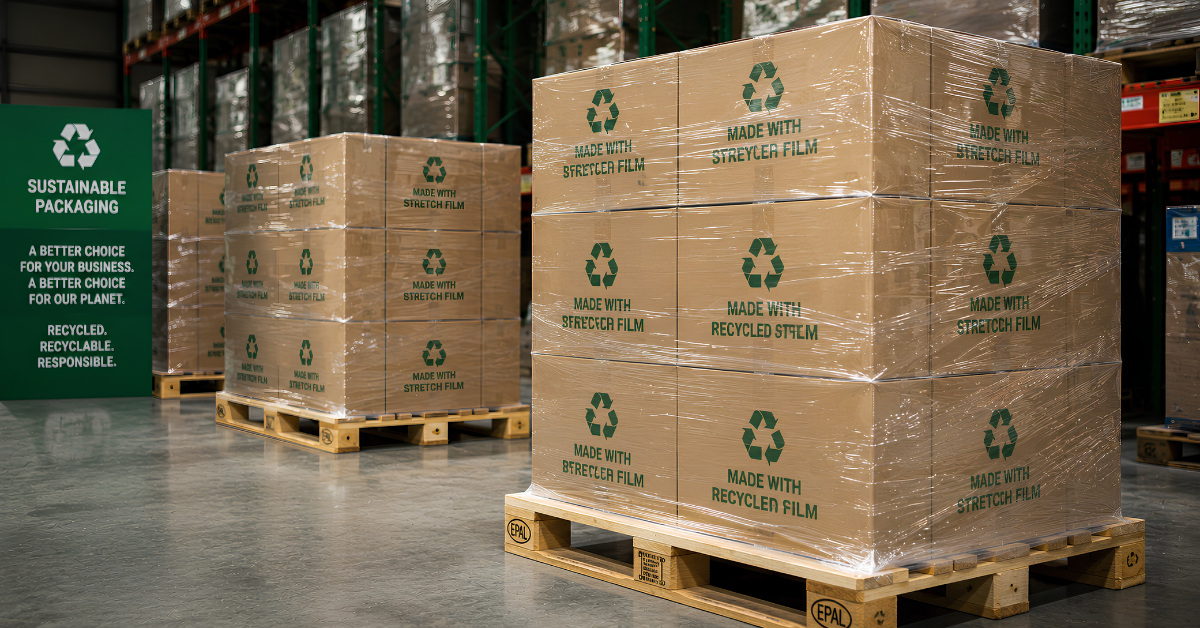
Recycled stretch film is produced using recycled polyethylene content while maintaining the strength and flexibility required for industrial packaging.
Many manufacturers choose recycled stretch film to support circular economy initiatives and reduce the consumption of virgin plastic.
Applications:
- Warehouse packaging
- Distribution centers
- Manufacturing
- Retail logistics
Benefits:
- Supports sustainability
- Reduces plastic waste
- Lower carbon footprint
- Excellent load stability
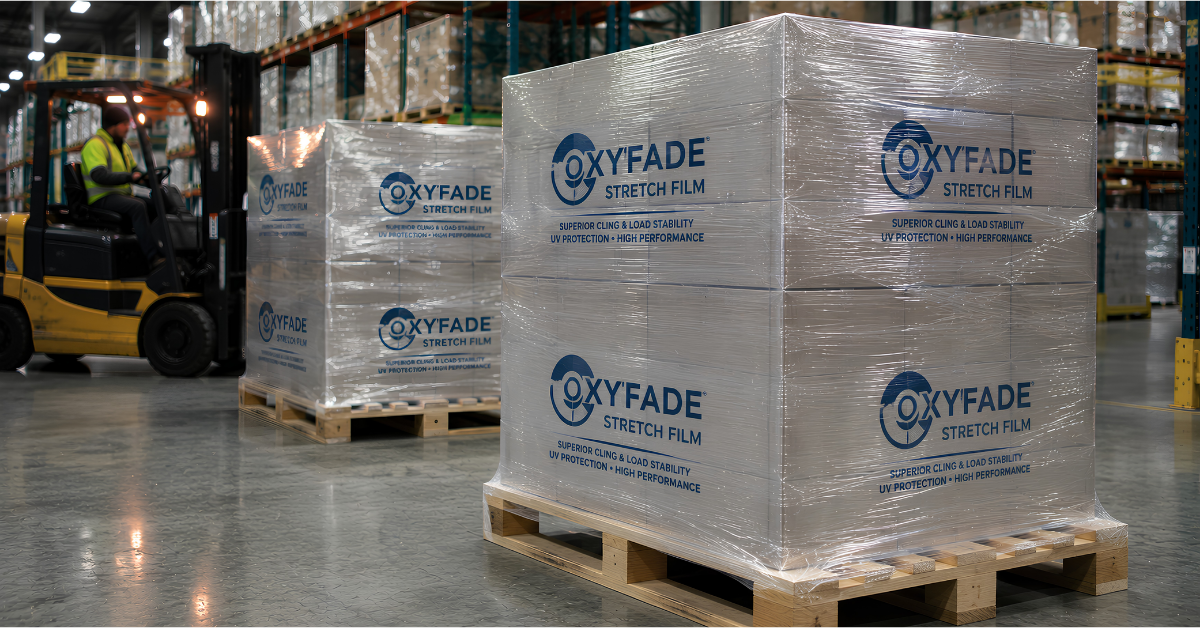
Oxy Fade Stretch Film
Oxy Fade stretch film is designed to gradually degrade after extended exposure to oxygen and environmental conditions, making it suitable for specific packaging applications where long-term plastic persistence is not required.
It delivers reliable pallet stability during transportation while supporting businesses looking for alternative packaging solutions.
Typical applications:
- Retail logistics
- Distribution
- Short-term storage
- Export packaging
Silage Stretch Film
Silage stretch film is manufactured specifically for agricultural applications, where it is used to wrap silage bales and preserve animal feed.
The film creates an airtight barrier that minimizes oxygen penetration while protecting silage from moisture and UV exposure.
High-quality silage film helps improve feed quality and reduces spoilage throughout storage.
Key features:
- Excellent puncture resistance
- Strong UV protection
- High cling performance
- Reliable oxygen barrier
- Suitable for round and square bales

How to Choose the Right Type of Stretch Film
Selecting the right stretch film depends on your packaging process, product weight, transportation conditions, and sustainability goals. Choosing the correct film improves load stability, reduces film consumption, and lowers packaging costs.
| Requirement | Recommended Stretch Film |
|---|---|
| Small packages | Mini Stretch Film |
| Manual pallet wrapping | Hand Stretch Film |
| High-volume production | Machine Stretch Film |
| Maximum film savings | Pre Stretch Film |
| No cardboard waste | Coreless Stretch Film |
| Rust protection | VCI Stretch Film |
| Sustainable packaging | Biodegradable Stretch Film |
| Recycled packaging | Recycled Stretch Film |
| Agricultural bale wrapping | Silage Stretch Film |
Conclusion
Understanding the different types of stretch film helps businesses select packaging materials that improve product protection, operational efficiency, and overall logistics performance. From manual stretch film for small-scale operations to machine stretch film for automated production lines, each type is designed to meet specific packaging requirements.
Specialty solutions such as VCI stretch film, coreless stretch film, pre stretch film, and silage film address industry-specific challenges, while biodegradable and recycled stretch films support sustainability initiatives.
By choosing the right stretch film for your application, businesses can reduce packaging costs, improve pallet stability, minimize product damage, and create more efficient supply chains.
Frequently Asked Questions (FAQ)
What is the most common type of stretch film?
Machine stretch film and hand stretch film are the two most commonly used types for industrial pallet wrapping and shipping.
What is the difference between hand stretch film and machine stretch film?
Hand stretch film is applied manually for lower packaging volumes, while machine stretch film is designed for automated wrapping systems and high-volume operations.
Which stretch film is best for heavy loads?
Blown machine stretch film generally provides better puncture resistance and load retention for heavy or irregular pallet loads.
Is stretch film recyclable?
Yes. Most LLDPE stretch films are recyclable where suitable recycling facilities are available.
Which stretch film is best for metal products?
VCI stretch film is the preferred choice because it protects metal components from corrosion during storage and transportation.