
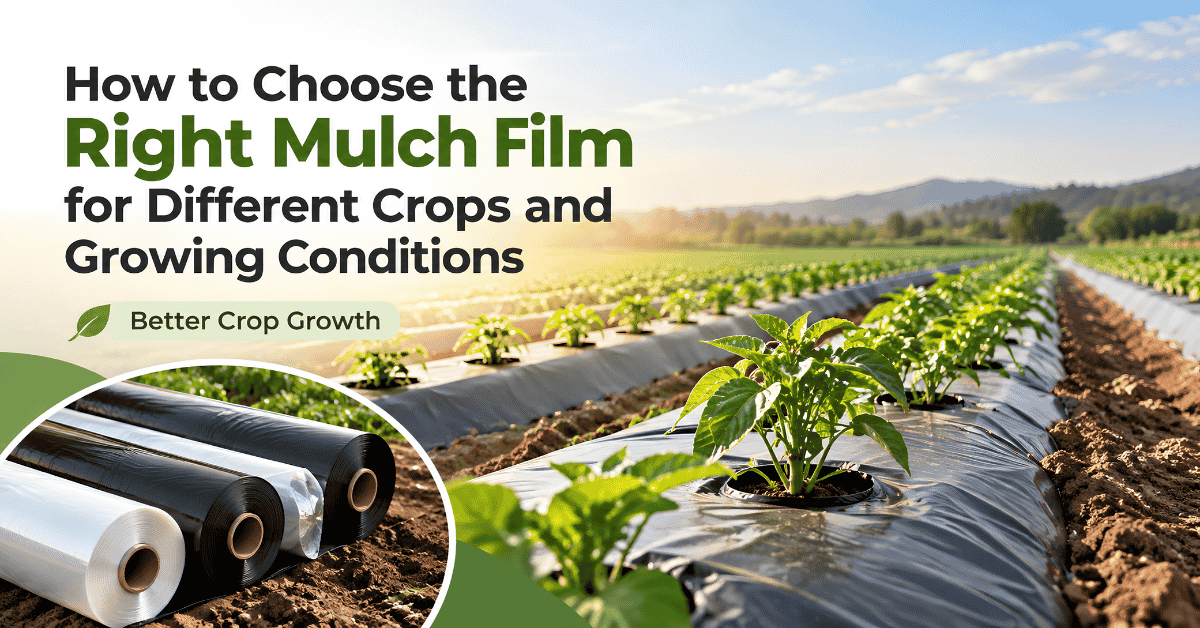
Choosing the right mulch film is an important part of managing soil conditions around cultivated crops. Agricultural mulch film is used to cover the soil surface around plants and can help with moisture conservation, weed management and soil temperature regulation. However, not every crop or growing environment requires the same type of film. Thickness, colour, width, expected service life, crop type, climate and field conditions all need to be considered before selecting a suitable mulch film.
For commercial farming and horticultural applications, the objective is not simply to select a plastic sheet and place it over the soil. The film should match the growing conditions and the practical requirements of the crop. A suitable specification can make field installation easier and provide the desired level of soil coverage throughout the crop cycle. This is why understanding the differences between black, transparent and reflective films, as well as different thicknesses and widths, is important when selecting agricultural mulch film.
 Why Is Mulch Film Used in Agriculture?
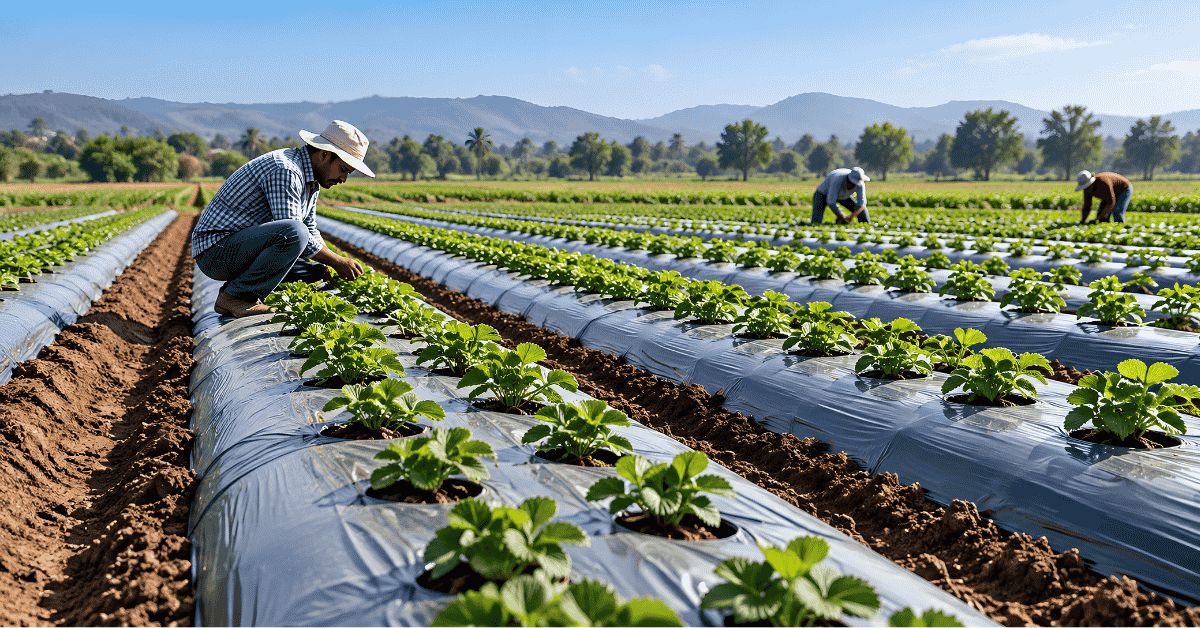
Mulch film creates a physical covering over the soil surrounding cultivated plants. By separating the exposed soil surface from direct environmental conditions, it can help farmers manage several aspects of crop cultivation. One of the most common purposes is reducing the amount of light that reaches the soil surface, particularly when an opaque film such as black mulch film is used. This can help suppress weed growth around the crop and reduce competition for water and nutrients.
Another important application is soil moisture management. Exposed soil can lose moisture through evaporation, particularly under warm and dry conditions. A properly installed plastic mulch film can reduce direct evaporation from the soil surface and help maintain more consistent moisture around the crop. This does not eliminate the need for appropriate irrigation, but it can form part of an overall water-management approach.
Mulch film can also influence soil temperature. Different colours and film constructions interact with sunlight differently, so the selection of a transparent, black or reflective film should be based on the crop and local growing conditions. For this reason, selecting the right film requires more than simply choosing the most commonly used option.
Consider the Crop Before Choosing Mulch Film
The first consideration should be the crop itself. Vegetables, fruits, horticultural crops and other cultivated plants can have different growing requirements. A crop that benefits from increased soil warming may require a different film characteristic from a crop where weed suppression is the primary objective.
For vegetable cultivation, mulch film is commonly used around crops such as tomatoes, peppers, cucumbers, eggplants and melons. The film is installed around the plants rather than over the plants themselves, creating a covered soil area while leaving appropriate openings for crop growth.
When selecting a mulch film for a particular crop, consider:
- Crop type and growing cycle
- Expected crop duration
- Local climate and temperature
- Soil moisture requirements
- Weed pressure in the field
- Required film service life
- Bed and row dimensions
- Installation method
- Required roll width
- Film thickness and durability
Understanding these factors helps avoid selecting a specification based only on price or appearance. The correct mulch film should be suitable for the actual conditions in which it will be used.
Choosing Between Black, Clear and Reflective Mulch Film
One of the most important decisions is film colour. Different colours provide different characteristics because they interact with sunlight and the soil surface differently.
Black Mulch Film
Black mulch film is widely used when weed suppression is an important objective. Its opaque surface limits the amount of light reaching the soil, making it difficult for many weeds to grow beneath the covered area. It can also help reduce evaporation from the soil surface.
For fields where weed management and moisture conservation are important considerations, black plastic mulch can be a practical choice. However, the final selection should still consider the crop, climate and expected soil temperature.
Clear Plastic Mulch Film
Clear plastic mulch allows more sunlight to reach the soil beneath the film. This can be useful where increased soil warming is desired. Because it behaves differently from opaque black film, it should be selected according to the crop and growing environment.
Clear mulch film may be particularly relevant where soil temperature management is an important consideration during cultivation. The local climate and seasonal conditions should always be evaluated before selecting the film.
Silver and Reflective Mulch Film
Reflective or silver + black mulch film provides different light-management characteristics from standard black or transparent film. Reflective surfaces can alter the way sunlight interacts with the crop and soil environment.
These films may be considered for specific crop-management requirements where light reflection is relevant. The appropriate specification should be selected based on the crop, field conditions and intended application.
How Film Thickness Affects Selection
Thickness is another important consideration when selecting agricultural mulch film. A thinner film may be suitable for a shorter crop cycle or a single-season application, while thicker film can be considered when a longer service life or greater durability is required.
For example, Tilak Polypack supplies mulch film in different thickness ranges:
- 15–20 micron: suitable for single-season crop applications
- 20–30 micron: suitable for applications involving two or three crop seasons
- 50 micron and above: suitable for orchard applications and situations requiring longer service life
These are practical specification ranges, but the appropriate thickness should ultimately be selected according to the crop, installation conditions and expected duration of use.
A thicker film is not automatically the correct choice for every field. If the crop cycle is short, a lower thickness may be sufficient. For longer-duration applications where the film needs to remain in place for an extended period, greater thickness may be more appropriate.
Selecting the Correct Mulch Film Width
Width is often overlooked when selecting mulch film, but it directly affects installation and soil coverage. If the film is too narrow for the prepared crop bed, it may not adequately cover the intended area. If it is unnecessarily wide, handling and installation can become less efficient.
Mulch film can be supplied in different widths according to field requirements. Tilak Polypack provides widths from 600 mm to 1800 mm, allowing the specification to be selected according to crop rows, bed dimensions and installation requirements.
Before ordering a mulch film roll, measure the prepared beds and consider how much soil needs to be covered on both sides of the crop. The roll width should provide sufficient coverage while allowing the edges to be properly secured.
Mulch Film Roll Selection for Field Installation
A mulch film roll needs to be practical to handle as well as suitable for the crop. Roll width, film thickness and expected service life all affect how the material can be transported and installed in the field.
The installation process generally begins with preparing and leveling the soil. Crop beds should be properly formed before the film is positioned. The mulch film is then laid across the prepared area and the edges are secured with soil or another suitable method to prevent movement caused by wind or field activity.
Planting openings are created at the required spacing, allowing crops to grow through the film while keeping the surrounding soil covered. Proper installation is important because gaps, loose edges or poorly positioned film can reduce the effectiveness of the soil-covering system.
Mulch Film for Different Growing Conditions
Growing conditions vary considerably between farms, regions and seasons. A specification that works well in one environment may not be suitable for another. Temperature, sunlight, rainfall, irrigation practices and crop duration all influence the selection process.
In warmer environments, the interaction between film colour and soil temperature can become particularly important. In areas where soil warming is desirable, transparent film may be considered. Where weed suppression is a major requirement, black film may be more appropriate.
Moisture management is another consideration. In areas where maintaining soil moisture is important, covering the soil can help reduce direct evaporation. However, mulch film should be considered as part of a complete irrigation and crop-management system rather than as a replacement for proper water management.
Farmers should also consider wind and installation conditions. The film needs to be properly secured along the edges and installed with appropriate tension so that it remains in position throughout the intended application period.
Polyethylene Mulch and Agricultural Plastic Film
Polyethylene mulch is commonly used for agricultural soil-covering applications. The term polythene mulch is also used in many markets to describe polyethylene-based agricultural mulch film.
The selection between different polyethylene mulch specifications depends on the intended application. Thickness, colour and width can all influence how the film performs in the field.
For businesses purchasing mulch film in bulk, it is also important to specify the required dimensions and application rather than simply requesting a generic plastic roll. Providing information about crop type, expected life, required width and preferred colour helps manufacturers recommend a more suitable specification.
For a broader overview of agricultural film applications, you can also explore agricultural films and related agricultural film solutions.
How to Choose Mulch Film for Vegetable Crops
Vegetable crops often have relatively specific spacing and growing requirements, which makes film selection and installation particularly important. Tomatoes, peppers, cucumbers, eggplants and melons can all be grown using mulch-film systems, but the appropriate film should be selected according to the crop and local growing environment.
For vegetable cultivation, consider the following:
- Crop duration: Match film life with the expected growing cycle.
- Weed pressure: Black mulch film can be considered where reducing light penetration to the soil is important.
- Soil moisture: Mulching can help reduce direct evaporation from exposed soil.
- Soil temperature: Select film colour according to the desired temperature-management characteristics.
- Bed width: Choose a roll width that provides adequate soil coverage.
- Installation: Make sure the film can be properly secured and maintained throughout the crop cycle.
The objective is to select a film that works with the entire cultivation system rather than treating the film as an isolated product.
Mulch Film for Orchards and Longer-Life Applications
Orchard applications can require a longer service life than a short-duration vegetable crop. In these situations, the expected period of use should be considered when selecting film thickness.
Tilak Polypack offers 50 micron and above mulch film options for orchard applications and situations requiring longer service life. The final specification should be selected according to the crop, installation environment and customer requirements.
For longer-duration applications, durability becomes increasingly important. The film needs to remain functional and adequately positioned for the intended period, so selecting the appropriate thickness and installation method is essential.
Common Mistakes When Selecting Mulch Film
Choosing mulch film only by colour or thickness can lead to an unsuitable specification. The film should be selected according to the complete application.
Some common mistakes include:
- Choosing film thickness without considering the crop duration
- Selecting colour without considering soil-temperature requirements
- Using an unsuitable width for the crop bed
- Ignoring local weather and field conditions
- Selecting a film without considering installation requirements
- Using a short-life film for an application requiring longer service
- Failing to secure the film properly after installation
- Treating mulch film as a replacement for irrigation and other crop-management practices
A better approach is to define the application first and then select the film specification around those requirements.
Why Film Specifications Matter for Commercial Buyers
For commercial agricultural buyers, consistency is often just as important as the film itself. When mulch film is purchased for repeated or large-scale applications, specifications should remain consistent with the requirements of the crop and installation process.
Important specifications to confirm before purchasing include:
- Film thickness
- Roll width
- Film colour
- Expected service life
- Application type
- Crop requirements
- Quantity required
- Packaging and roll configuration
- Custom specifications, if required
Clear specifications also make communication between farmers, distributors and manufacturers easier. Instead of simply requesting a “plastic mulch roll,” buyers can define the exact characteristics required for the intended agricultural application.
Choosing a Mulch Film Supplier
For businesses sourcing mulch film, the supplier should be able to provide specifications that match the intended application. A manufacturer with different thickness, width and colour options can provide greater flexibility when the requirements vary between crops or growing environments.
Tilak Polypack supplies mulch film in different thicknesses, widths and colours for agricultural and horticultural applications. Available widths range from 600 mm to 1800 mm, while film thickness can be selected according to the intended service life and application.
The company also supplies agricultural films for different applications and international markets. Buyers can discuss their crop, required dimensions, expected service life and other specifications before requesting a quotation.
For product specifications and detailed information, see our mulch film page.
Final Thoughts
Selecting the right mulch film is ultimately about matching the film specification with the growing environment. Crop type, film thickness, colour, width, expected service life, soil conditions and installation requirements should all be considered before choosing a product.
Black mulch film may be suitable where weed suppression and moisture management are important, while clear plastic mulch can be considered when soil warming is required. Reflective and coloured options provide additional choices for specific growing conditions. Similarly, a shorter crop cycle may require a different thickness from an orchard or other longer-duration application.
For commercial agricultural applications, the best approach is to define the requirements first and then select the mulch film specification around them. With the right combination of thickness, width and colour, agricultural mulch film can become a practical part of a broader crop-management system.
Tilak Polypack supplies mulch film and agricultural films in different specifications for crop cultivation, horticultural applications and longer-duration agricultural requirements. To discuss your requirements or request a quotation, contact Tilak Polypack directly.