
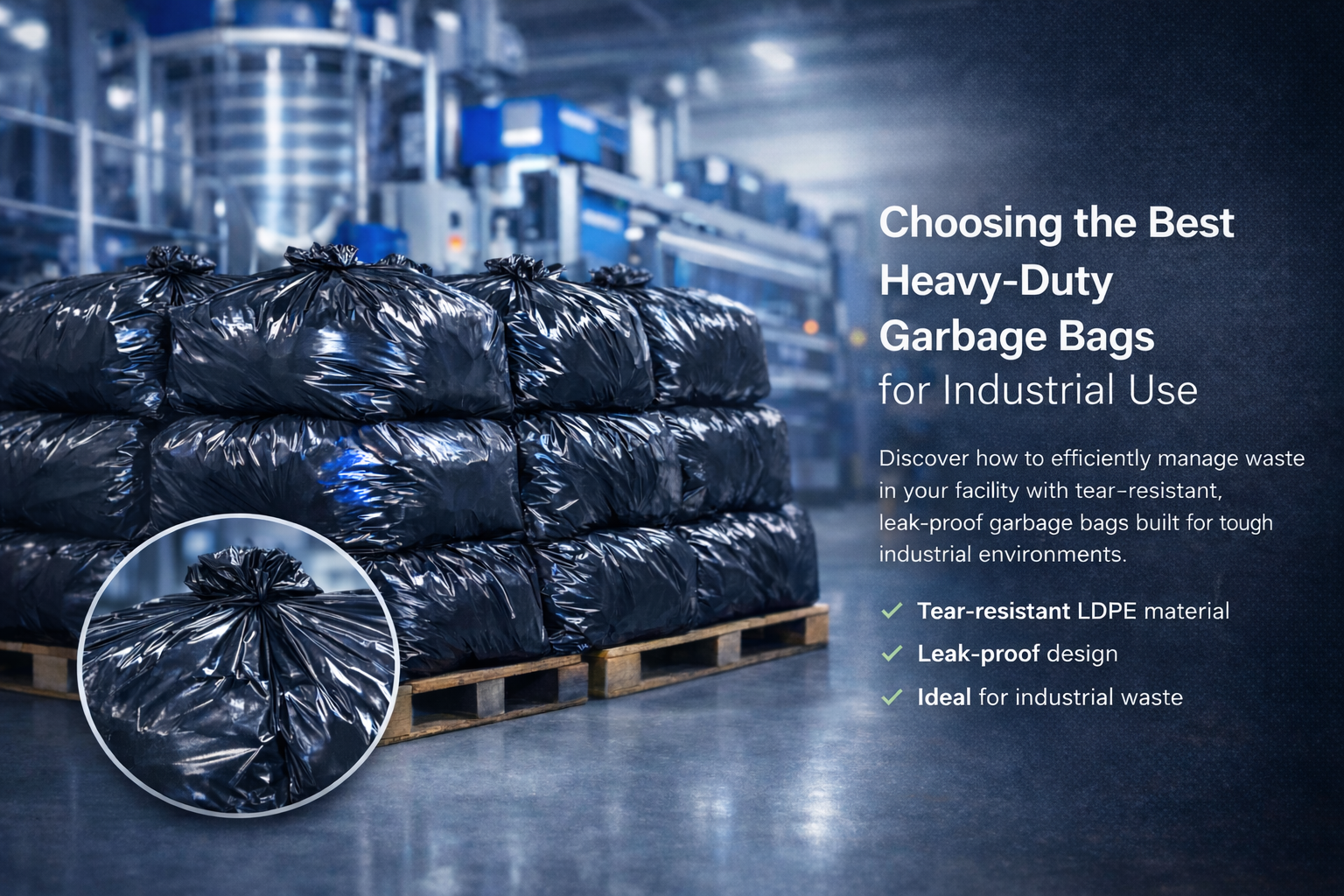
In industrial and commercial environments, garbage bags are not just a basic necessity — they are a critical part of daily operations that directly affect efficiency, hygiene, and cost control. Whether it’s a factory, warehouse, hospital, or retail store, poor-quality garbage bags can lead to leakage, tearing, and repeated handling, which increases both workload and expenses. Many businesses face these issues regularly without realizing that the root cause is often the supplier they choose.
Working with the right garbage bags manufacturer can completely change this experience. A reliable manufacturer ensures consistent quality, strong materials, and proper production processes, helping businesses avoid common waste management problems and maintain smooth operations over the long term.
Why Quality Matters in Industrial Garbage Bags
Industrial garbage bags are exposed to tough working conditions every day, including heavy loads, sharp waste, and sometimes wet or hazardous materials. When a bag fails during handling, it creates not only a mess but also delays in workflow, additional labor effort, and increased operational costs. Over time, these small inefficiencies can significantly affect productivity and hygiene standards.
High-quality garbage bags are designed with proper thickness, strong bottom sealing, and durable materials that can withstand pressure without tearing. This ensures that they perform reliably in demanding environments, reducing the need for double-bagging or frequent replacements. Businesses that invest in quality materials often experience smoother operations and better cost efficiency in the long run.
Materials Used in Garbage Bag Manufacturing
The type of material used in manufacturing plays a crucial role in determining how well a garbage bag performs under different conditions. Choosing the right material depends on the type of waste, handling requirements, and budget considerations.
LDPE – Flexible and Durable for Heavy Waste
Low-Density Polyethylene (LDPE) is widely used for heavy-duty garbage bags because of its flexibility and strength. It can stretch under pressure without breaking, which makes it ideal for handling bulky and irregular waste commonly found in industrial environments. This flexibility helps the bag absorb stress instead of tearing, which is a key advantage in demanding applications.
LDPE also provides excellent puncture resistance, making it suitable for waste that may include sharp or uneven materials. Businesses that require reliable performance often prefer LDPE bags because they offer durability and consistency even under heavy loads.
HDPE – Cost-Effective for Daily Use
High-Density Polyethylene (HDPE) is thinner compared to LDPE but still offers good strength for lighter waste applications. It is commonly used in offices, retail stores, and commercial environments where waste is mostly dry and easier to manage.
HDPE bags are more economical and suitable for high-volume usage. They provide a practical balance between cost and performance, making them an efficient solution for everyday waste management needs.
Recycled Materials – Budget-Friendly Option
Recycled plastic is often used to manufacture black garbage bags, especially for general-purpose waste. These bags are affordable and support environmentally friendly practices, which is an added advantage for businesses focusing on sustainability.
However, since recycled materials may vary slightly in consistency, they are best suited for applications where extreme durability is not required. For heavy-duty industrial use, virgin materials are generally a better option.
Garbage Bag Manufacturing Process Explained
A professional garbage bags manufacturer follows a structured and controlled process to ensure that every bag meets performance standards and delivers consistent results.
Extrusion – Creating the Plastic Film
The manufacturing process begins with melting polyethylene resin and converting it into a thin film using extrusion technology. The material is shaped into a tube and cooled carefully to maintain uniform thickness and strength throughout the film.
This stage is extremely important because it directly affects the durability and reliability of the final product. Even small variations in thickness can impact performance.
Cutting and Sealing – Forming the Bag
Once the film is ready, it is cut into required sizes and sealed using heat. The bottom seal plays a critical role because it carries the entire weight of the waste during use.
Strong and consistent sealing ensures that the bag does not break or leak during handling, which is especially important in industrial applications where loads are heavy.
Printing and Finishing
In many industries, garbage bags are printed with branding or instructions to improve identification and organization. This is commonly seen in retail, healthcare, and logistics environments where proper labeling is necessary.
Businesses that require customized packaging solutions often use printed plastic films to maintain consistency in branding while ensuring that the material strength is not compromised.
Quality Testing
Before the final product is dispatched, it goes through multiple quality checks to ensure strength, durability, and consistency. This step ensures that the garbage bags perform reliably in real-world conditions and meet industrial standards.
Role of PE Liners in Industrial Applications
Along with garbage bags, polyethylene liners play an important role in industrial waste management and bulk material handling. These liners are used inside containers or bulk bags to create a protective barrier that prevents moisture, dust, and contamination from affecting the stored material.
PE liners are highly flexible and can conform to different container shapes, ensuring a secure and tight fit. They are widely used in industries such as food processing, pharmaceuticals, and chemicals where maintaining product integrity is essential. Their resistance to moisture and chemicals makes them a reliable solution for safe storage and transportation.
Types of Industrial Garbage Bags
Different industries require different types of garbage bags depending on their usage and waste type.
Heavy-Duty Garbage Bags
These bags are designed for industrial environments where waste is heavy or sharp. They are thicker and more durable, ensuring reliable performance in demanding conditions.
Biohazard Bags
Biohazard bags are used in hospitals and laboratories for safe disposal of hazardous waste. They are manufactured under strict standards and are often color-coded for easy identification. Businesses dealing with medical waste often rely on specialized biohazard bags to maintain safety and compliance.
Black Refuse Sacks
These are commonly used for general commercial waste. They are cost-effective and suitable for everyday use where durability requirements are moderate.
Clear Garbage Bags
Clear bags are used in environments where visibility is important, allowing easy inspection and improving sorting efficiency in retail or controlled settings.
Final Thoughts
Garbage bags may seem like a simple product, but they play a major role in maintaining cleanliness, safety, and efficiency in industrial environments. The right choice reduces operational issues, improves workflow, and ensures better cost management over time.
By understanding materials, manufacturing processes, and product features, businesses can make informed decisions and choose reliable solutions that meet their specific needs while maintaining consistent performance.