
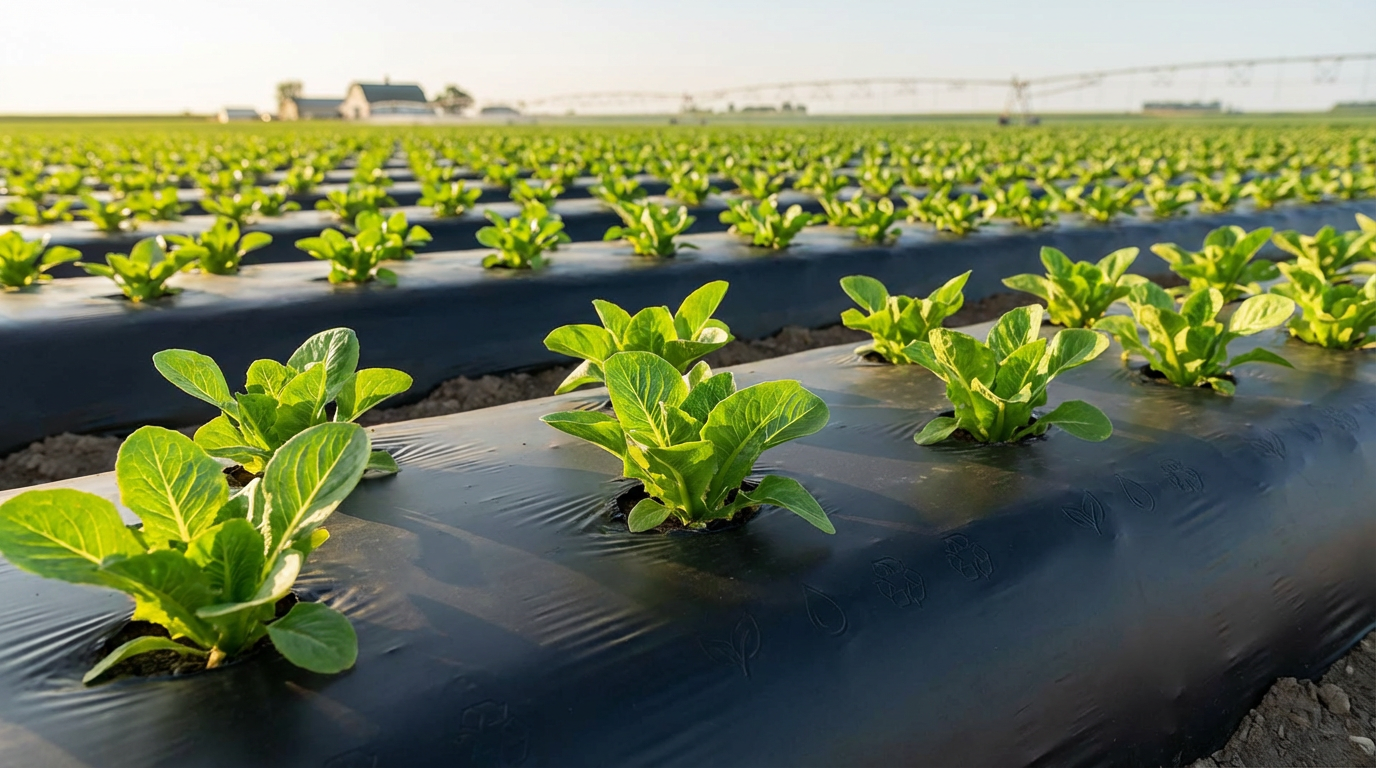
The agricultural sector faces increasing pressure to balance high productivity with environmental sustainability. Traditional plastic films, widely used for mulching, greenhouse covering, and low tunnel protection, are effective at enhancing crop yields but contribute significantly to plastic waste. For commercial farms and large-scale B2B operations, biodegradable agricultural films have emerged as a practical solution, offering crop protection while reducing environmental impact.
These films are designed to decompose naturally in the soil after the crop season, eliminating disposal challenges and supporting sustainable farming practices. In this article, we will explore what biodegradable films are, their applications, advantages, and best practices for B2B farming operations.
Understanding Biodegradable Agricultural Films
Biodegradable agricultural films are polymer-based coverings engineered to break down into water, carbon dioxide, and biomass under soil conditions. Unlike traditional polyethylene films that persist in the environment for decades, biodegradable films decompose naturally, leaving minimal residue.
Most biodegradable films are made from plant-based polymers, starch blends, or biodegradable polyesters. They maintain their structural integrity during the crop growth period, ensuring protection against pests, weeds, and environmental stressors, but degrade after the functional lifecycle.
The primary purpose of these films is to provide all the operational benefits of conventional plastic films while reducing labor costs, environmental footprint, and regulatory concerns. For B2B operations managing extensive farmland, this combination of protection and sustainability is highly advantageous.
Key Applications of Biodegradable Films in Agriculture
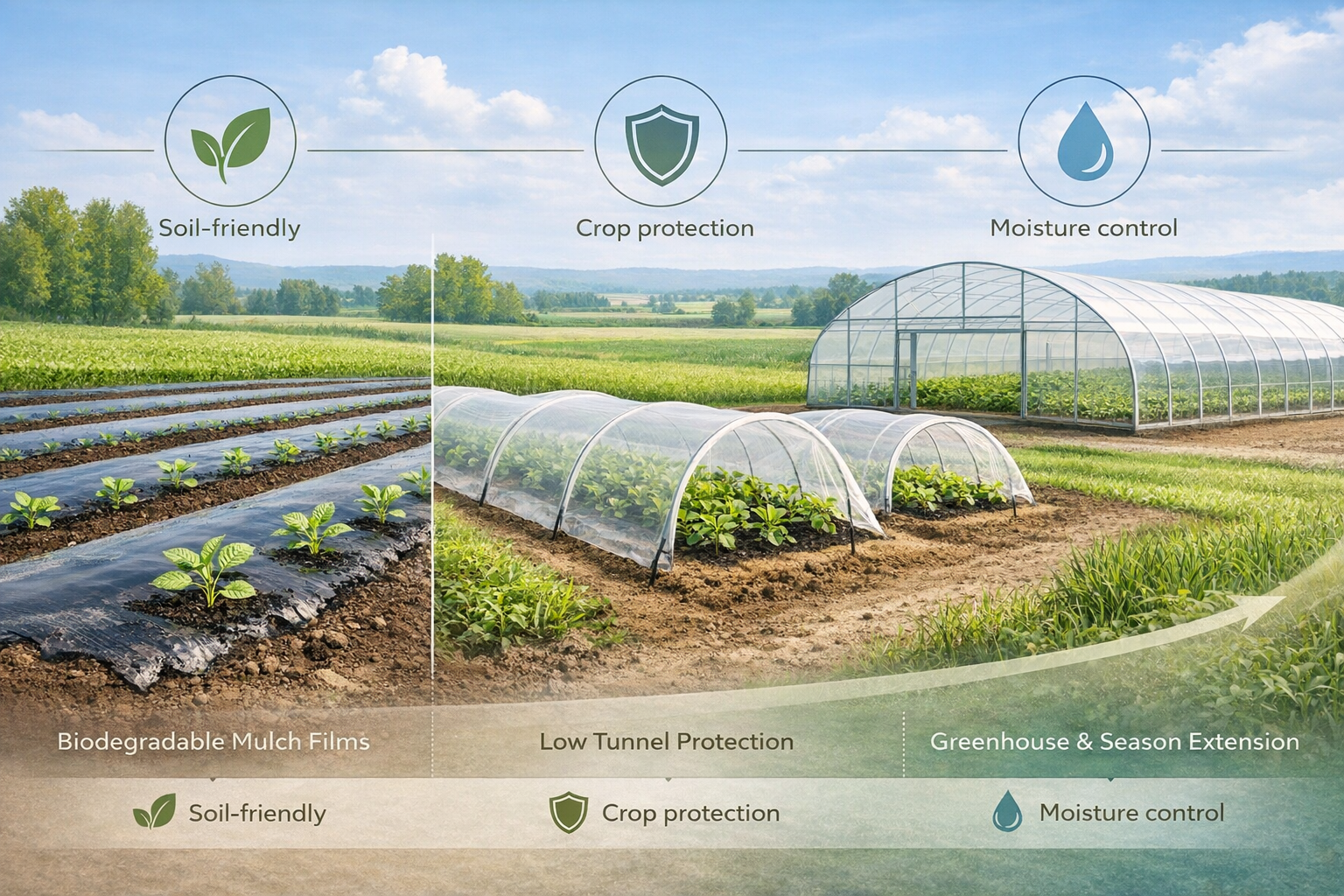
Biodegradable films are versatile and can be applied in multiple scenarios:
- Mulching for High-Value Crops: Films suppress weed growth, retain soil moisture, and regulate temperature for vegetables, fruits, and flowers.
- Low Tunnel Covering: Protects seedlings and young plants from frost, wind, and pests, creating a controlled microenvironment.
- Season Extension: Enables early planting in spring and late harvesting in autumn, maximizing crop cycles.
- Organic Farming: Supports soil health and meets certification standards by reducing residual chemicals and plastics.
- Large-Scale Commercial Operations: Simplifies operations by removing the need for post-harvest film collection and disposal.
In large-scale B2B farming, biodegradable films help maintain consistent crop quality while reducing labor-intensive processes. Their flexibility allows farms to scale protection measures across hectares of fields efficiently.
Types of Biodegradable Films for Commercial Agriculture
Biodegradable films are available in various types, each suited to different crop and climate conditions:
- Starch-Based Films: Suitable for short-term applications and fast-growing crops. They provide basic protection and degrade quickly after harvest.
- Polylactic Acid (PLA) Films: Offer longer-term protection and can withstand UV exposure. Ideal for crops with extended growth periods.
- PBAT Blends: Tear-resistant and flexible, these films maintain structural integrity while degrading at a controlled rate.
- Oxobiodegradable Films: Include additives that accelerate decomposition in soil, useful for quick post-harvest degradation.
Selecting the right film depends on crop type, soil composition, climate, and intended degradation timeline. Bulk purchases of uniform films ensure operational efficiency and consistency in large-scale farming operations.
Benefits of Biodegradable Agricultural Films
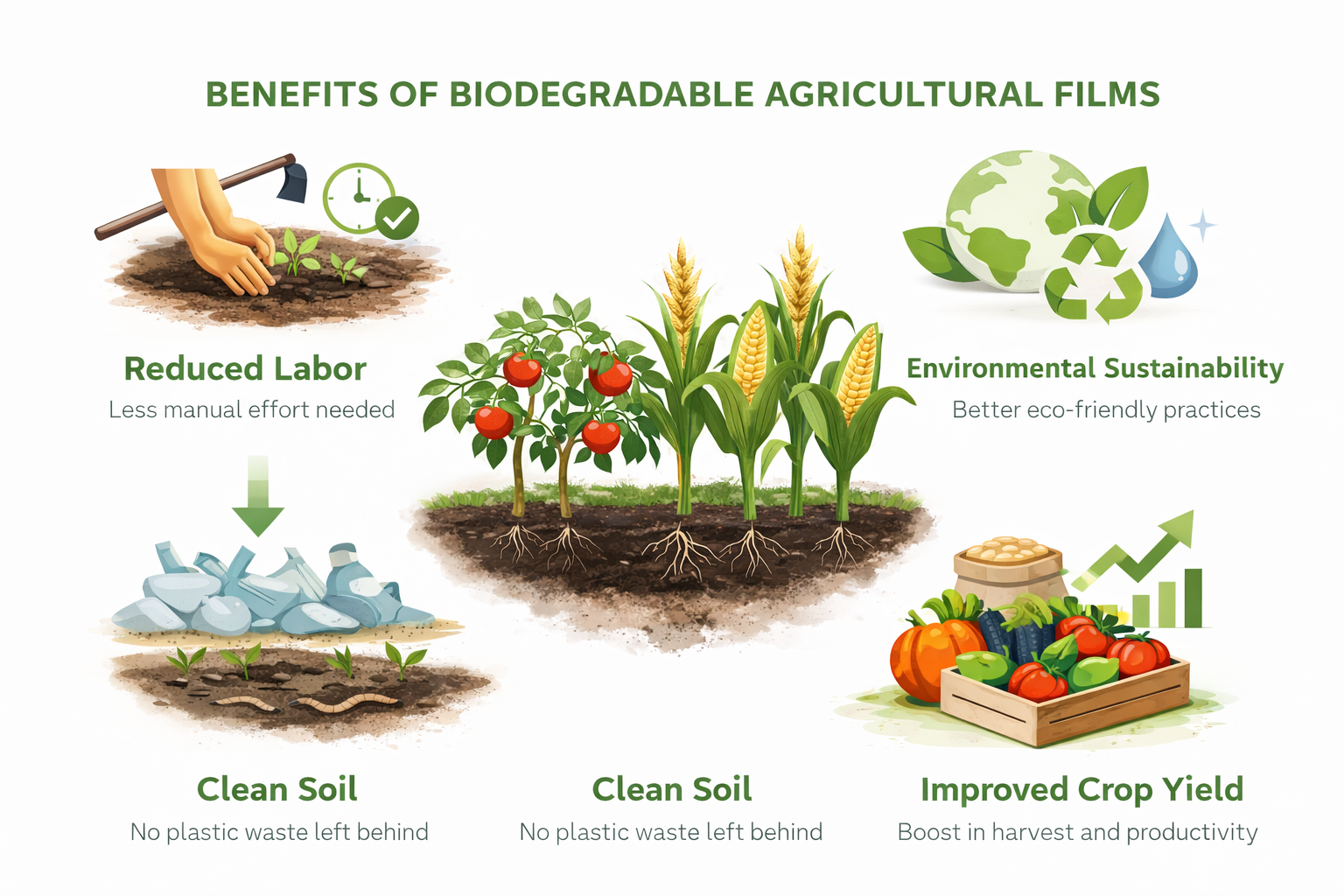
The adoption of biodegradable films brings multiple advantages for commercial farming operations:
Environmental Sustainability: Reduces plastic waste and minimizes microplastic contamination in soil.
Labor and Cost Efficiency: Eliminates the need to remove and dispose of films after harvest, saving time and reducing operational costs.
Crop Protection: Maintains weed suppression, moisture retention, temperature regulation, and pest control similar to traditional films.
Regulatory Compliance: Helps farms meet environmental regulations restricting single-use plastics.
Market Positioning: Enables farms to promote produce as eco-friendly and sustainable, appealing to environmentally conscious buyers.
Operational Flexibility: Lightweight, easy to handle, and scalable for large fields, making them ideal for B2B operations with extensive acreage.
These advantages demonstrate why biodegradable films are increasingly considered essential for modern commercial agriculture.
Best Practices for Applying Biodegradable Films
Proper application ensures the films perform optimally throughout the crop cycle:
- Soil Preparation: Level beds, remove debris, and ensure proper irrigation before laying the film.
- Secure Edges: Anchor films with soil, stakes, or clips to prevent wind displacement.
- Microclimate Management: For low tunnel setups, use lightweight support arches to maintain uniform coverage and airflow.
- Monitoring: Regularly inspect films for tears or displacement to maintain protection efficiency.
- Post-Harvest Handling: For most biodegradable films, no removal is necessary; they degrade naturally, reducing labor requirements.
Following these steps ensures operational efficiency and maximizes the return on investment for large-scale commercial operations.
Challenges and Considerations
While biodegradable films offer many benefits, commercial farms should be aware of potential challenges:
- Environmental Conditions: Excessive moisture or high microbial activity can accelerate degradation, potentially before the crop reaches maturity.
- Film Selection: Using a short-term film for long-season crops can compromise protection.
- Installation Errors: Improper tension or loose edges can reduce weed suppression and pest protection.
- Quality Variations: Ensure consistent quality when sourcing films in bulk to maintain operational reliability.
Understanding these factors allows B2B farms to plan appropriately and select films that align with crop requirements and environmental conditions.
Future Trends in Biodegradable Agriculture Films
The global push for sustainable farming practices is driving innovation in biodegradable films. New formulations offer improved UV resistance, enhanced tear strength, and controlled degradation rates suitable for multi-season use. Advances in biodegradable polymer technology are making films more affordable, durable, and adaptable to diverse crop and soil conditions. For B2B agricultural operations, staying updated with these developments ensures farms can adopt the latest eco-friendly solutions without compromising productivity or efficiency.
Conclusion
Biodegradable agricultural films provide a practical, sustainable, and cost-effective solution for modern farming operations. By protecting crops, reducing labor and disposal needs, and supporting environmental sustainability, these films are ideal for large-scale B2B farms aiming to optimize productivity and profitability. Selecting the right film, applying it correctly, and understanding its degradation behavior allows commercial operations to achieve reliable crop protection while meeting environmental and regulatory standards. Biodegradable films are not merely a product—they are a strategic tool for building a more sustainable and efficient agricultural future.