
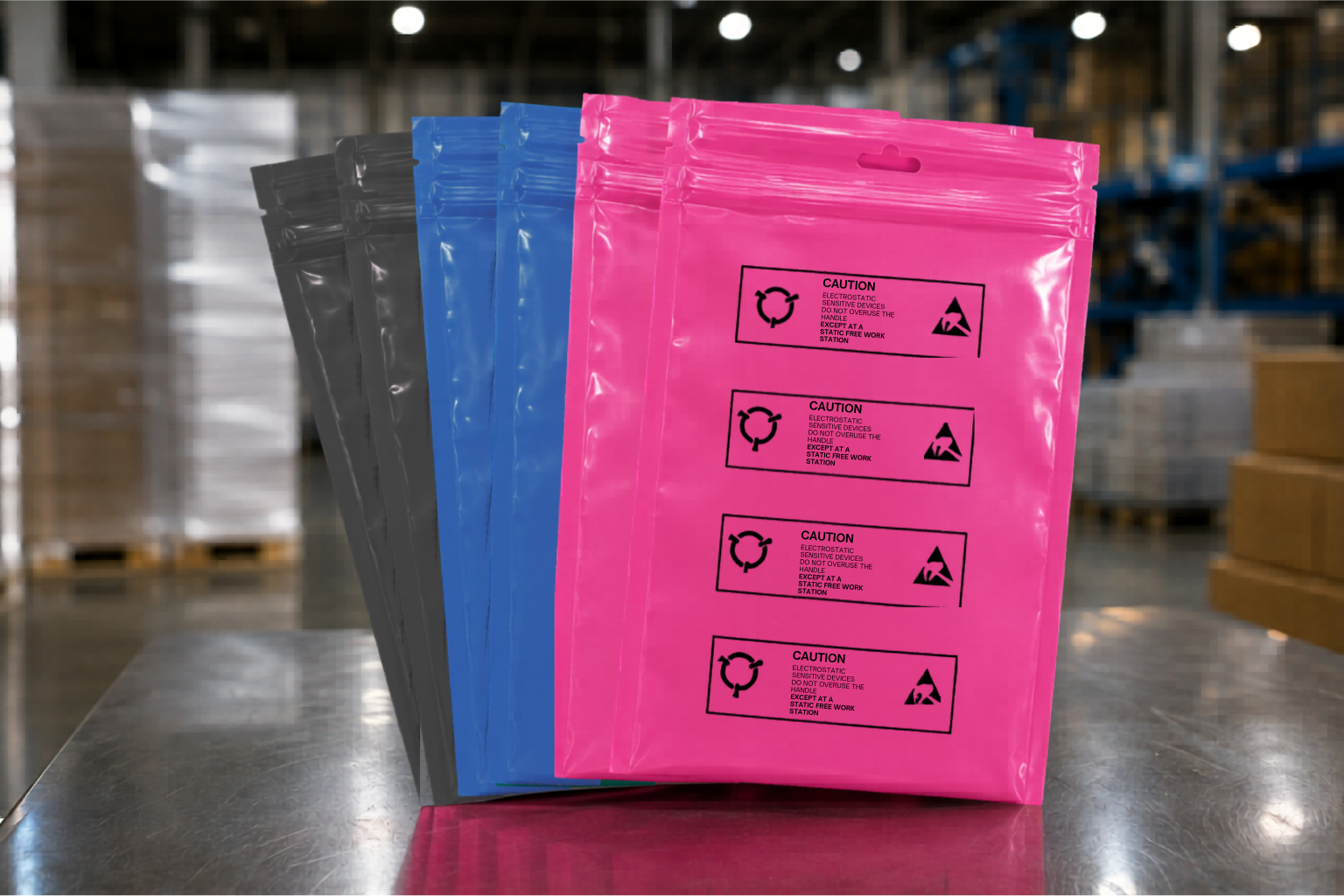
Antistatic poly bags are specialized polyethylene packaging bags designed to help reduce static charge buildup when packaging, storing, handling, and transporting electronic components and other static-sensitive products. Tilak Polypack manufactures antistatic plastic bags in different sizes, thicknesses, colors, and closure options according to application requirements.
These anti-static poly bags are suitable for electronics manufacturers, component suppliers, distributors, logistics companies, and businesses that need packaging designed for static-sensitive products. They can be supplied as open-top bags, zipper bags, and other configurations depending on the required packaging method.
Technical Specifications
| Specification | Details |
|---|---|
| Width | 100 mm onwards |
| Height | 200 mm onwards |
| Thickness | 50 Micron |
| Zipper | 3.5 mm |
| Colors | Pink, Blue & Black |
Custom specifications can be discussed according to product size, packaging application, closure requirements, printing requirements, and order requirements.
What Are Antistatic Poly Bags?
Antistatic poly bags are plastic packaging bags designed to reduce the accumulation of electrostatic charge on the bag surface. They are commonly used for packaging electronic components and other products that may be affected by uncontrolled static electricity during handling, storage, or transportation.
These bags are generally manufactured from polyethylene film formulated to provide the required static-control characteristics. The electrical performance of an antistatic bag depends on its material formulation, construction, and specified electrical properties.
At Tilak Polypack, LDPE antistatic bags can be manufactured in different sizes and configurations to suit the dimensions and handling requirements of the packaged product. Their lightweight construction makes them practical for routine packaging operations while allowing the contents to remain easy to identify.
For applications where a higher level of ESD protection or shielding is required, the appropriate packaging construction should be selected based on the sensitivity of the electronic component and the applicable packaging requirements.
Features of Antistatic Poly Bags
- Helps reduce static charge accumulation
- Suitable for packaging static-sensitive electronic components
- Manufactured from polyethylene film
- Available in different sizes and configurations
- Available with zipper closure options
- Lightweight and easy to handle
- Suitable for storage, handling, and transportation
- Custom sizes can be manufactured according to requirements
- Available in pink, blue, and black
- Surface electrical properties can be specified according to application requirements
Applications of Anti-Static Plastic Bags
Anti-static plastic bags are commonly used where electronic components need controlled static handling during packaging and transportation.
Typical applications include:
Electronic Components: Antistatic bags can be used for components such as circuit boards, connectors, sensors, microelectronic components, and other static-sensitive parts.
PCB Packaging: Anti-static poly bags can be used for packaging printed circuit boards and related electronic assemblies during storage and movement.
Electrical Parts: Manufacturers and distributors can use antistatic packaging for electrical components that require protection from electrostatic effects during handling.
Industrial Electronics: Equipment manufacturers may use antistatic bags for smaller electronic assemblies, spare parts, and components.
Warehousing and Logistics: ESD-oriented packaging can help maintain appropriate static-control practices when sensitive components are moved between production, storage, and shipping areas.
Antistatic Poly Bags With Zipper Closure
Antistatic zip lock bags provide a resealable packaging option for products that may need to be accessed and repacked during storage or assembly.
A zipper closure can be useful when electronic components are handled multiple times because the bag can be opened and closed without replacing the complete package. The 3.5 mm zipper specification can be supplied according to the applicable bag design.
For customers looking for anti-static resealable bags, zipper configurations can be considered when repeated access to the packaged product is required.
How Antistatic Poly Bags Help Protect Electronic Components
Static-sensitive electronic components can be exposed to electrostatic effects during manufacturing, handling, assembly, storage, and transportation. An appropriately specified antistatic bag is intended to help control static charge accumulation on the packaging surface.
The effectiveness of an ESD packaging system depends on the type of packaging selected and the characteristics of the product being protected. An antistatic bag should therefore be selected according to the required level of protection rather than treating every static-control bag as equivalent.
For highly sensitive products, buyers should also consider whether the application requires additional properties such as shielding, static dissipation, or other ESD packaging characteristics.
Types of Antistatic Poly Bags
Different configurations can be manufactured according to the packaging application.
Flat Antistatic Poly Bags: Open-top bags suitable for straightforward packaging applications.
Antistatic Zip Lock Bags: Resealable bags designed for applications where components may need to be accessed more than once.
Custom-Size Antistatic Bags: Bags manufactured according to the dimensions of the electronic component, assembly, or product.
Antistatic Liner Bags: Larger liner-style configurations may be considered where static-control packaging is required for containers, equipment, or larger products.
The appropriate construction should be selected according to the product’s sensitivity, dimensions, handling conditions, and required ESD protection level.
How to Select the Right Antistatic Poly Bags
When selecting antistatic poly bags, consider the following factors:
1. Bag Size: Select a width and height that provide sufficient space for the product without unnecessary excess material.
2. Thickness: Choose the film thickness according to the product, handling conditions, and required durability.
3. Closure: Open-top, heat-sealed, or zipper configurations can be selected based on how frequently the package needs to be opened.
4. Static-Control Requirement: Confirm the electrical properties required for the application and whether antistatic performance alone is sufficient.
5. Product Sensitivity: Highly ESD-sensitive electronic components may require packaging with additional protective properties.
6. Material and Construction: Check the polyethylene formulation and bag construction specified for the application.
7. Size and Customization: Custom dimensions can help improve packaging efficiency for components with non-standard sizes.
8. Testing and Documentation: Where ESD performance is critical, ask the manufacturer for applicable test data and technical documentation.
Quality and ESD Packaging Considerations
ESD packaging requirements should be matched to the protection needs of the electronic product. ANSI/ESD S20.20-2021 provides requirements for establishing and maintaining an ESD control program, while packaging materials are addressed by standards such as ANSI/ESD S541. The IEC has also published IEC 61340-5-1:2024 for protection of electronic devices from electrostatic phenomena.
Tilak Polypack can discuss the required bag dimensions, material specifications, closure type, and electrical-property requirements based on the intended packaging application. Where specific compliance or test requirements apply, customers should confirm the required documentation before placing an order.
Antistatic Poly Bags Manufacturer and Supplier
Tilak Polypack manufactures and supplies antistatic poly bags for packaging applications involving electronic components and other static-sensitive products. The bags can be produced in different dimensions and configurations to suit customer requirements.
The company supplies packaging products to customers in India and international markets. Customers can discuss required sizes, thickness, closure options, colors, and application-specific specifications directly with the manufacturer.
For enquiries about anti-static poly bags, antistatic plastic bags, ESD bags, or antistatic polyethylene packaging, contact Tilak Polypack with your required bag dimensions and application details.
FAQs
1. What are antistatic poly bags?
Antistatic poly bags are polyethylene packaging bags designed to help reduce the buildup of static charge on the packaging surface. They are commonly used for packaging electronic components and other products that require static-control considerations.
2. What are antistatic plastic bags used for?
Antistatic plastic bags are commonly used for electronic components, circuit boards, connectors, sensors, electrical parts, and other products that may be sensitive to electrostatic effects during storage, handling, or transportation.
3. Are antistatic poly bags suitable for electronics?
Yes. Antistatic poly bags are commonly used for packaging electronic components where controlling static charge accumulation is part of the packaging requirement. The required level of ESD protection should be determined according to the sensitivity of the product.
4. What material are antistatic poly bags made from?
Antistatic poly bags are commonly manufactured from polyethylene film. The final antistatic performance depends on the film formulation, additives, construction, and specified electrical properties.
5. Are antistatic poly bags available with a zipper?
Yes. Antistatic zip lock bags can be supplied for applications where the packaging needs to be opened and resealed during handling or storage.
6. Can antistatic poly bags be customized?
Yes. Depending on the manufacturing requirements, bags can be customized by size, thickness, closure configuration, color, and other product specifications.
7. What is the difference between antistatic and ESD shielding bags?
Antistatic packaging is designed to help control static charge accumulation, while shielding packaging is designed to provide additional protection against electrostatic fields and other effects. The appropriate packaging type depends on the sensitivity of the electronic product and the protection required.
8. Are antistatic bags recyclable?
Recyclability depends on the bag composition, additives, construction, and local recycling infrastructure. Customers should confirm the material composition and applicable recycling requirements for their region.
9. What standards are relevant to ESD packaging?
Relevant standards include ANSI/ESD S20.20-2021 for ESD control programs and ANSI/ESD S541-2026 for ESD protective packaging materials. IEC 61340-5-1:2024 provides requirements for protection of electronic devices from electrostatic phenomena.
10. Where can I source antistatic poly bags in bulk?
Businesses can source antistatic poly bags directly from packaging manufacturers and suppliers. Tilak Polypack supplies antistatic poly bags in different specifications and can discuss requirements for electronic component packaging and other static-sensitive applications.