
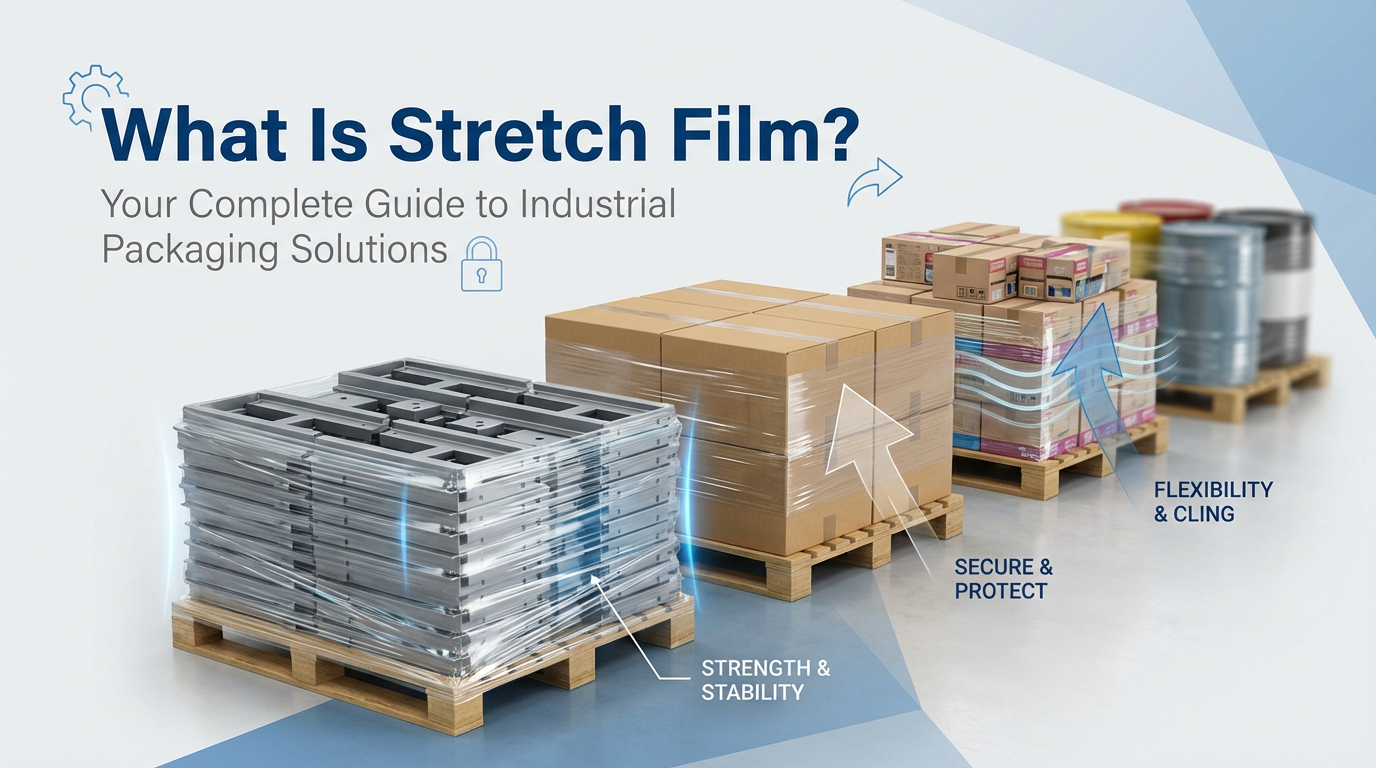
Stretch film is one of the most widely used packaging materials across industries due to its strength, flexibility, and cost-effectiveness. Also known as stretch wrap, this durable plastic wrap for packaging is designed to tightly secure products, protect goods during transportation, and improve pallet load stability.
From warehouses and manufacturing facilities to retail stores and moving services, stretch film plays a crucial role in modern packaging operations. With multiple types, thickness options, and applications available, choosing the right stretch film roll for packing can significantly reduce product damage and improve efficiency.
This guide explains what stretch film is, how it works, the different types available, and how to select the best plastic wrap for your packaging needs.
What Is Stretch Film?
Stretch film is a highly elastic plastic wrap used to secure products on pallets and protect goods during storage and transportation. It is typically made from linear low-density polyethylene (LLDPE) and clings tightly to itself without the need for heat or adhesives.
Because of its excellent stretch and recovery properties, stretch film creates a strong holding force that keeps products stable and protected throughout the supply chain.
How Does Stretch Film Work?
Stretch film works through controlled tension and elasticity. When stretched during application, the film tries to return to its original shape, creating a tight, secure hold around the load.
Its natural cling allows multiple layers to bond together, preventing shifting and improving load containment during handling, storage, and transit.
Key Features of Stretch Film
Puncture Resistance
Protects packaged goods from tears caused by sharp edges or rough handling.
Load Stability
Prevents product movement and reduces the risk of pallet collapse during shipping.
Moisture & Dust Protection
Shields items from dust, dirt, and moisture exposure.
Types of Stretch Film
Understanding different stretch film types helps ensure optimal performance for specific packaging applications.
Hand Stretch Film vs. Machine Stretch Film
- Hand Stretch Film:
Ideal for low-volume operations and manual pallet wrapping. - Machine Stretch Film:
Designed for automated wrapping machines and high-volume packaging environments.
Cast Stretch Film vs. Blown Stretch Film
- Cast Stretch Film:
Clear, glossy, quiet to unwind, and consistent in thickness. - Blown Stretch Film:
Offers superior puncture resistance and better load retention for heavy or irregular loads.
Specialty Stretch Films
- Colored stretch film for load identification
- UV-resistant stretch film for outdoor storage
- Anti-static film for electronic components
Stretch Film Thickness (Gauge & Micron)
Stretch film thickness varies based on load weight and application. Lightweight wraps are suitable for small loads, while heavy-duty industrial films are designed for large or unstable pallets.
Plastic Wrap for Packaging: Applications & Industries
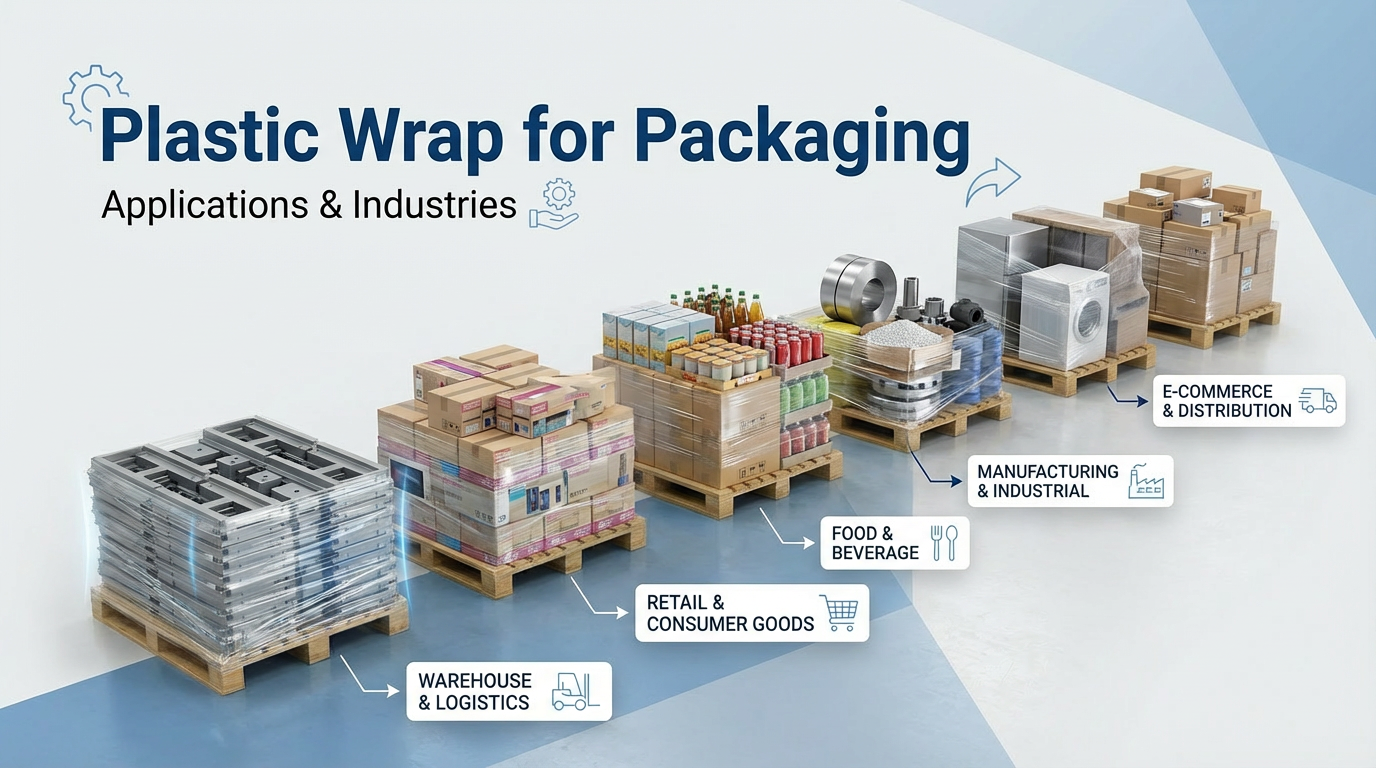
Stretch film is widely used across many industries, including:
- Warehouse & Logistics: Pallet wrapping and load stabilization
- Retail & Consumer Goods: Product bundling and protection
- Food & Beverage Industry: Securing cartons and packaged goods
- Manufacturing & Industrial Use: Protecting raw materials and finished products
- Moving & Relocation Services: Wrapping furniture and appliances
How to Choose the Right Stretch Film Roll for Packing
Selecting the right stretch film ensures maximum protection and cost efficiency.
Factors to Consider
- Load weight, size, and shape
- Storage and transportation conditions
Gauge & Thickness Selection
Lighter loads require thinner stretch film, while heavy or irregular loads need thicker, high-strength film.
Core Size & Roll Dimensions
Ensure roll width and core size are compatible with your hand applicators or wrapping machines.
Pre-Stretch vs. Standard Stretch Film
Pre-stretch film reduces material usage and wrapping effort while maintaining strong load security.
Benefits of Stretch Film
Stretch film offers several advantages over traditional packaging methods:
- Cost-Effective: Reduces material and labor costs
- Superior Load Protection: Prevents shifting and transport damage
- Weather Resistance: Protects against dust and moisture
- Tamper Evidence: Visible signs of interference
- Recyclable Options: Environmentally responsible packaging solution
How to Use Stretch Film Effectively
Proper application improves performance and minimizes waste.
Wrapping Technique
Start at the base of the pallet and wrap upward with consistent tension.
Overlap & Tension Guidelines
Overlap each layer by approximately 50% and maintain even tension.
Common Mistakes to Avoid
- Over-stretching the film
- Using incorrect film thickness
- Inconsistent wrapping patterns
Hand vs. Machine Wrapping Tips
Hand wrapping requires controlled tension, while machine wrapping benefits from accurate stretch and pre-stretch settings.
Stretch Film vs. Other Packaging Materials
Stretch Film vs. Shrink Wrap
Stretch film does not require heat, making it safer and faster for pallet wrapping compared to shrink wrap.
Stretch Film vs. Strapping
Stretch film provides better surface protection and load containment without damaging products.
When to Use Each
- Use stretch film for palletized loads
- Use shrink wrap for individual product packaging
- Use strapping for rigid load reinforcement
Conclusion
Stretch film is a reliable, versatile, and cost-effective plastic wrap for packaging and pallet wrapping across industries. By understanding the different types of stretch film, applications, and selection factors, businesses can improve load stability, reduce product damage, and optimize packaging efficiency.
