
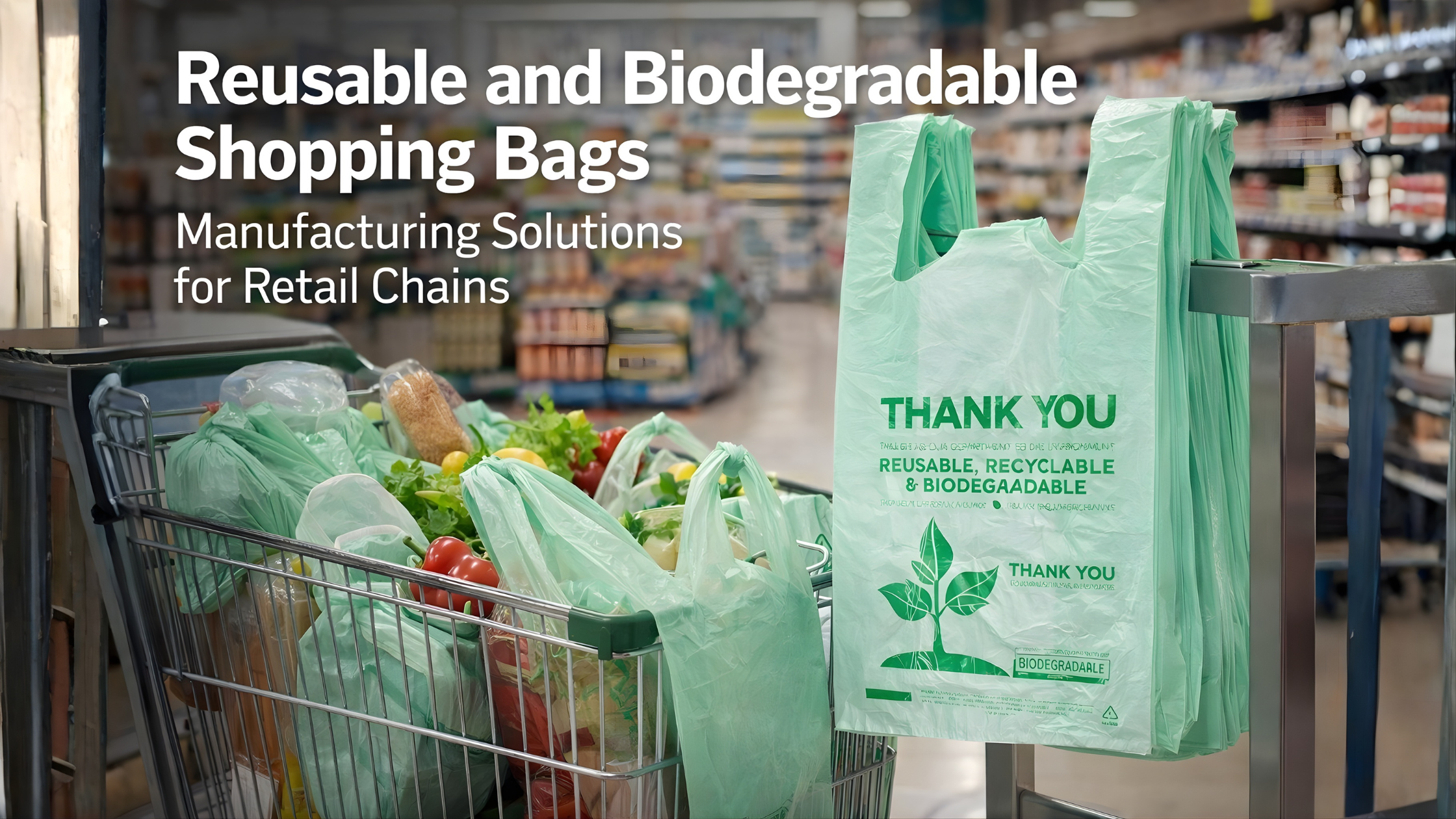
Retailers today must balance operational efficiency with environmental responsibility. As single‑use plastic bans proliferate and consumers increasingly demand sustainable choices, retail chains are turning to reusable and biodegradable shopping bags as a strategic alternative. Implementing these solutions at scale requires careful decisions about materials, manufacturing processes, supplier partnerships, procurement strategy, and in‑store integration. This article offers a practical, B2B‑oriented guide for retail procurement, supply chain, and sustainability teams that are planning to manufacture or source sustainable shopping bags in bulk.
Why Sustainable Bags Matter for Retail Chains
Sustainable shopping bags address multiple business objectives simultaneously. They reduce the environmental footprint and plastic waste associated with traditional bags, help retailers comply with evolving regulations, and strengthen brand positioning among eco‑conscious customers. For national and regional chains, the decision to adopt reusable or biodegradable bags is not simply a marketing move: it directly affects inventory planning, logistics, merchandising, and total cost of ownership. Reusable bags lower recurring procurement if customers adopt them, while biodegradable options can simplify waste handling where industrial composting is available. Both formats require retailers to align material performance with operational realities such as load capacity, storage conditions, and point‑of‑sale handling.
Material selection and performance parameters
Selecting the right material is the single most important decision. Reusable bags are commonly produced from non‑woven polypropylene (NWPP), cotton, jute, or RPET (recycled PET). NWPP offers a favorable cost‑to‑performance ratio for high turnover stores: it is lightweight, tear‑resistant, and prints well. Cotton and jute give a premium look and strong sustainability messaging but increase unit cost and storage bulk. RPET converts post‑consumer PET into durable fabric, delivering strong sustainability credentials without sacrificing durability.
Biodegradable options typically include PLA (polylactic acid), PBAT/PBAT blends, PHA, or starch‑based films. These materials must meet two sometimes competing constraints: they need to survive standard retail handling (folding, stacking, exposure to varied temperatures and humidity) while reliably degrading under composting or soil conditions at end‑of‑life. Retail technical specifications should therefore include mechanical thresholds (tensile strength, seam pull, handle load), printability and resistance to abrasion, plus a required degradation profile validated by third‑party testing.
Manufacturing at scale: process control and consistency
Manufacturing bags for a retail chain involves a repeatable, audited process. For reusable bags the sequence typically moves from raw material inspection to fabric production or purchase, printing, cutting, assembly (stitching or welding), finishing and a final quality inspection. For biodegradable bags the technical controls are tighter: polymer compounding, careful extrusion to avoid thermal degradation, corona treatment or primer application for printing adhesion, and finishing that does not compromise compostability.
At scale, manufacturers implement inline quality controls: gauge monitors for film or fabric thickness, tensile testers on sample batches, and digital color verification for printed branding. Traceability from batch to pallet is critical for large orders: lot numbers and production worksheets allow retailers to isolate issues quickly and avoid broad recalls or returns. Retailers should insist on factory tour access (physical or virtual), process flow diagrams, and sample batch testing before committing to multi‑million unit contracts.
Minimal bullets: core manufacturing checkpoints
- Confirm raw material provenance and certificates (recycled content, feedstock origin).
- Validate mechanical performance: tensile strength, seam strength, and handle pull.
- Verify end‑of‑life claims via third‑party certification (EN 13432, ASTM D6400, or relevant regional standards).
- Check print durability and food‑contact safety where applicable.
Quality assurance, certification and compliance
Claims like “biodegradable” or “compostable” must be provable. Leading retailers require independent lab reports that demonstrate biodegradability under recognized conditions and confirm the absence of toxic residues. Mechanical test reports should cover full load cycles indicative of retail use. Food safety and restricted substance lists (e.g., phthalates, heavy metals) must be documented if bags will contact food. It is also wise to request an annual certificate of conformity and random audit rights to confirm ongoing compliance after the contract is signed.
Procurement strategy and supplier partnerships
Procurement for sustainable bags differs from commodity buys. Forecasting should be tied to merchandising calendars, promotional cycles, and anticipated regulatory changes. Long‑term supply agreements (12–36 months) with volume tiers secure capacity and pricing, but contracts must include quality SLAs, remediation steps for nonconforming lots, and clear delivery lead times. Private‑label or co‑branded runs require lead time for proofs, print plates, and pre‑production samples; plan for at least one pilot run before full rollout.
Strategically, retail buyers should consider dual sourcing to mitigate supplier risk, and work with manufacturers that offer flexibility on roll widths, bag shapes, and finishing options to reduce waste. Supplier scorecards that track on‑time delivery, defect rates, and sustainability KPIs help commercial teams manage performance over time.
Logistics, storage and shelf life considerations
Reusable bags are durable but occupy more cubic storage than thin single‑use plastics. Warehouse planning must account for pallet optimization and pick patterns for heavy, bulky SKUs. Biodegradable bags may have shorter recommended storage windows depending on material and packaging; heat and humidity accelerate polymer breakdown. Storage facilities should be climate‑controlled where necessary and incoming lots rotated on a first‑in, first‑out basis to prevent degradation. Shipping practices compressed packaging, pallet wrap type also affect how many bags can be delivered per container and the risk of transit damage.
Retail rollout and point‑of‑sale integration
A successful rollout requires more than product delivery: merchandising, staff training, and customer messaging are critical. Merchandising teams should design accessible displays and consider bundle pricing or loyalty incentives to encourage reuse. Point‑of‑sale staff must be prepared to explain benefits and durability to customers succinctly and up‑sell where margins permit. Stores should employ simple signage that clarifies end‑of‑life handling for biodegradable bags, including whether local industrial composting infrastructure exists. Pilot programs in selected regions allow teams to refine stock levels, promotional messaging, and packaging formats before a national rollout.
Measuring impact and calculating ROI
Retailers need clear metrics to evaluate performance. Track reduction in single‑use bag purchases, uptake rates for reusable options, incremental revenue from premium bag SKUs, and changes in waste disposal costs. Lifecycle assessments quantify carbon and waste reductions, but procurement teams should also model working capital impacts, inventory carrying costs, and warehouse space changes. Non‑financial returns brand sentiment, social media lift, and compliance risk mitigation—should be included in executive reports to justify initial price premiums.
Risk management and contingency planning
Material shortages, certification challenges, and factory disruptions are real risks. Retailers should maintain alternative approved suppliers and specify acceptable substitute materials in contracts. Include clauses for accelerated shipments, penalty structures for excessive defect rates, and rights to audit sub‑tier suppliers. For biodegradable options, if regional composting infrastructure is absent, retailers must prepare to educate customers on disposal options or consider take‑back programs to prevent greenwashing accusations.
Communication and customer education
Clear, honest communication builds trust. Marketing and sustainability teams should collaborate on messaging that explains what reusable and biodegradable mean in practice, including appropriate washing, reuse expectations, and disposal instructions. Avoid overstated claims; instead, provide measurable statements such as “made from X% recycled content” or “certified compostable under industrial conditions (EN 13432).” In regions where composting is limited, suggest alternative end‑of‑life options such as municipal organics programs or partner take‑back.
Practical rollout roadmap
Begin with a pilot in a representative cluster of stores to validate material performance and customer response. Use pilot learnings to adjust specifications, merchandising, and logistics. After optimizing supply and store processes, implement a phased regional rollout aligned with procurement capacity. Monitor KPIs closely during each phase—defect rates, sell‑through, customer feedback—and iterate. When the program stabilizes, integrate sustainable bags into corporate ESG reporting and consider augmenting with recycling or reuse incentives to sustain uptake.
Conclusion
For retail chains, transitioning to reusable and biodegradable shopping bags is both a regulatory imperative and a strategic opportunity to strengthen brand loyalty and operational sustainability. Success at scale depends on careful material selection, robust manufacturing controls, validated certifications, structured procurement, and integrated retail operations. When retailers partner with experienced manufacturers, pilot thoughtfully, and measure outcomes rigorously, they can implement durable, credible programs that reduce plastic waste and deliver measurable business value.
