
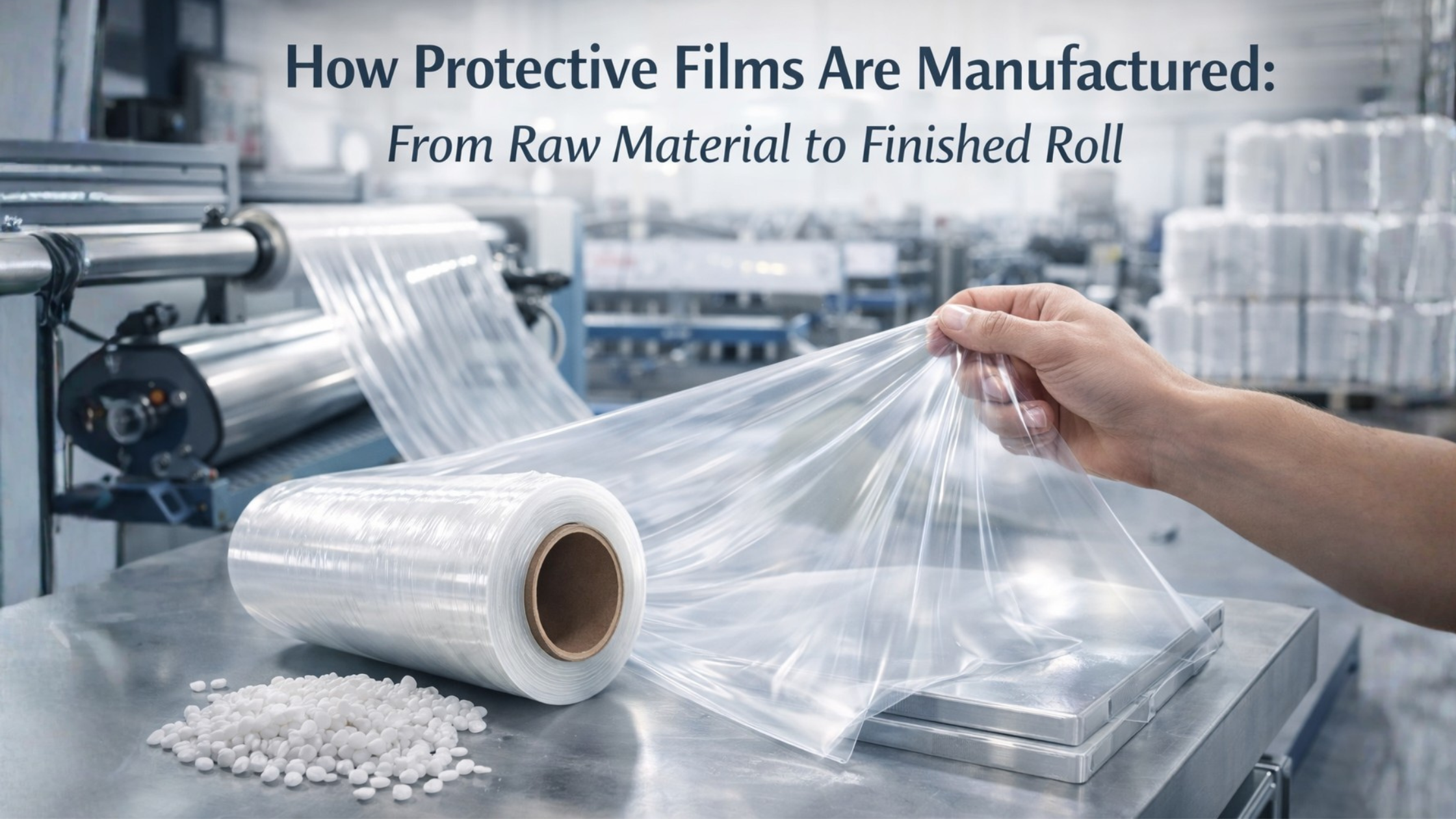
Protective films are essential in everyday life, whether in households, commercial kitchens, industrial packaging, or specialty applications. They safeguard surfaces, preserve food, and maintain hygiene while adding convenience. Yet, few people realize the sophisticated journey that transforms raw polymer into the transparent, clingy, and protective sheets we rely on daily. At Tilak Polypack, we specialize in manufacturing high-quality protective films, including cling films, decorative films, and specialty packaging films, delivering performance, safety, and versatility across the globe.
The manufacturing of protective films is a combination of advanced polymer science, precision engineering, and rigorous quality control. These films, particularly those designed for food or sensitive surfaces, must meet strict standards for safety, durability, and usability. Protective films serve multiple purposes: they preserve freshness in food, prevent scratches and damage during handling, and offer easy storage and transport solutions. In commercial applications, such as food service, industrial packaging, and decorative wrapping, these films are indispensable.
Understanding Protective Films and Their Applications
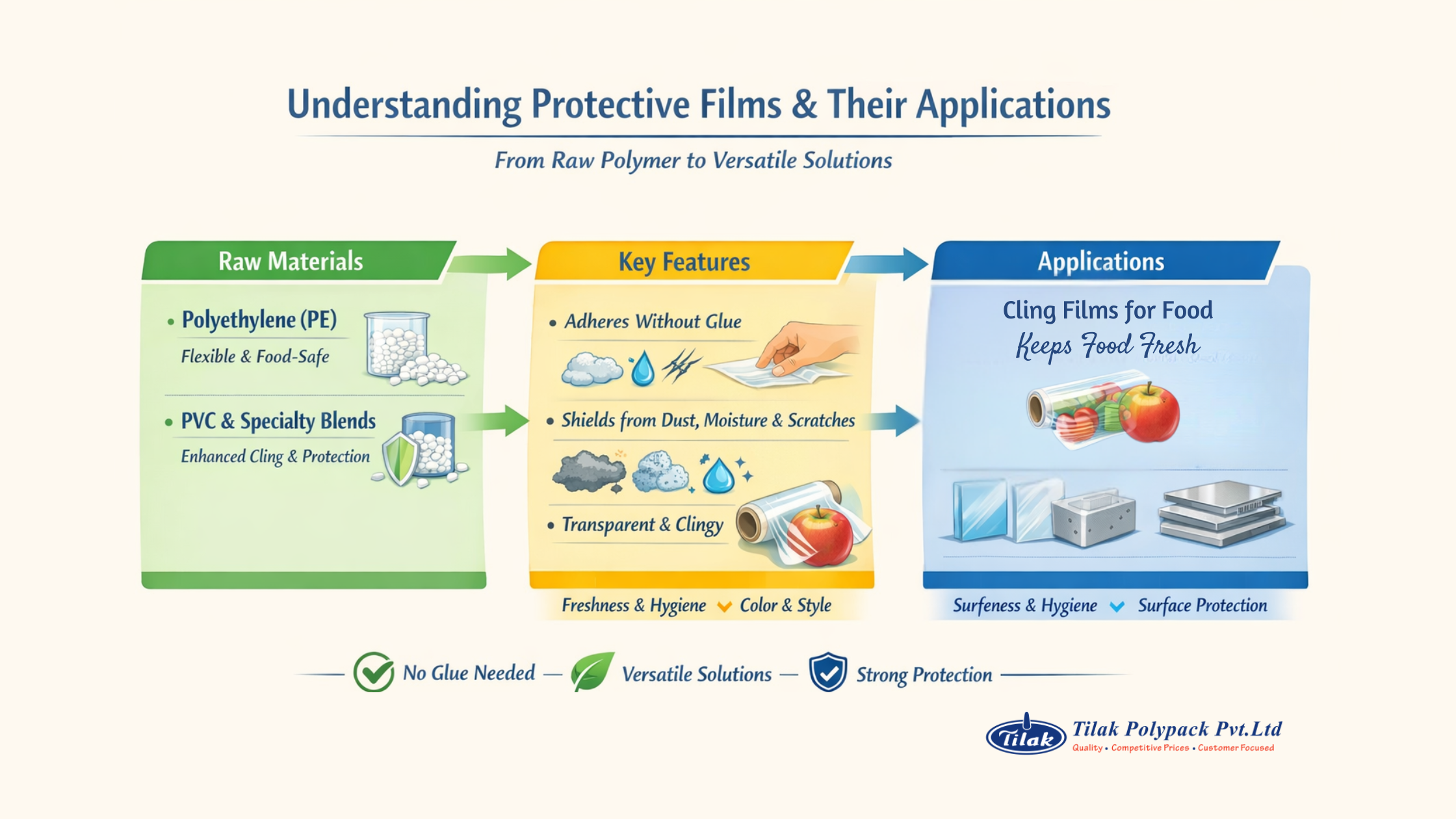
Protective films are made from a variety of polymers, primarily polyethylene (PE), known for its flexibility, transparency, and food-safe properties. Some films are produced using polyvinyl chloride (PVC) or specialty blends to achieve unique characteristics, such as enhanced cling or surface protection. The films can adhere to containers, surfaces, and objects without adhesives, providing a reliable barrier that protects against dust, moisture, scratches, and contamination.
At Tilak Polypack, our protective films include cling films for food packaging, decorative films for household and retail applications, and specialized protective films for industrial use. Cling films are designed to maintain the freshness of fruits, vegetables, cooked foods, dairy products, and sweets. Decorative films add color and style without requiring glue, making them ideal for wrapping gifts, decorating surfaces, or enhancing presentation. Industrial protective films are used to safeguard materials like acrylic, metal, and glass during manufacturing, shipping, and storage.
Raw Materials and Preparation
The production of protective films begins with careful selection of raw materials. High-quality polyethylene resins form the base for most of Tilak Polypack’s films, ensuring flexibility, safety, and durability. These resins are blended with specific additives to enhance performance. Tackifiers create natural cling, slip agents allow smooth unwinding, UV stabilizers protect against sunlight exposure, and anti-static or anti-fog additives provide additional functionality depending on the film’s intended use.
Before entering the production line, raw materials undergo stringent testing to ensure compliance with international standards such as FDA and EU food-contact regulations. This attention to detail guarantees that every roll of protective film is safe for consumers and meets performance expectations.
Film Extrusion: Transforming Polymers into Protective Films
Once the raw materials are prepared, they undergo extrusion, the core process in protective film manufacturing. In this step, plastic pellets are melted and formed into thin sheets through one of two primary methods: blown film extrusion or cast film extrusion.
Blown film extrusion is the most common method for producing cling and protective films. Molten polymer is forced through a circular die and inflated into a bubble. This bubble is carefully cooled and flattened into uniform sheets that are wound into jumbo rolls. This technique provides films with excellent stretch, clarity, and surface cling.
Cast film extrusion, in contrast, uses a flat die to produce films with exceptional transparency and smoothness, ideal for decorative and high-end protective applications. Both methods are closely monitored to maintain consistent thickness, clarity, and adhesive properties, ensuring the final films perform reliably in a variety of uses.
Achieving Cling and Protective Properties
The defining feature of protective films, particularly cling film, is their ability to adhere without adhesives. In PE films, tackifiers migrate to the surface to create controlled stickiness. Some films receive corona treatment, a process that increases surface energy to enhance adhesion to containers, materials, or themselves. This ensures that food wraps, decorative films, and industrial protective sheets cling effectively without leaving residue.
Beyond cling, protective films often have additional features depending on their application. For example, films intended for food packaging may include moisture barriers and UV protection, while industrial films protect delicate surfaces from scratches, dust, or impact during storage and transportation.
Converting Rolls and Packaging
After extrusion, jumbo rolls of protective film are slit into specific widths suitable for various applications. Tilak Polypack offers a broad range of widths, from narrow household rolls to wide industrial films, and thicknesses ranging from 12 to 29 microns, with custom options available. The rolls are then rewound onto cores, packaged, and prepared for distribution.
Consumer-ready products include dispenser boxes with serrated edges and easy-start tabs, making cling films convenient for home and professional use. Bulk rolls and industrial films are carefully packaged to maintain quality during transport, with attention to preventing sticking, blocking, or deformation.
Quality Control and Safety
Tilak Polypack emphasizes quality and safety at every stage of production. Films undergo rigorous testing for cling strength, tear resistance, tensile strength, and optical clarity. For food applications, films are evaluated for compliance with FDA and EU standards, ensuring they are safe for direct contact with consumables. Industrial protective films are tested for durability, resistance to scratches, and protective performance under varying environmental conditions.
This meticulous attention to quality ensures that all Tilak Polypack films whether household, decorative, or industrial deliver consistent, reliable performance that customers can trust.
Sustainability and Innovation
Tilak Polypack is committed to eco-friendly solutions without compromising performance. Many of our films are reusable or biodegradable, with options made from plant-based polymers for environmentally conscious consumers. UV-protected films extend shelf life, decorative films enhance presentation, and industrial protective films maintain surface integrity, all while supporting sustainable practices. Advanced manufacturing techniques also reduce waste and optimize material use, reflecting our commitment to innovation and responsibility.
Conclusion
Protective films are more than just sheets of plastic they are highly engineered products designed to protect, preserve, and enhance convenience across multiple applications. From raw polymer selection to extrusion, finishing, and quality testing, each step in the production process is critical to achieving the performance characteristics customers expect.
At Tilak Polypack, our protective films including cling films, decorative films, and industrial protective sheets combine transparency, durability, safety, and sustainability. Whether wrapping food, decorating surfaces, or protecting materials during transport, Tilak Polypack ensures that every roll delivers reliability, convenience, and quality, making protective films a vital part of daily life and business operations worldwide.
