

The packaging industry is undergoing a profound transformation. As global awareness of environmental sustainability grows, businesses across sectors are seeking alternatives to conventional plastics. For commercial operations that handle large-scale distribution, storage, and shipping, traditional stretch films—while effective—pose significant environmental challenges. Biodegradable stretch films have emerged as a viable solution, combining operational reliability with ecological responsibility.
Leading manufacturers are now focusing on innovation to produce films that maintain the performance of conventional plastics while naturally decomposing after use. This shift is redefining B2B packaging strategies, enabling companies to meet sustainability targets without sacrificing efficiency or product protection.
Understanding Biodegradable Stretch Films
Stretch films are widely used for wrapping pallets, securing products during transit, and preventing damage from dust, moisture, or vibration. Biodegradable stretch films perform the same functions as traditional polyethylene films but are formulated to break down naturally in soil or compost environments.
These films are typically made from plant-based polymers, biodegradable polyesters, or starch-polymer blends. The result is a product that retains tensile strength, elasticity, and clarity during its functional life, but decomposes without leaving harmful residues. For B2B businesses managing bulk shipments, this provides an environmentally responsible alternative without requiring changes to existing packaging machinery or processes.
Strategic Advantages of Adopting Biodegradable Stretch Films
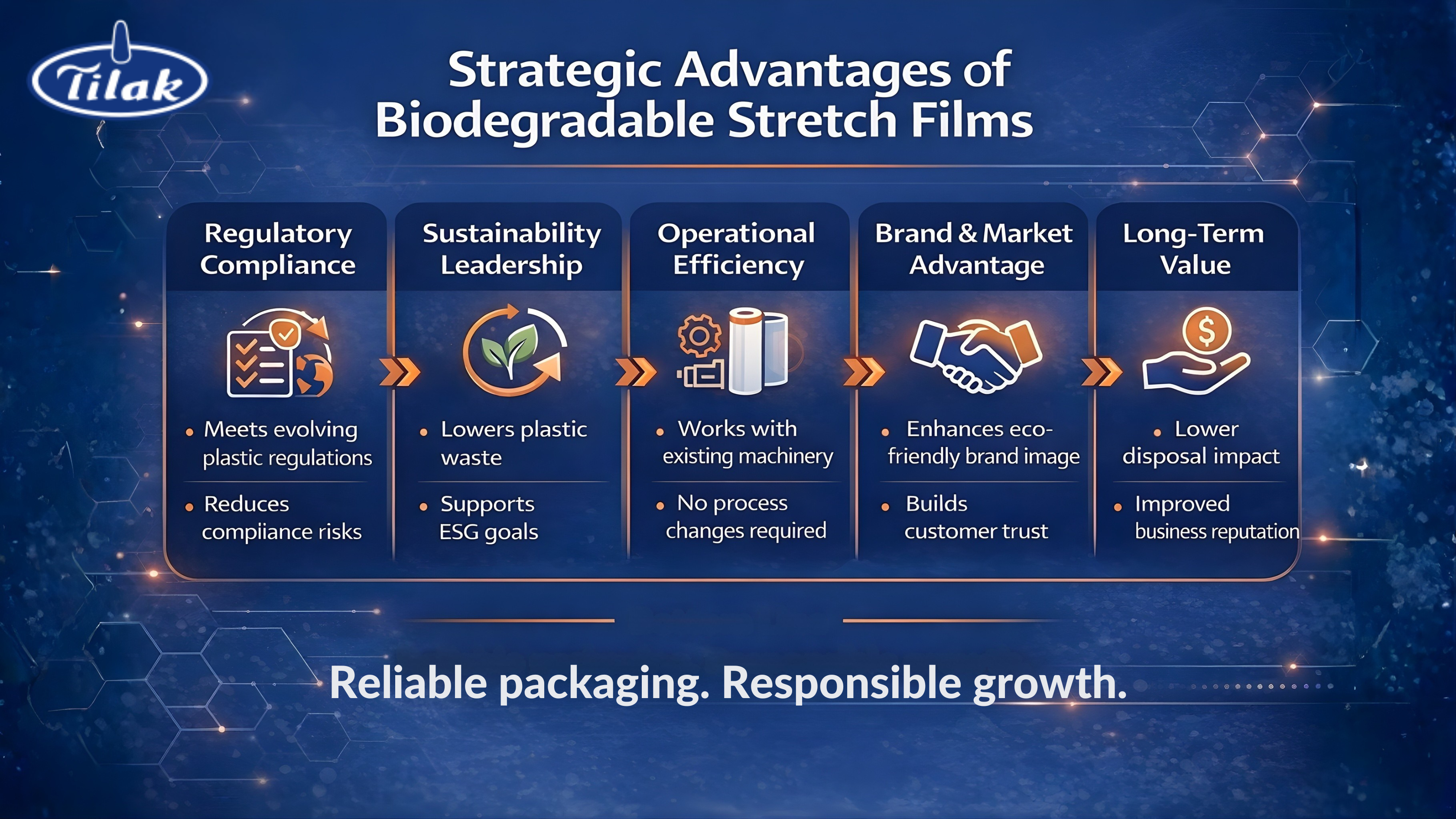
Commercial distributors, manufacturers, and logistics companies are under growing pressure to minimize plastic waste and adopt sustainable practices. Switching to biodegradable stretch films provides measurable benefits that extend beyond environmental responsibility.
Regulatory Alignment: With increasing restrictions on single-use plastics in many regions, using biodegradable films ensures compliance with local and international regulations, reducing the risk of fines or operational interruptions.
Sustainability Leadership: Integrating biodegradable films into packaging workflows allows companies to actively reduce their carbon footprint, reinforcing corporate sustainability initiatives and demonstrating commitment to responsible operations.
Seamless Integration: Modern biodegradable films are engineered to perform like conventional stretch films, maintaining strength, elasticity, and load security. This ensures that high-volume packaging processes remain efficient without requiring equipment modifications.
Enhanced Market Perception: Clients, retailers, and end-users increasingly prefer eco-friendly packaging. Offering products wrapped in biodegradable films strengthens brand reputation, satisfies customer expectations, and differentiates businesses in competitive markets.
For large-scale B2B operations, these combined advantages make biodegradable stretch films a strategic solution for maintaining operational efficiency while meeting environmental and market demands.
Innovations Led by Manufacturers
Manufacturers of biodegradable stretch films are at the forefront of packaging innovation. Investment in research and development is enabling improvements in material strength, shrinkability, and controlled biodegradability.
Some key innovations include:
- High-Performance Polymer Blends: Combining PLA, PBAT, and starch-based polymers to achieve optimal strength, clarity, and stretchability.
- Controlled Degradation Rates: Films are engineered to maintain integrity during transport and storage but degrade efficiently post-use.
- UV and Temperature Resistance: Designed to withstand varying environmental conditions without compromising film performance.
- Industrial Compostability Certification: Ensures compliance with recognized standards, making disposal environmentally safe and predictable.
These innovations allow B2B users to adopt biodegradable films confidently, knowing they can match the functional benefits of conventional materials while advancing sustainability goals.
Applications Across Industries
Biodegradable stretch films have versatile applications across various commercial sectors:
- Pallet Wrapping for Logistics and Distribution: Secures large shipments for storage and transport while minimizing plastic waste.
- Food and Beverage Packaging: Protects products from dust, moisture, and tampering while aligning with eco-friendly supply chain practices.
- Consumer Goods Packaging: Ensures safe transport of electronics, household items, and retail products without compromising environmental responsibility.
- Industrial and Manufacturing Applications: Wraps raw materials, machinery parts, and heavy equipment for bulk transport or storage.
The adaptability of biodegradable stretch films makes them suitable for B2B operations of all sizes, particularly those managing extensive logistics and supply chain operations.
Advantages Over Conventional Stretch Films
Switching to biodegradable stretch films offers multiple advantages for commercial operations:
Environmental Responsibility: Reduces landfill waste, prevents microplastic contamination, and supports sustainable supply chains.
Operational Continuity: Works with standard wrapping machinery, eliminating the need for equipment upgrades or process changes.
Cost-Effectiveness: While unit costs may be higher, savings are realized in disposal, regulatory compliance, and enhanced brand value.
Customer Alignment: Supports client sustainability initiatives, creating a competitive edge in markets increasingly focused on green practices.
Durability: Modern biodegradable films match or exceed conventional films in tensile strength, load retention, and puncture resistance.
For B2B businesses, these advantages translate into operational efficiency, regulatory compliance, and a stronger environmental profile.
Challenges in Large-Scale Implementation
Despite the benefits, companies must consider operational challenges when integrating biodegradable stretch films:
- Environmental Sensitivity: Films must be stored properly to prevent premature degradation from humidity or heat.
- Bulk Procurement Consistency: Ensuring uniform quality across large-volume orders is critical for operational reliability.
- Load Requirements: Heavier or irregularly shaped pallets may require testing specific biodegradable formulations to ensure sufficient strength.
- Cost Considerations: Initial costs are higher, though lifecycle savings and brand positioning often justify the investment.
Proper planning and supplier engagement are essential for seamless integration into B2B packaging workflows.
How Manufacturers Support B2B Operations
Biodegradable stretch film manufacturers play a crucial role in helping B2B clients transition effectively. Many offer:
- Custom Film Formulations: Tailored to specific load weights, pallet sizes, and environmental conditions.
- Technical Support: Guidance on storage, application, and film performance optimization.
- Bulk Supply Solutions: Ensures consistent quality, reliable delivery schedules, and scalable options for large operations.
- Sustainability Certification Assistance: Helps clients meet compliance requirements and industry standards.
By collaborating with manufacturers, B2B companies can adopt biodegradable stretch films confidently and at scale, integrating sustainability into daily operations without sacrificing efficiency.
The Road Ahead for Biodegradable Stretch Films
As regulatory pressures, market expectations, and sustainability priorities grow, biodegradable stretch films are poised to replace conventional plastics in commercial packaging. Continuous innovation is enhancing material performance, reducing costs, and expanding the range of applications. For B2B operations, early adoption not only aligns with environmental goals but also positions businesses competitively in an increasingly eco-conscious market.
Large-scale manufacturers and distributors who integrate biodegradable films now will benefit from operational efficiencies, reduced environmental liabilities, and enhanced market reputation—laying the foundation for a future where sustainable packaging becomes the standard, not the exception.
Conclusion
Biodegradable stretch films are more than just an alternative to conventional plastics—they represent a strategic approach to sustainable packaging in B2B operations. By partnering with forward-thinking manufacturers, commercial businesses can achieve reliable product protection, streamline logistics, and meet environmental and regulatory expectations. As the packaging industry evolves, embracing biodegradable stretch films ensures operational efficiency, enhances brand value, and contributes to a greener future.
For companies managing bulk shipments or large-scale operations, biodegradable stretch films are not simply a choice—they are a practical, sustainable solution that drives both business performance and environmental responsibility.
