
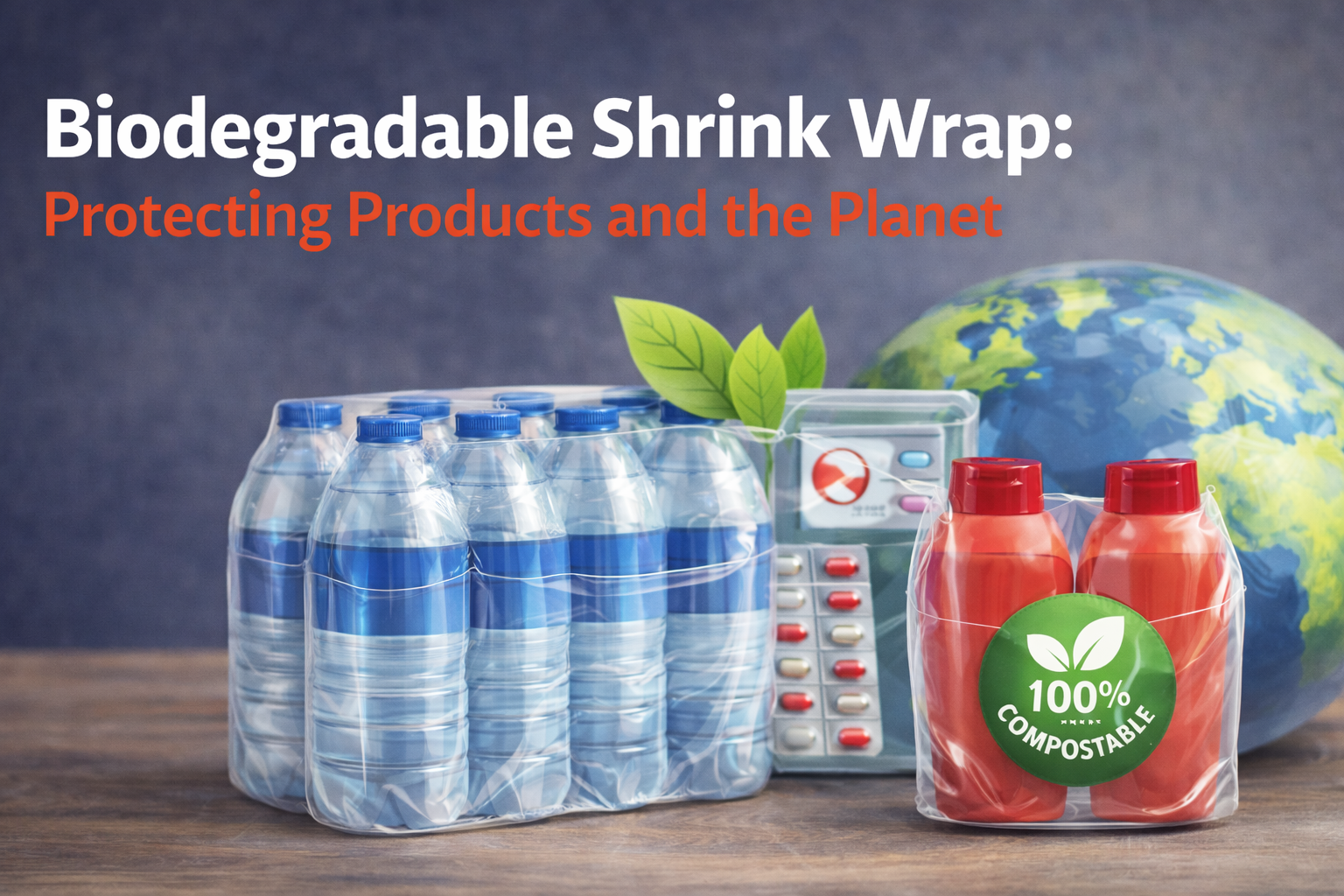
In modern packaging, shrink wrap has long been a go-to solution for securing, protecting, and presenting products. However, traditional shrink films are made from non-degradable plastics, contributing significantly to environmental waste. For B2B companies handling bulk shipments or large-scale product distribution, this poses operational and ethical challenges. Biodegradable shrink wrap provides a practical alternative, combining reliable product protection with environmental sustainability, aligning with corporate responsibility goals and evolving regulatory standards.
What Is Biodegradable Shrink Wrap?
Biodegradable shrink wrap is a polymer-based film designed to shrink tightly around products when heat is applied, while naturally breaking down in soil or compost after disposal. Unlike conventional polyethylene shrink films, these wraps are formulated using plant-based polymers, biodegradable polyesters, or starch blends. The result is a product that offers the same protective and aesthetic qualities as traditional shrink films but decomposes naturally without leaving harmful residues.
For B2B businesses, this means large-scale shipments, pallets, and bulk items can be securely packaged while minimizing environmental impact. It provides a direct solution for companies looking to reduce plastic waste without compromising operational efficiency.
Why B2B Companies Are Adopting Biodegradable Shrink Wrap
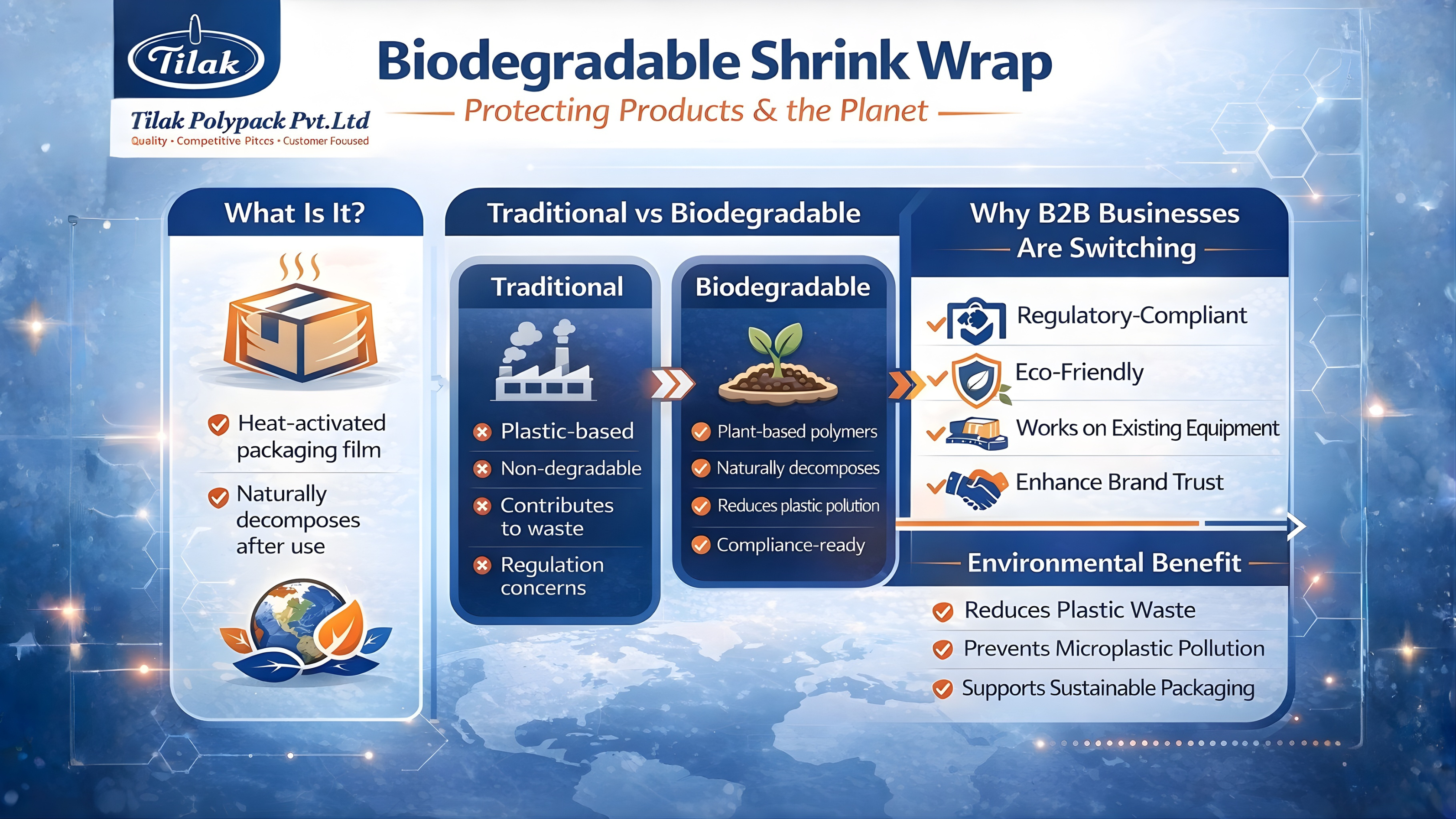
Commercial operations and large-scale distributors face unique pressures: regulatory compliance, sustainability targets, and operational efficiency. Biodegradable shrink wrap addresses all of these:
Environmental Compliance: Governments worldwide are imposing stricter regulations on single-use plastics. Using biodegradable shrink wrap ensures businesses remain compliant while avoiding potential fines or operational delays.
Corporate Sustainability Goals: Many companies are committed to reducing their carbon footprint and promoting eco-friendly practices. Switching to biodegradable films strengthens corporate social responsibility initiatives and enhances brand image.
Operational Efficiency: The performance of biodegradable shrink films is comparable to traditional films—they cling tightly, secure items during transport, and maintain product integrity. Businesses can maintain their existing packaging processes without significant changes.
Customer Expectations: Buyers, especially in retail and food distribution, are increasingly favoring environmentally responsible packaging. Offering products wrapped in biodegradable shrink films can improve market perception and attract eco-conscious clients.
For B2B operations that handle large volumes, these advantages translate into operational, financial, and reputational benefits.
Applications in Commercial Packaging
Biodegradable shrink wrap is versatile and can be applied across a wide range of industries:
- Pallet and Bulk Product Packaging: Secures stacked products for shipment and storage.
- Consumer Goods Protection: Ensures items like electronics, toys, and packaged foods remain intact and visually appealing.
Food and Beverage Industry: Maintains hygiene and prevents contamination while complying with food safety standards. - Industrial Components: Protects tools, machinery parts, and other sensitive products during transport.
These applications demonstrate how biodegradable shrink wrap can seamlessly replace traditional plastics without compromising on reliability or performance.
Material Types and Performance
Biodegradable shrink wrap comes in several formulations, each tailored for different operational needs:
- Starch-Based Films: Best for short-term applications where rapid biodegradation is desirable.
- PLA (Polylactic Acid) Blends: Provide longer-term durability and stability under temperature variations.
- PBAT Blends: Offer flexibility and tear resistance for high-volume and heavy-load applications.
- Compostable Films: Fully certified for industrial composting, ideal for clients seeking zero-waste packaging solutions.
Selecting the right film depends on the type of product, shipment duration, storage conditions, and desired degradation timeline. For bulk B2B operations, sourcing consistent, high-quality rolls is critical for maintaining operational efficiency.
Best Practices for Using Biodegradable Shrink Wrap
Proper handling and application ensure maximum performance and longevity of biodegradable films:
- Heat Application: Ensure even heating to achieve uniform shrinkage without damaging products.
- Storage Conditions: Keep films in a cool, dry environment to prevent premature degradation.
- Pallet Wrapping Techniques: Apply tension carefully to secure goods without overstressing the film.
- Monitoring Degradation: Understand the decomposition timeline to match storage and shipping requirements.
Following these practices ensures that biodegradable shrink wrap performs reliably across large-scale operations while maintaining eco-friendly standards.
Advantages Over Conventional Shrink Films
Biodegradable shrink wrap offers multiple benefits for commercial users:
- Eco-Friendly: Reduces landfill contributions and prevents microplastic pollution.
- Comparable Strength: Provides the same protection, shrinkage, and clarity as traditional films.
- Labor and Cost Efficiency: Maintains operational processes without additional handling requirements.
- Market Appeal: Aligns with sustainability expectations from clients and regulatory bodies.
These advantages make biodegradable shrink films an attractive choice for B2B companies looking to modernize packaging while demonstrating environmental responsibility.
Challenges and Considerations
Despite the benefits, there are operational considerations to keep in mind:
- Storage Sensitivity: Biodegradable films can degrade if stored in humid or excessively warm conditions for long periods.
- Performance Under Heavy Loads: Some formulations may require testing for ultra-heavy pallets to ensure adequate tensile strength.
- Supply Chain Consistency: Bulk operations must ensure reliable sourcing to avoid interruptions in production or shipping.
Addressing these factors during procurement and operational planning ensures that biodegradable shrink wrap performs consistently and efficiently.
The Future of Packaging in B2B Operations
As sustainability becomes an operational priority, biodegradable shrink wrap is likely to see continued adoption across commercial industries. Advances in polymer technology are producing films with enhanced durability, tear resistance, and controlled decomposition timelines, making them suitable for an even wider range of applications. For B2B businesses, embracing biodegradable shrink films represents both a strategic operational decision and a step toward responsible corporate stewardship.
Conclusion
Biodegradable shrink wrap is transforming the way B2B companies approach packaging. By combining reliable product protection with environmental responsibility, it provides a solution that meets the needs of large-scale operations, regulatory compliance, and sustainability goals. For distributors, manufacturers, and commercial operations, adopting biodegradable shrink films is not only an investment in eco-friendly practices but also a step toward operational efficiency, brand enhancement, and future-ready packaging. As environmental considerations increasingly shape business decisions, biodegradable shrink wrap is emerging as a practical and essential tool for responsible, large-scale packaging operations.
