

As commercial farming scales up, the environmental footprint of traditional plastic films has become a growing concern. Conventional polyethylene films, widely used for mulching, low tunnels, and greenhouse covers, provide excellent crop protection but create significant waste after harvest. Biodegradable plastic films offer a strategic solution for B2B agricultural operations—combining effective crop protection with sustainability, operational efficiency, and regulatory compliance.
Understanding Biodegradable Films and How They Work
Biodegradable plastic films are engineered to break down naturally in soil through microbial activity, turning into water, carbon dioxide, and biomass. They are typically made from plant-based polymers, starch blends, or biodegradable polyesters. These films maintain their mechanical strength during the crop’s growth phase, ensuring effective protection against pests, weeds, and weather. Once their functional period ends, they decompose, eliminating the need for labor-intensive removal and disposal.
The advantage of this technology lies in balancing crop protection with environmental responsibility. Biodegradable films perform the same functions as conventional plastics—such as moisture retention, temperature regulation, and weed suppression—while leaving the soil clean and fertile for subsequent crops.
Why Large-Scale Farms Are Turning to Biodegradable Films
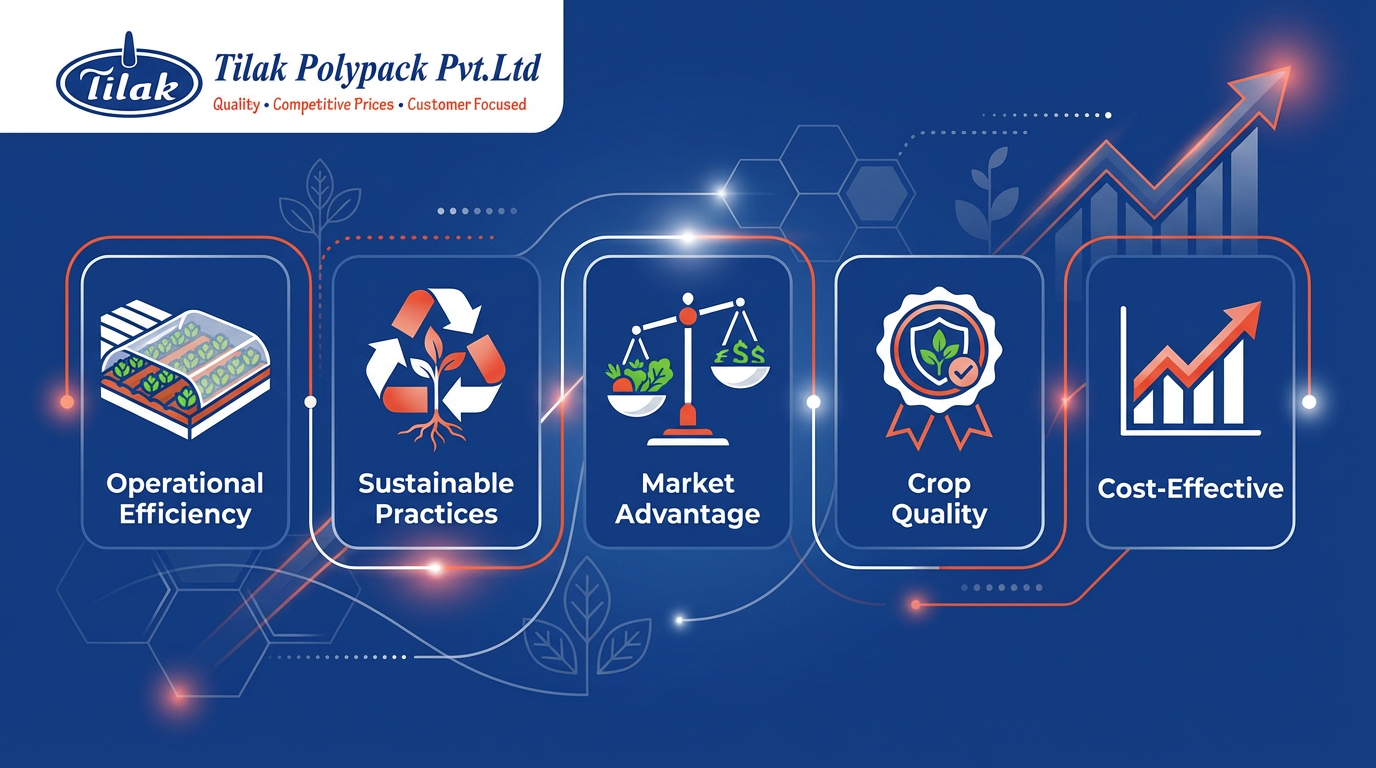
For commercial agricultural operations, biodegradable films offer multiple benefits:
Operational Efficiency: Eliminates the need for collecting and disposing of plastic films after harvest, reducing labor costs, particularly across hundreds or thousands of hectares.
Sustainable Practices: Aligns with corporate sustainability goals and regulatory mandates limiting single-use plastics in agriculture.
Market Advantage: Growing consumer demand for environmentally friendly produce enables farms to market crops as eco-conscious, adding value to bulk B2B sales.
Crop Quality: Maintains all the benefits of traditional films—weed suppression, soil moisture retention, temperature control, and pest management—without leaving residual waste.
Cost-Effectiveness Over Time: Despite a slightly higher upfront cost, reduced labor, disposal savings, and compliance advantages make biodegradable films economically viable for large-scale growers.
Key Applications in Commercial Agriculture
Biodegradable films are versatile and can be applied in a variety of scenarios:
- Vegetable Mulching: Retains moisture, suppresses weeds, and enhances soil temperature for high-value crops.
- Seedling Protection in Low Tunnels: Shields young plants from frost, wind, and pests while decomposing naturally post-growth. For more details, explore our guide on low tunnel plastic film for crop protection.
- Season Extension: Facilitates early planting and late harvesting, maximizing yield cycles.
- Organic Farming: Reduces soil contamination, supports certification standards, and enhances marketability.
- High-Volume Production: Simplifies operations by eliminating post-harvest film retrieval across large commercial farms.
These use cases demonstrate the scalability and practicality of biodegradable films in professional, B2B farming operations.
Varieties of Biodegradable Plastic Films
Commercially available biodegradable films differ in composition and performance:
- Starch-Based Films: Suitable for short-term mulching and low tunnel protection; ideal for quick-growing crops.
- Polylactic Acid (PLA) Films: Plant-based polyester films providing longer-term protection and UV stability.
- PBAT Blends: Flexible, tear-resistant films with controlled degradation rates for multi-month applications.
Oxobiodegradable Films: Incorporate additives that accelerate breakdown through microbial activity.
Selecting the appropriate film type depends on crop requirements, field conditions, season duration, and desired degradation period. B2B farms often purchase in bulk rolls to maintain consistency and efficiency across large-scale operations.
Installation and Field Management Best Practices
 Proper application ensures maximum performance and longevity of biodegradable films.
- Soil Preparation: Level the bed, remove debris, and ensure proper irrigation setup.
- Secure Edges: Use soil, clips, or stakes to anchor the film and prevent wind displacement.
- Frame Support for Low Tunnels: Lightweight PVC or metal arches support the film for seedling protection.
- Monitoring: Regular inspection helps identify tears or gaps, maintaining crop protection.
- Post-Harvest Handling: No removal is required for most biodegradable films; the soil naturally absorbs the decomposed material.
Following these steps ensures consistent performance, reduces operational labor, and maximizes the value of the investment for large-scale commercial growers.
Degradation Process and Soil Safety
Biodegradable films decompose through microbial activity, returning to the ecosystem without leaving microplastics or toxic residues. Soil microbes gradually break down the polymer chains into water, carbon dioxide, and biomass, enriching the soil naturally. For B2B farms, this means the soil is ready for future planting cycles without additional cleanup or disposal costs, supporting sustainable production practices on a large scale. Learn more about how biodegradable mulch film improves crop yields and environmental impact.
Common Challenges and How to Avoid Them
Even high-quality biodegradable films can underperform if not used properly:
- Mismatch Between Film Type and Crop Duration: Short-term films used for long-season crops may degrade prematurely.
- Poor Installation: Loose edges or improper tension can reduce weed suppression and pest control.
- Environmental Factors: Excessive moisture or high microbial activity can accelerate decomposition beyond planned timelines.
- Neglecting Regular Checks: Small tears or displacements can compromise crop protection if not addressed promptly.
Adhering to manufacturer guidelines and B2B best practices ensures consistent protection and operational efficiency. For guidance on selecting films, read about using biodegradable films effectively.
Advantages for B2B Farming Operations
Biodegradable films provide tangible benefits for large-scale, professional agriculture:
- Labor Savings: Eliminates the need for removal, collection, and disposal.
Environmental Compliance: Meets regulations restricting single-use plastics. - Sustainability Branding: Supports marketing of eco-friendly produce.
- Operational Efficiency: Easy deployment, minimal maintenance, and scalable across extensive fields.
- Crop Performance: Retains all traditional film benefits—weed control, moisture retention, and pest protection.
These advantages make biodegradable films a strategic choice for commercial farms seeking high ROI and sustainable operations.
Selecting the Right Film for Your Operation
Choosing the correct biodegradable film requires analysis of:
- Crop Type and Growth Cycle: Fast-growing crops may require short-term starch-based films; long-season crops may benefit from PLA or PBAT blends.
- Climate Conditions: UV-stabilized variants protect crops in high sunlight exposure.
- Field Scale: Bulk rolls ensure uniformity and operational efficiency.
- Desired Degradation Timeline: Films should last the crop season but decompose shortly afterward.
By carefully selecting the right product, B2B farms can maximize yield, reduce labor costs, and support sustainability goals. Additionally, explore tunnel plastic sheets for reliable greenhouse protection.
Conclusion
Biodegradable plastic films represent a transformative solution for modern agriculture, combining crop protection, operational efficiency, and environmental responsibility. For large-scale B2B farms, these films reduce labor, eliminate plastic waste, support sustainability compliance, and maintain high crop quality. By choosing the right type of film, applying it correctly, and monitoring its performance, commercial growers can achieve reliable protection, maximize yields, and reinforce their commitment to sustainable agricultural practices. Biodegradable films are not just a product—they are a strategic investment in the future of large-scale, environmentally responsible farming.
