
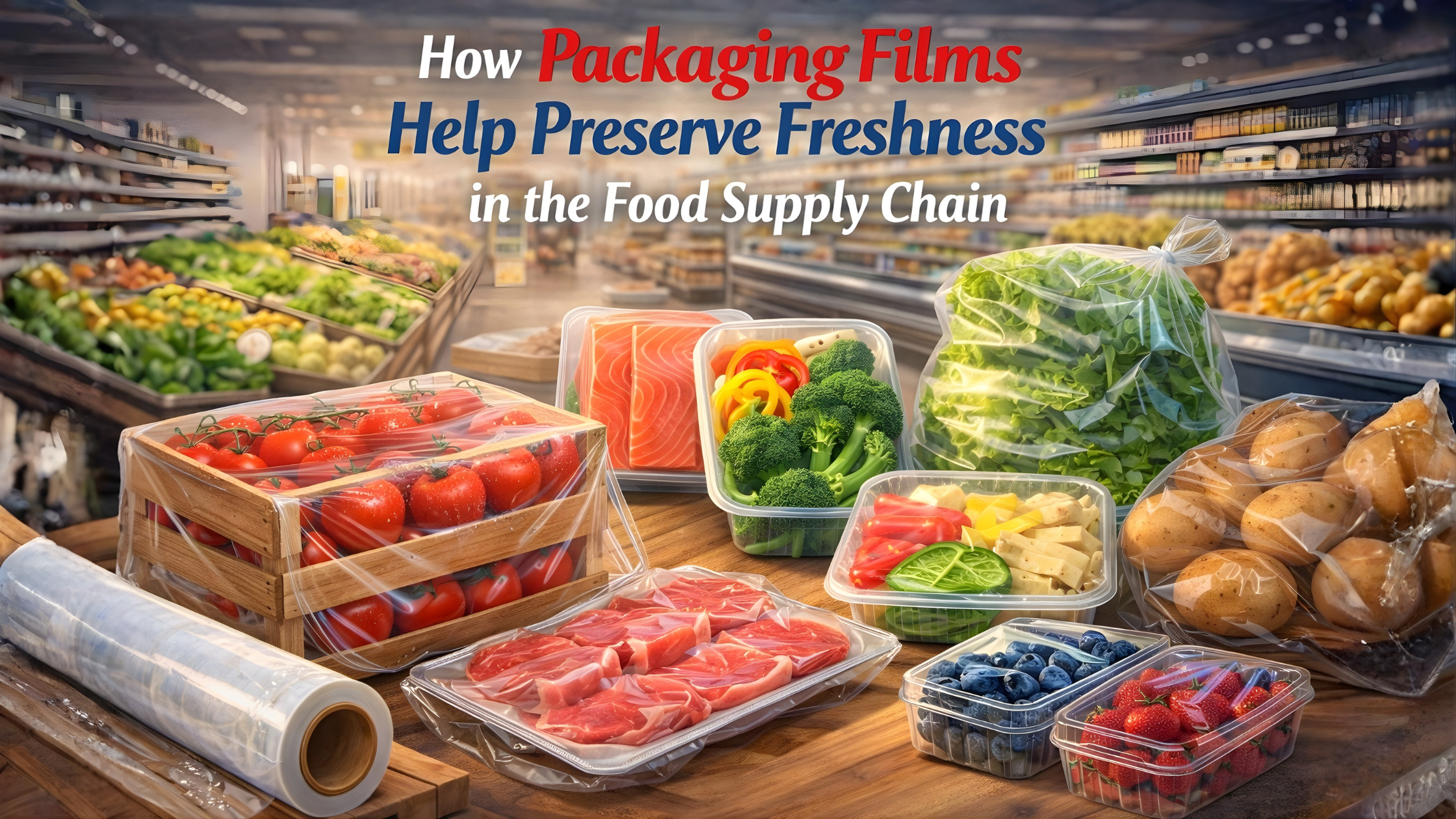
The modern food supply chain moves products from farms through processing facilities, distribution centers, and finally to consumers. Throughout this journey, maintaining freshness is critical. Packaging films have become essential tools in this preservation process, using advanced polymer technology to protect food from production to consumption.
Understanding how these films work reveals the science behind keeping food fresh, safe, and nutritious across the entire supply chain.
The Food Preservation Challenge
Food deterioration happens constantly. Oxygen exposure causes fats to become rancid and vitamins to degrade. Moisture leads to texture changes and encourages bacterial growth. Temperature fluctuations accelerate chemical reactions that diminish nutritional value. Physical damage during handling creates entry points for contamination.
Without effective barriers, food products lose quality rapidly. Fresh produce wilts, dairy products spoil prematurely, and meat develops off-flavors. Studies show that 30-40% of food produced globally is wasted, with inadequate packaging contributing significantly to these losses.
This is where specialized packaging films make their impact, serving as engineered barriers that control the food’s environment throughout the supply chain.
Cling Film: The Food Service Essential
Cling film is one of the most versatile packaging solutions in commercial food service and retail. This transparent, flexible film clings to surfaces without heat or adhesives, creating protective seals that prevent contamination and preserve moisture.
Restaurants use it to cover prep containers, wrap sandwiches, and protect cut produce. Catering businesses rely on it for transport. The film’s transparency allows visual inspection without unwrapping, reducing handling and maintaining food safety.
At Tilak Polypack, our cling film is manufactured using virgin and food-grade raw materials, with special additives imported from Europe. Available in thicknesses from 10 microns with customizable roll lengths, our cling film meets demanding professional requirements while providing excellent cling properties and easy handling.
Agricultural Films: Protection from Farm to Table
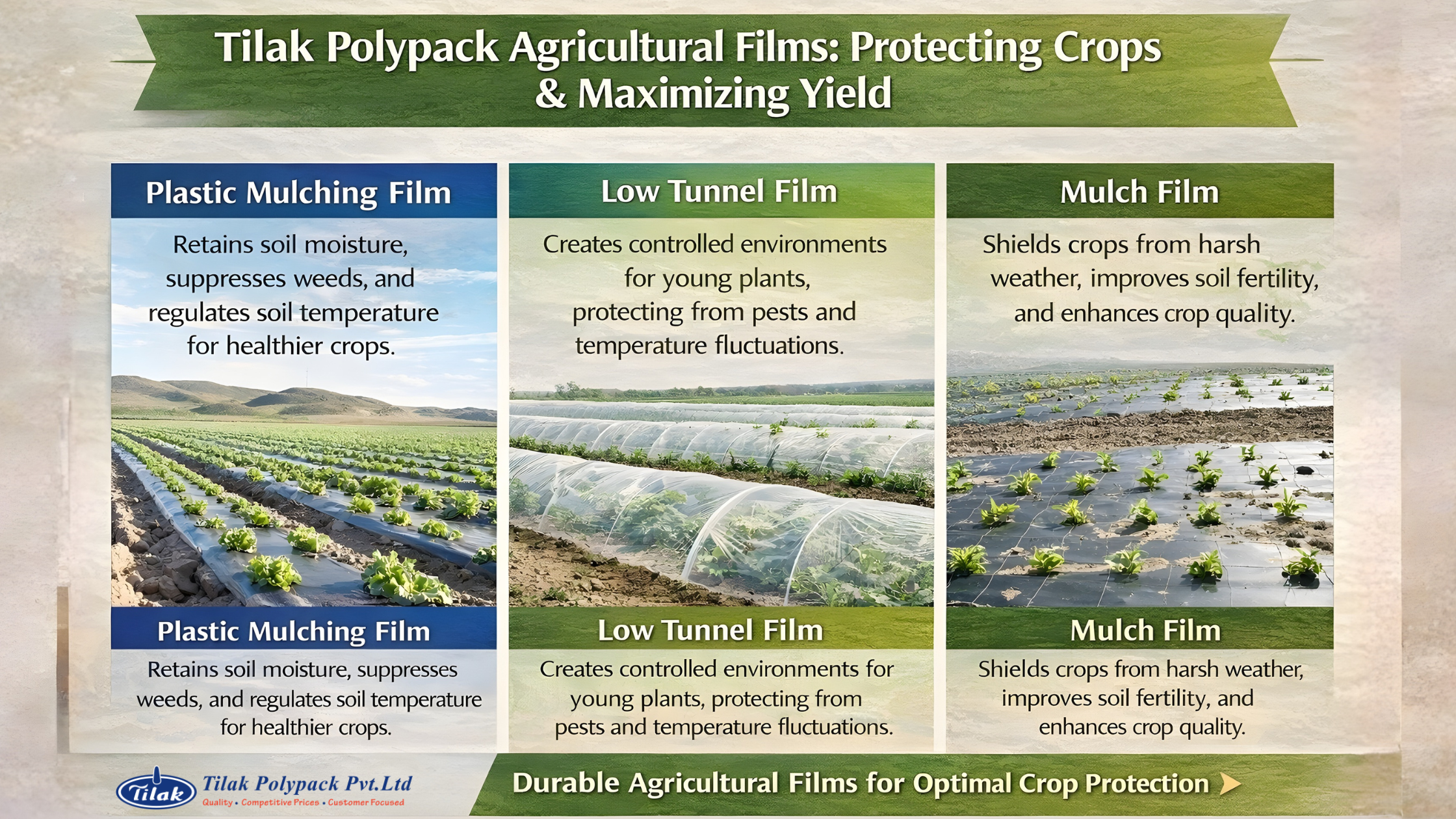
Food freshness preservation begins in the field, where agricultural films create optimal growing conditions and protect harvested crops during transport to processing facilities.
Mulch films suppress weed growth, retain moisture, and regulate soil temperature. This leads to healthier plants producing higher-quality crops with better nutritional content. By reducing herbicide requirements and water consumption, these films support sustainable agricultural practices.
Greenhouse films create controlled environments that shield crops from weather, pests, and diseases. They maintain optimal temperature and humidity, extending growing seasons and enabling consistent, high-quality crop production year-round.
Silage films preserve animal feed quality, ensuring livestock receive nutritious feed. Healthier animals produce higher-quality meat and dairy products, demonstrating how protection at every stage contributes to final product excellence.
At Tilak Polypack, we manufacture comprehensive agricultural films including plastic mulching films, low tunnel films, and mulch films in various colors, thicknesses, and widths. Our films are engineered from high-quality polyethylene, providing durability and resistance against tearing and punctures.
Specialized Dairy Packaging Solutions
Dairy products require specialized packaging due to their sensitivity to light, oxygen, and temperature. Milk packaging film must address multiple preservation needs simultaneously.
Oxygen barriers prevent oxidative degradation that causes off-flavors and reduces nutritional value. Light barriers protect vitamins that degrade under UV exposure. Moisture barriers prevent condensation and maintain product consistency.
Modern milk packaging employs multi-layer films combining different polymers for comprehensive protection. These films enable extended shelf life, reduced waste, improved distribution flexibility, and better product availability in remote markets.
For cheese, yogurt, and butter, film technology adapts to specific needs anti-fog properties for clarity, hermetic seals with easy opening, and grease resistance at refrigeration temperatures.
How Barrier Technology Extends Shelf Life
Barrier performance is the most critical function of food packaging films. Different foods require protection from different environmental factors.
Oxygen barriers prevent oxidative spoilage in products containing fats and oils. High-barrier films reduce oxygen transmission to extremely low levels, extending shelf life from days to weeks or months.
Moisture barriers prevent water vapor transmission that causes textural changes and microbial growth. Hygroscopic products like crackers need excellent moisture barriers to maintain crispness.
Light barriers protect photosensitive nutrients and pigments. Many vitamins degrade under light exposure, and natural colors can fade. UV-blocking additives or opaque films provide essential protection.
Aroma barriers prevent flavor loss and protect against off-flavor absorption, particularly important for strongly flavored products like coffee or cheese.
Mechanical Protection During Distribution
Food products endure significant physical stress during distribution loading, unloading, vibration during transport, stacking pressure, and repeated handling. Packaging films must provide mechanical protection throughout this journey.
Puncture resistance prevents package failures from sharp corners, rough handling, or warehouse equipment contact. Tear propagation resistance contains damage to localized areas rather than allowing tears to run across packages. Impact resistance protects during drops or collisions, especially for frozen products where cold temperatures reduce flexibility.
Quality packaging films balance these mechanical properties with barrier performance, ensuring products reach consumers in optimal condition.
Sustainability and Environmental Responsibility
As environmental concerns influence packaging decisions, food companies must balance preservation needs with sustainability goals.
Material reduction through downgauging using thinner films that maintain performance decreases plastic consumption per package. Advances in polymer technology enable substantial thickness reductions without compromising protection.
At Tilak Polypack, we’re committed to sustainable packaging solutions. Our manufacturing processes optimize strength-to-weight ratios, reducing material consumption while maintaining protective properties essential for food preservation.
The sustainability equation must consider the broader picture: properly preserved food reduces waste, which represents a net environmental benefit despite using plastic packaging materials.
Quality Control and Food Safety
Packaging films directly contact food products, making rigorous quality control and regulatory compliance essential. Films must meet food safety standards and perform consistently.
Food contact regulations require demonstration that films don’t transfer harmful substances to food. Migration testing quantifies potential transfer of film components, with results remaining below regulatory limits.
At Tilak Polypack, quality assurance is fundamental to our operations. With over 20 years of manufacturing experience, we’ve developed rigorous testing protocols ensuring every product meets strict standards. Our commitment to food-grade materials and compliance with international regulations ensures our films protect both food quality and consumer safety.
The Economic Value of Effective Packaging
While packaging represents a cost, effective films deliver substantial value through waste reduction, shelf life extension, and quality maintenance.
Spoilage reduction translates directly to savings. If improved packaging reduces spoilage by just 5% in high-value categories, savings quickly exceed incremental packaging costs. Extended distribution reach becomes possible when packaging extends shelf life sufficiently, enabling economies of scale and efficient distribution networks.
Quality consistency throughout shelf life maintains brand reputation and consumer satisfaction. Products that maintain appearance, texture, and flavor generate repeat purchases and brand loyalty.
Partnering with Tilak Polypack
Successful packaging implementation requires collaboration with experienced manufacturers. At Tilak Polypack, we bring over 20 years of manufacturing experience to every customer relationship. Our global presence serving customers across the US, Singapore, Australia, Germany, Canada, New Zealand, United Kingdom, Ireland, Scotland, and Norway demonstrates our capability to meet diverse requirements.
We offer comprehensive customization options, engineering films specifically for your application. Our commitment to quality and food safety ensures every product meets rigorous standards. Technical support continues beyond initial delivery, helping optimize packaging processes and identify improvement opportunities.
Conclusion
Packaging films serve as essential guardians of food quality throughout the supply chain. From cling film protecting prepared foods in commercial kitchens, to agricultural films optimizing crop production, to specialized milk packaging film preserving dairy products these materials play critical roles in delivering fresh, safe food to consumers.
Modern packaging films employ sophisticated polymer technology, multi-layer structures, and specialized additives to create comprehensive protection. As films evolve toward enhanced performance and improved sustainability, their role in reducing food waste while maintaining safety continues growing.
Companies that invest in appropriate protective films achieve superior results: reduced waste, extended shelf life, enhanced quality, and improved profitability.
For more information about our food packaging solutions including cling films and agricultural films, contact Tilak Polypack at +91-9227422544 or email info@tilakpolypack.com.