
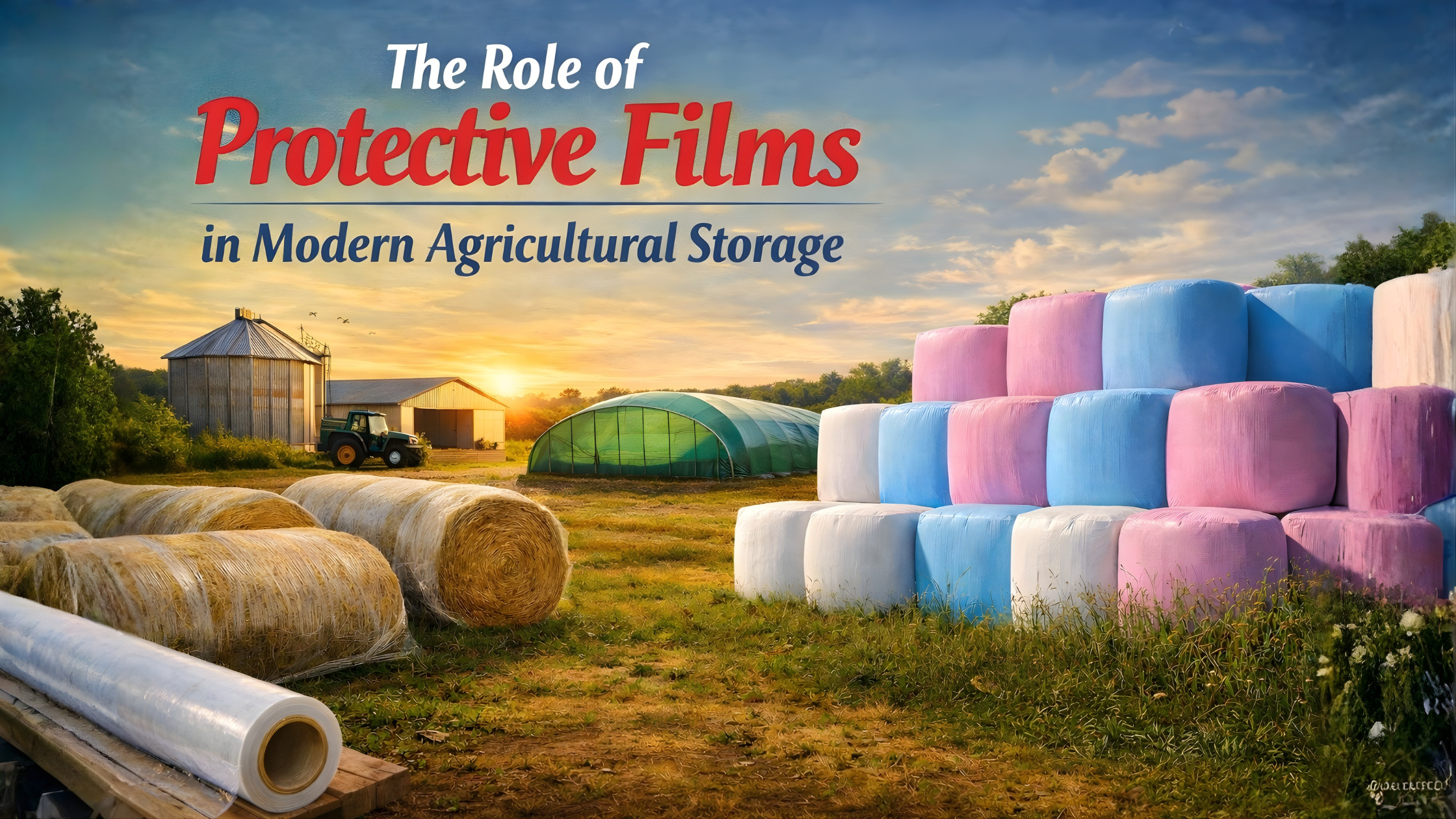
Modern agriculture demands innovative solutions to preserve feed quality and minimize losses. As farming operations scale and weather patterns become increasingly unpredictable, protective films have emerged as indispensable tools for agricultural storage. From small family farms to large commercial operations, the right packaging solution can mean the difference between profitable harvests and significant feed losses.
Understanding Silage Preservation: Why Protection Matters
When farmers harvest crops like hay, maize, or grass for silage, they’re capturing nutrients at their peak. However, without proper protection, these nutrients can quickly degrade. The fermentation process that creates quality silage requires an oxygen-free environment where beneficial lactic acid bacteria can thrive while harmful microorganisms are kept at bay.
Exposure to air, moisture, and UV radiation triggers a chain reaction of spoilage. Mold develops, heat builds up, and nutritional value plummets. Studies show that improperly stored silage can lose 20-30% of its dry matter content, directly impacting livestock nutrition and farm profitability. This is where advanced agricultural films become crucial investments rather than optional expenses.
The Science Behind Silage Stretch Film
Silage stretch film represents a significant advancement in agricultural storage technology. Unlike ordinary plastic sheets, these specialized films are engineered with multiple features that work together to create optimal preservation conditions.
At Tilak Polypack, our silage stretch film is formulated with advanced polymers that deliver:
- Superior puncture resistance: Protects against tears during application and from external damage like bird pecking or rodent activity
- High tack levels: Ensures layers bond together, eliminating air pockets between wraps
- UV stabilization: Shields bales from sunlight damage during outdoor storage
- Low oxygen permeability: Creates the anaerobic environment essential for proper fermentation
- Minimal water vapor transmission: Prevents moisture infiltration that leads to spoilage
These properties aren’t accidental they’re the result of careful material selection and manufacturing processes designed specifically for the demanding conditions of agricultural storage.
How Stretch Properties Transform Storage Efficiency
The “stretch” in silage films isn’t just about convenience; it’s fundamental to effective preservation. Quality silage films can stretch up to 300% of their original length, allowing them to conform tightly to bale surfaces regardless of shape or size.
This elasticity serves multiple critical functions. First, it enables farmers to create multiple protective layers using less material, reducing costs per bale. Second, stretched film maintains tension even as bales settle and compress during fermentation. Third, the tight conformity eliminates air gaps where spoilage organisms could flourish.
When properly applied, our silage stretch film creates a seal so effective that it reduces dry matter losses to as little as 3-5% a dramatic improvement over traditional storage methods. For operations wrapping hundreds or thousands of bales annually, this difference translates into substantial feed savings and improved herd nutrition.
Versatility Across Agricultural Applications
While silage preservation represents the primary use case, agricultural films have evolved to serve diverse farming needs. The same polymer technology that protects silage also secures hay bales, bundles produce, and protects equipment during storage or transport.
At Tilak Polypack, we manufacture stretch film solutions that extend beyond traditional agriculture:
- Manual stretch film for small-scale bundling and wrapping operations
- Machine stretch film for high-volume operations using automated wrapping equipment
- Pre-stretch film that reduces physical effort while improving efficiency
- Specialized films with features like VCI protection for farm equipment or UV resistance for outdoor applications
This versatility means farmers can standardize on proven film technology across multiple operations, simplifying procurement and ensuring consistent quality throughout their storage systems.
Choosing the Right Film: Key Considerations
Not all agricultural films deliver the same performance, and selecting the appropriate product requires understanding your specific operational needs:
Climate factors play a major role. Farms in high-UV regions benefit from films with enhanced UV stabilizers, while operations in areas with extreme temperature swings need films that maintain flexibility in both heat and cold. Our films are specially formulated to perform reliably across diverse environmental conditions.
Bale characteristics influence film requirements. Larger bales demand thicker films with higher puncture resistance typically 23 or 29 microns. Round bales and square bales each present unique wrapping challenges that affect film selection. The wrapping method matters too, whether using manual application or automated bale wrapping machinery.
Storage duration affects performance needs. Silage intended for 12+ months of storage requires films with superior oxygen barrier properties to maintain fermentation quality throughout the storage period.
Application Best Practices for Maximum Protection
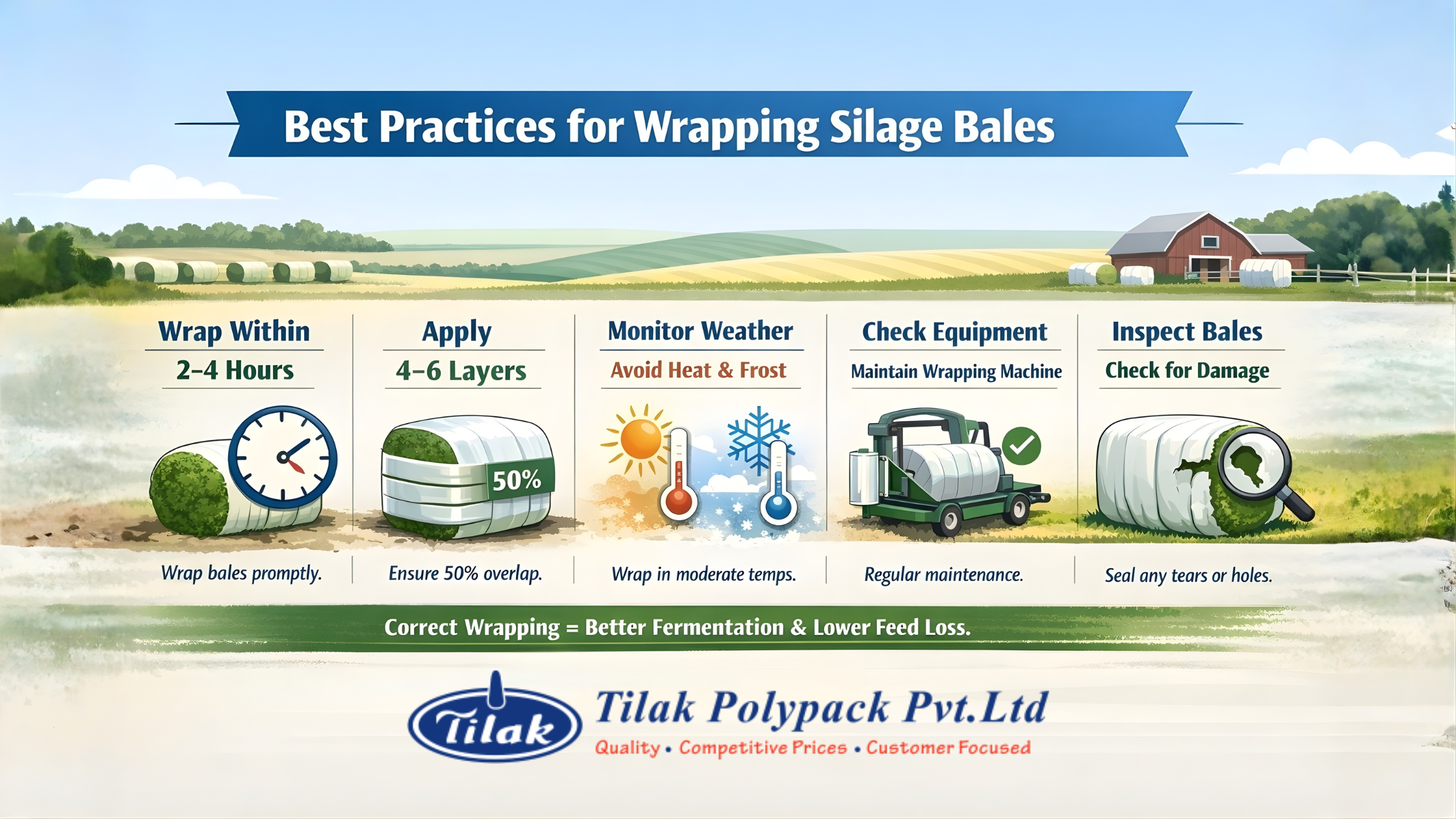
Even premium silage stretch film won’t perform optimally without proper application technique. Here are key practices that separate successful storage operations from problematic ones:
Timing is critical. Ideally, bales should be wrapped within 2-4 hours of baling to minimize oxygen exposure and preserve nutritional content. Delayed wrapping allows aerobic spoilage to begin before the protective barrier is in place.
Layer management ensures protection. Professional operations typically apply 4-6 layers of film, with 50% overlap between passes. This creates redundancy if one layer suffers damage, remaining layers maintain the protective seal. The outside layer provides crucial UV protection and additional puncture resistance.
Weather awareness improves outcomes. Wrapping in extreme heat can cause films to stick together, while very cold conditions may reduce film elasticity. Planning wrapping operations during moderate temperature periods improves application ease and final seal quality.
Machine maintenance matters. For operations using wrapping machines, regular maintenance ensures consistent tension and proper film dispensing. This prevents over-stretching that weakens the film or under-stretching that wastes material and reduces protection.
The Economics of Quality Film Investment
When evaluating agricultural films, the lowest price per roll rarely represents the best value. Quality films like those manufactured by Tilak Polypack deliver measurable economic advantages:
Reduced feed loss translates directly to bottom-line savings. If quality film prevents just 5% additional dry matter loss compared to budget alternatives, that’s 50kg saved per ton of silage. Multiply this across an entire harvest, and the premium for better film becomes insignificant compared to the feed value preserved.
Labor efficiency improves with films engineered for easy handling. Films that tear during application waste time and frustrate workers. Our silage stretch film is designed for smooth unwinding and consistent performance, even when used by less experienced operators.
Storage flexibility increases when you can rely on long-term protection. Farmers using quality films can safely store bales through variable weather conditions without constant monitoring or emergency re-wrapping of damaged bales.
Consistent quality reduces variability in livestock nutrition. When every bale emerges from storage with preserved nutritional value, you can maintain steady feeding programs that optimize animal performance.
Blown vs. Cast Films: Understanding the Difference
Within agricultural films, two manufacturing processes produce distinct characteristics:
Blown films offer exceptional tear resistance and puncture resistance, making them ideal for rough handling conditions and irregular bale shapes. The manufacturing process creates a tougher, more durable film particularly valued for wrapping by hand or in challenging field conditions.
Cast films provide smooth application and consistent quality with excellent clarity. Their unique formulation enables high-performance wrapping with automated equipment, ensuring uniform coverage and reliable results.
Tilak Polypack produces both types, allowing farmers to select the option best suited to their specific wrapping method and operational requirements. Both types include UV protection to reduce heat buildup and prevent sun damage during outdoor storage.
Environmental Considerations in Modern Agriculture
As agriculture increasingly focuses on sustainability, the environmental impact of packaging materials deserves attention. While agricultural films are plastic products, their use in preventing feed waste contributes to overall sustainability:
Resource conservation through reduced spoilage means fewer acres need to be cultivated to feed the same number of animals. The land, water, fuel, and labor invested in growing crops generates greater returns when films preserve the harvest effectively.
Efficiency improvements continue as manufacturers develop thinner films that maintain or improve protection while using less material. Our manufacturing process focuses on optimizing strength-to-weight ratios, reducing plastic consumption per bale wrapped.
Recycling initiatives are expanding as industry and agricultural communities develop programs for collecting and processing used agricultural films. While challenges remain due to field contamination, progress continues toward circular economy solutions.
The sustainability equation must be viewed holistically: properly preserved silage reduces overall environmental impact even considering the single-use nature of current film technology.
Quality Standards That Define Reliable Performance
Not all manufacturers maintain the same standards for agricultural films. When evaluating suppliers, look for these indicators of quality:
Consistent thickness throughout the roll ensures predictable performance. Variations in gauge create weak spots prone to tearing and compromise protection.
Reliable tensile strength means the film can withstand the stress of stretching during application without failing. Our silage stretch film undergoes rigorous testing to verify mechanical properties meet agricultural demands.
Verified UV stabilization determines how long films protect against sun damage. Without proper UV inhibitors, films can degrade in weeks rather than providing season-long protection.
Documented oxygen permeability affects fermentation quality. Lower permeability creates better anaerobic conditions for silage preservation.
At Tilak Polypack, every production run is tested to ensure it meets our strict quality standards before reaching customers. With over 20 years of manufacturing experience and a global presence across the US, Singapore, Australia, Germany, Canada, New Zealand, United Kingdom, Ireland, Scotland, and Norway, we’ve established ourselves as a trusted provider of high-quality agricultural films.
Innovation Driving Agricultural Advancement
The evolution of agricultural films continues as research and development efforts focus on enhanced performance characteristics:
Multi-layer technology combines different polymer formulations in a single film, each layer optimized for specific functions UV resistance, oxygen barrier, puncture protection, and tack.
Specialized additives are incorporated during manufacturing to address specific challenges. These include enhanced UV stabilizers for extreme sun exposure, anti-static properties for easier handling, and optimized cling characteristics for superior layer bonding.
Application efficiency improvements make films easier to use while maintaining or improving protection. Pre-stretch technology reduces the physical effort required for hand wrapping while ensuring optimal tension and coverage.
Customization options allow farmers to specify exactly what they need. At Tilak Polypack, we offer silage stretch film in various widths (250mm, 500mm, 750mm), thicknesses (23 micron, 29 micron), and colors (white, green, black, or customized options) to match specific operational requirements.
Making the Right Choice for Your Operation
Selecting agricultural films represents an important decision that affects operational efficiency, feed quality, and farm profitability. Consider these factors when evaluating options:
Source from proven manufacturers with track records of consistent quality and reliable supply. Tilak Polypack’s 20+ years in the industry and global customer base demonstrate our commitment to meeting agricultural needs reliably.
Evaluate total cost, not just price per roll. Factor in potential feed savings, labor efficiency, and the peace of mind that comes from knowing your harvest is properly protected.
Consider customization options that align with your specific needs. One-size-fits-all approaches rarely optimize performance for diverse agricultural conditions.
Look for responsive technical support. Questions arise during application, and having access to knowledgeable support helps ensure successful outcomes.
The Future of Agricultural Storage
As global food demand grows and climate variability increases, the role of protective films in agriculture will only expand. Innovations in material science promise even better performance from thinner films, while developments in recycling technology may address environmental concerns more effectively.
Smart films incorporating sensors to monitor fermentation conditions represent an exciting frontier, potentially alerting farmers to developing problems before significant losses occur. Enhanced barrier technologies may extend storage periods further, improving flexibility in feed management.
Whatever developments emerge, the fundamental principles remain constant: effective agricultural storage requires creating and maintaining an optimal environment for feed preservation. Quality silage stretch film will continue serving as the foundation of successful storage operations.
Taking Action: Implementing Better Storage Solutions
For farmers looking to improve their silage storage outcomes, the path forward is clear:
Assess your current practices honestly. Calculate actual feed losses and consider how much improvement is possible with better materials and techniques.
Invest in quality films from manufacturers like Tilak Polypack who understand agricultural demands and engineer products specifically for farming applications.
Train operators properly on application techniques that maximize film performance. Even the best materials can’t overcome poor wrapping practices.
Monitor results to verify improvements and adjust approaches as needed. Track metrics like visible spoilage, feed odor and appearance, and livestock performance to quantify the benefits of better storage.
Plan ahead to ensure adequate film supplies before harvest season begins. Last-minute purchases limit options and may force compromises on quality.
Conclusion
Protective films have transformed agricultural storage from a challenge of managing inevitable losses to an opportunity for preserving maximum nutritional value. Modern silage stretch film technology delivers the mechanical properties, barrier characteristics, and durability needed to protect valuable feed investments through all storage conditions.
The difference between successful and problematic storage often comes down to film quality and application practices. By choosing proven agricultural films engineered specifically for demanding farm conditions like those manufactured by Tilak Polypack and implementing proper wrapping techniques, farmers can dramatically reduce losses while improving feed quality and consistency.
As agriculture continues evolving to meet global food security needs, the protective films that preserve our harvests will remain essential tools. The investment in quality materials and proper techniques pays dividends throughout the feeding season and beyond, ultimately contributing to more efficient, sustainable agricultural operations.
For more information about our silage stretch film solutions or to discuss your specific agricultural storage needs, contact Tilak Polypack at +91-9227422544 or email info@tilakpolypack.com. With customization options, global distribution capabilities, and over two decades of manufacturing excellence, we’re ready to help you achieve optimal storage results.