
In today’s fast-paced logistics landscape, ensuring products arrive at their destination undamaged is a fundamental business requirement. Industrial packaging films have transformed how companies secure their loads, offering superior protection that prevents costly damage during transportation and storage. These versatile materials have become indispensable in modern supply chains, providing efficient solutions that enhance both load stability and product safety across diverse industries.
The Critical Importance of Load Stability
Load stability goes far beyond simply keeping boxes neatly stacked on pallets. It’s about preventing product damage, reducing losses, and ensuring goods arrive in pristine condition. When loads shift during transit, the consequences can be severe: broken merchandise, contaminated products, workplace injuries, damaged customer relationships, and tarnished brand reputation.
The economic impact of poor load stability extends well beyond immediate product loss. Companies face increased insurance premiums, customer complaints, returns processing costs, additional shipping expenses, and potential liability issues. By investing in quality packaging films, businesses can dramatically reduce these risks while streamlining their operations and protecting their bottom line.
Understanding How Packaging Films Secure Your Loads
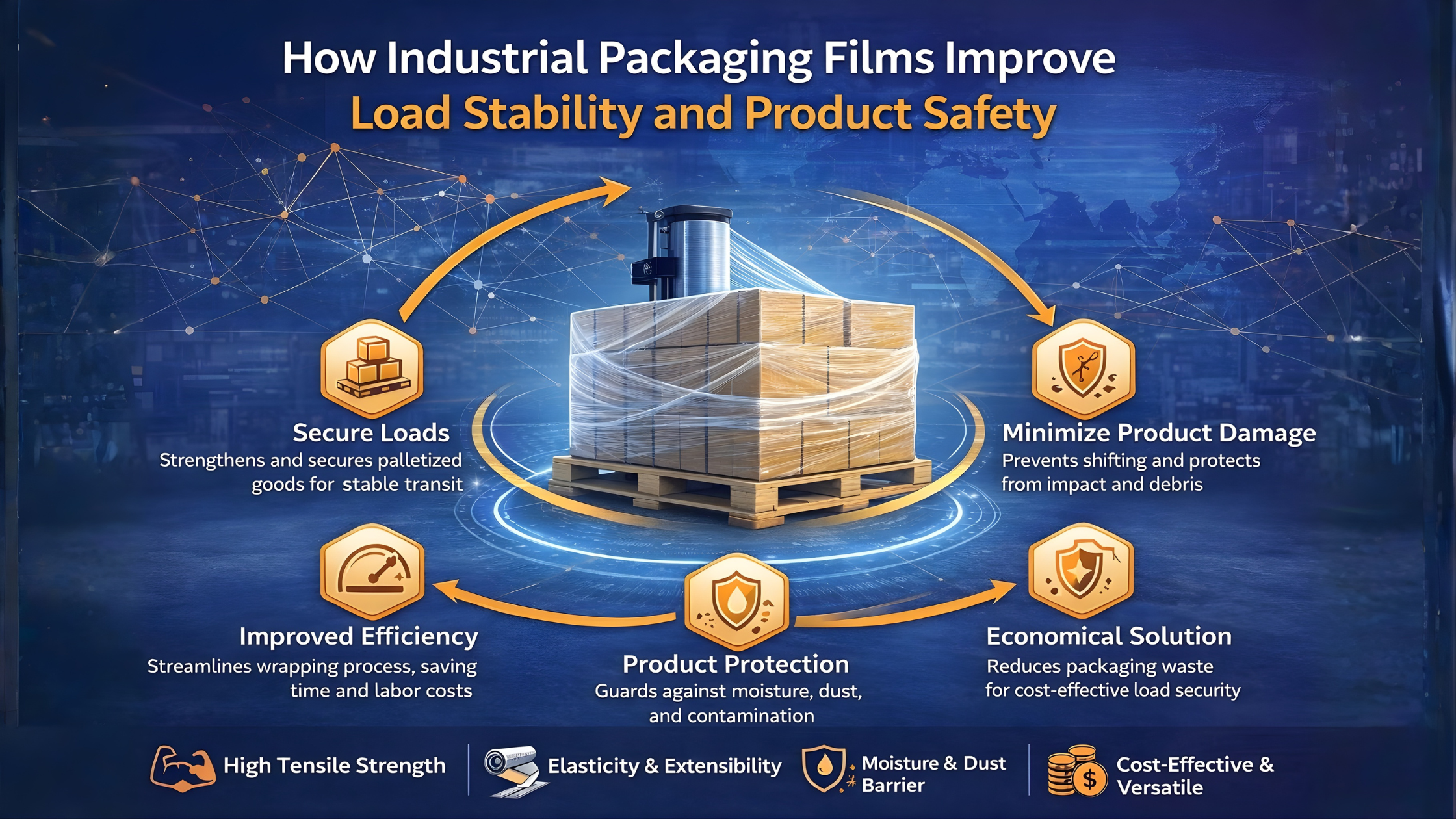
Modern packaging films work through several sophisticated mechanisms to secure loads effectively. The primary function is containment wrapping products tightly together to create a unified load that resists shifting. This containment force, often called “holding force,” keeps individual items locked in position even when subjected to the vibrations, impacts, and movements typical of transportation.
The elasticity of packaging films plays a vital role in maintaining consistent tension throughout the shipping journey. As loads settle or shift slightly, the film’s stretch properties allow it to maintain grip without tearing or losing effectiveness. This dynamic response to movement separates professional-grade packaging films from inferior alternatives that may snap or lose tension under stress.
Beyond mechanical stability, quality packaging films provide crucial protection against environmental factors. Moisture, dust, and debris can compromise product integrity during storage and transit. These films create a protective barrier that shields goods from external elements while maintaining load cohesion, effectively serving as waterproof packaging when wrapped properly around containers.
Stretch Film: The Industry Standard for Load Security
Stretch film has established itself as the workhorse of industrial packaging, offering unmatched versatility and performance. This highly elastic plastic film, typically made from polyethylene, is wrapped around products and pallets, stretching as it’s applied to create tight, secure loads. The film’s ability to return toward its original dimensions after stretching generates the holding force that keeps everything in place.
At Tilak Polypack, we manufacture stretch films in various configurations to meet diverse industry needs. Our stretch wrap rolls are available in standard widths ranging from 50mm to 600mm, with custom widths up to 1.5 meters available upon request. Thickness options span from 12 microns for lighter applications to 29 microns for heavy-duty protection, ensuring you can optimize your packaging strategy based on specific product requirements.
The versatility of stretch film makes it suitable for virtually any load configuration. Whether securing uniform boxes, irregularly shaped items, or mixed pallets, stretch film conforms to the load profile while providing consistent protection. The transparent films allow for easy barcode scanning and visual inspection without unwrapping, streamlining warehouse operations and quality control processes.
Manual vs. Machine Stretch Film Applications
For smaller operations or variable packaging needs, manual stretch film offers excellent flexibility. These hand rolls provide excellent clarity, help resist water and other liquids, and deliver lower packaging costs compared to strapping systems. The compact size of mini stretch wrap films makes them ideal for bundling and collating small items efficiently.
Machine stretch film serves high-volume operations where automated wrapping equipment is essential. Our machine-grade films accommodate widths from 150mm to 1000mm and thickness ranges starting from 17 microns. These films are engineered for high-speed pallet wrapping machines, including systems with pre-stretch capabilities that maximize efficiency and material utilization.
Specialized Stretch Film Solutions
Different applications demand specialized film properties. For food packaging and catering use, cling film manufactured from virgin, food-grade raw materials with European-imported additives ensures safe contact with edibles. Thickness options start at 10 microns, with roll lengths customizable to operational requirements.
Agricultural applications benefit from silage stretch film, which features good mechanical properties including tensile strength and puncture resistance, high tack levels, UV stabilization for outdoor exposure, and low oxygen and water permeability to maintain silage quality.
For metal products requiring corrosion protection, VCI stretch film incorporates vapor corrosion inhibitors that safeguard metal objects from rust during storage and shipment. This specialized solution eliminates the need for additional rust preventatives while maintaining standard stretch film benefits.
Pre-Stretch Film: Engineering Efficiency Into Every Roll
Pre-stretch film represents a significant advancement in packaging technology that delivers measurable operational advantages. This multi-layer stretch film is mechanically stretched during manufacturing typically to 90-300% of its original length before being wound onto rolls. The result is a film that’s simultaneously thinner and stronger than standard stretch film, requiring minimal additional stretching during application while maintaining excellent holding force.
The ergonomic benefits of pre-stretch film cannot be overstated. Because the film has already been stretched, it requires significantly less physical effort to apply, reducing worker fatigue and minimizing the risk of repetitive strain injuries. This advantage leads to increased productivity, improved workplace safety, and lower workers’ compensation costs.
From a cost perspective, pre-stretch film offers impressive efficiency gains. Since the film is already elongated, each roll covers substantially more pallets than equivalent conventional stretch film. This translates to fewer roll changes, reduced material costs, and less packaging waste. Businesses routinely achieve the same load security while using up to 50% less film by weight, directly impacting their packaging budget.
The consistent pre-stretching also eliminates variability in application. Unlike hand-applied or machine-stretched films where tension can vary based on operator technique or equipment settings, pre-stretch film delivers uniform performance every time. This consistency means more reliable load security across your entire operation, reducing the risk of load failures and product damage.
Coreless Stretch Film: Sustainability Without Compromise
As environmental concerns reshape business practices and customer expectations, coreless stretch film has emerged as an innovative solution that reduces waste without compromising performance. Traditional stretch film rolls contain cardboard or plastic cores that must be disposed of after the film is depleted. Coreless film eliminates this waste entirely, offering a more sustainable packaging option that aligns with corporate environmental goals.
The environmental benefits of coreless film are substantial and measurable. By removing the core, manufacturers eliminate several pounds of waste per roll. For high-volume operations using hundreds or thousands of rolls annually, this reduction translates to significant waste diversion from landfills. Many businesses find that switching to coreless film helps them meet sustainability targets while maintaining operational efficiency.
The economic advantages extend beyond environmental considerations. With coreless stretch film, 100% of your investment goes into usable material no cost is wasted on disposable cores. This efficient design reduces your cost per load while simultaneously reducing your carbon footprint, creating a win-win scenario for both business and environmental objectives.
Beyond environmental and cost advantages, coreless film offers practical benefits for warehouse operations. Without cores to collect and dispose of, workers save time on waste management tasks. The films are also lighter and more compact for storage, reducing space requirements and shipping costs for the film itself when ordering supplies.
Modern coreless stretch films deliver the same holding force and load security as traditional cored versions. Advanced manufacturing techniques ensure that these films maintain consistent quality and performance characteristics throughout the roll, dispelling concerns that coreless options might represent inferior alternatives.
Innovative Stretch Film Technologies for Specialized Needs
The packaging industry continues to evolve, and specialized stretch films address emerging challenges. Oxy fade stretch wrap incorporates an oxygen barrier layer for protection against oxidation, using up to 50% less plastic waste while providing durable construction for secure fits. This technology is particularly valuable for products sensitive to oxidation during extended storage periods.
For environmentally conscious operations, biodegradable stretch wrap offers a formula designed to minimize environmental impact while ensuring optimal protection. These films provide high-strength performance for secure wrapping with guaranteed roll lengths, eliminating concerns about receiving short-length rolls that disrupt operations.
Recycled stretch wrap incorporates 40% post-industrial and post-consumer recycled content without sacrificing performance. These high-performance, durable films are easy to use, provide secure fits, and help businesses reduce their environmental impact through sustainable packaging solutions that appeal to eco-conscious customers.
For produce and cold products, vented stretch film features die-cut holes that allow condensation to escape from pallet loads, promoting proper airflow and product freshness. This design helps reduce spoilage of perishable goods by maintaining optimal temperatures and preventing moisture buildup that can accelerate deterioration.
Best Practices for Maximizing Packaging Film Performance
Selecting the right packaging film is only the first step toward optimal load stability. Proper application techniques are essential for achieving the full potential of your chosen film. Training staff on correct wrapping patterns, appropriate overlap percentages, and proper tension settings ensures that your film performs as engineered.
Load preparation significantly impacts packaging effectiveness. Ensuring pallets are stable before wrapping, arranging items to minimize protrusions, and using corner boards or edge protectors for fragile loads all contribute to better outcomes. The film should complement good stacking practices, not compensate for poor load configuration.
For vented stretch film used with perishable goods, properly securing the end such as by twisting or knotting—is crucial to maintaining load stability and security during transport. This attention to detail prevents the film from unwinding and ensures the ventilation system functions as designed.
Regular evaluation of your packaging strategy helps identify opportunities for improvement. Monitoring damage rates, conducting drop tests, analyzing cost-per-load metrics, and soliciting feedback from warehouse staff and transportation partners provides valuable insights into whether your current approach meets your needs or requires adjustment.
Choosing the Right Partner for Your Packaging Needs
With over 20 years of industry experience, Tilak Polypack has established itself as a leading stretch film manufacturer serving customers across the globe, including the US, Singapore, Australia, Germany, Canada, New Zealand, United Kingdom, Ireland, Scotland, and Norway. Our commitment to quality, customization, and sustainability sets us apart in the packaging industry.
We understand that different industries and applications have unique packaging requirements. That’s why we offer extensive customization options in terms of film thickness, width, length, and special additives including UV protection, VCI, and antistatic properties. Our films meet rigorous manufacturing and quality standards, ensuring consistent performance that protects your products and your reputation.
Whether you need manual stretch film for flexible small-scale operations, machine stretch film for high-speed automated systems, or specialized solutions like VCI, biodegradable, or coreless films, Tilak Polypack provides eco-friendly, customized packaging products tailored to your specific requirements.
Conclusion: Investing in Quality Packaging Delivers Measurable Returns
Industrial packaging films represent a critical investment in product protection, operational efficiency, and customer satisfaction. Whether choosing traditional stretch film for its proven versatility, pre-stretch film for its efficiency and ergonomic benefits, or coreless stretch film for its sustainability advantages, the right packaging solution enhances load stability while reducing costs and waste.
The benefits of using quality stretch wrap rolls extend across your entire operation: secure packaging that prevents shifting during transportation, reduced packaging waste through high conformability, prevention of damage and moisture intrusion, improved load stability, cost-effective solutions that reduce the need for additional materials, and enhanced efficiency in both packaging and unpacking processes.
At Tilak Polypack, we’re dedicated to being your reliable packaging partner, providing top-quality products, eco-friendly solutions, and customized packaging products that meet your unique requirements. By partnering with experienced manufacturers who can provide guidance on film selection and application techniques, you can optimize your packaging operations for maximum protection and minimum waste. The result is a more resilient supply chain that delivers products safely and cost-effectively, building customer confidence and supporting sustainable business growth.