
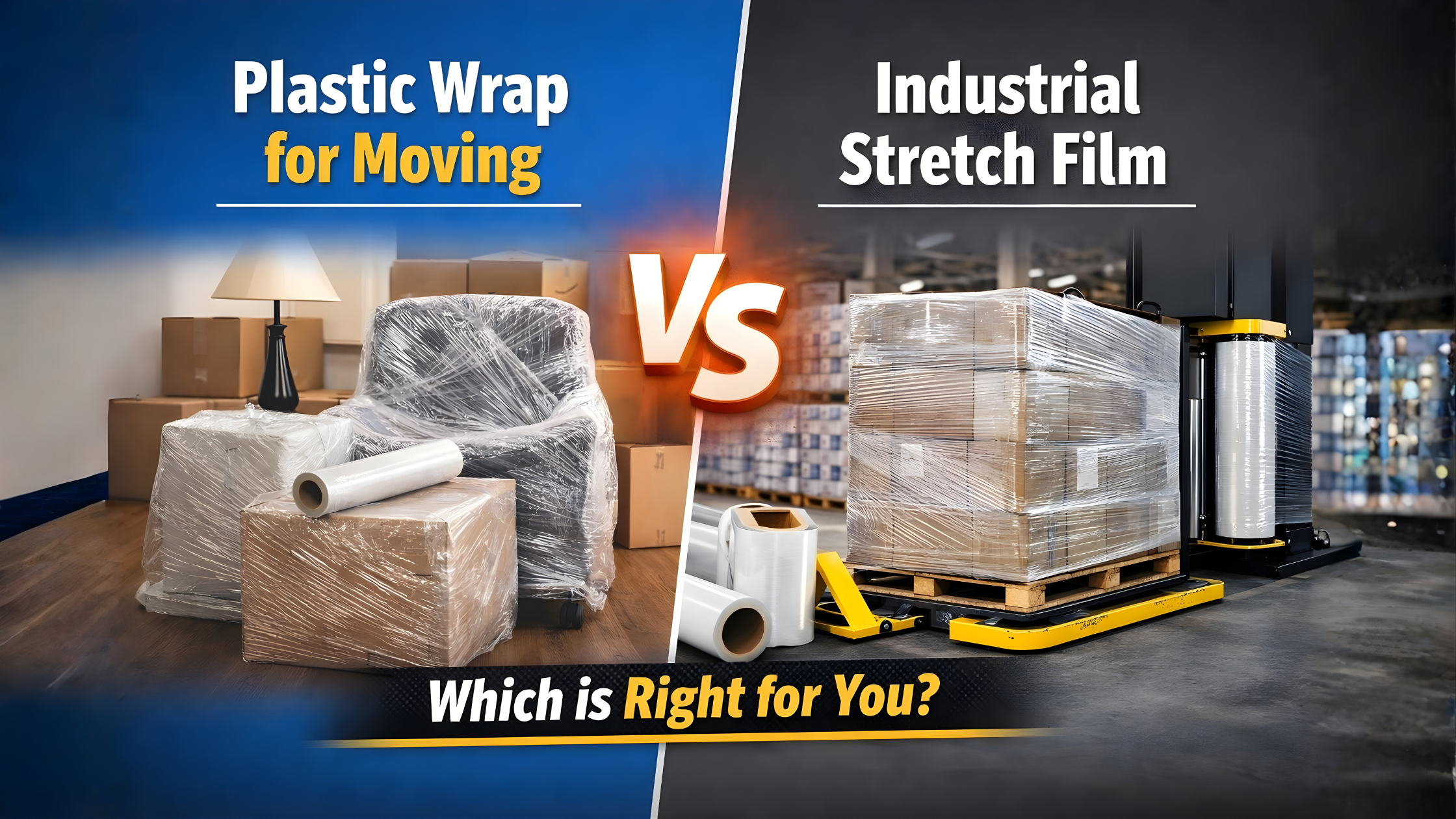
Plastic wrapping films are widely used for both household and industrial purposes. One common example is plastic wrap for moving, which is often used to secure furniture, protect household goods, and bundle items during relocation. However, in industrial environments, businesses rely on industrial stretch film to stabilize pallet loads and protect goods during storage and transportation.
While both materials may appear similar, they serve different purposes and are designed for different levels of performance. Understanding the difference between plastic wrap for moving and industrial stretch film can help businesses and individuals choose the right packaging solution for their needs.
This guide explains how these two types of wrapping films work, their key differences, and where each one is most commonly used.
What Is Plastic Wrap for Moving?
Plastic wrap for moving is a stretchable plastic film commonly used to secure furniture and household items during relocation. Moving companies and homeowners often use this type of film to bundle items together and prevent damage during transport.
It is typically applied manually by wrapping the film around objects such as furniture, appliances, and boxes.
Common Uses of Plastic Wrap for Moving
Plastic wrap for moving is commonly used for:
-
Wrapping furniture during relocation
-
Protecting mattresses and sofas
-
Bundling items together
-
Preventing scratches and dust damage
-
Securing drawers and cabinet doors
While it is helpful for temporary protection, moving plastic wrap is generally designed for light-duty applications.
What Is Industrial Stretch Film?
Industrial stretch film, also known as stretch wrap roll or stretch film roll, is a high-performance packaging film used in logistics, warehousing, and manufacturing industries.
Made from highly elastic polyethylene, industrial stretch film is designed to stretch tightly around pallet loads and secure products during transportation and storage.
When used to stabilize palletized goods, it is often referred to as pallet wrap.
Key Features of Industrial Stretch Film
-
High elasticity for strong load containment
-
Excellent protection against dust and moisture
-
No adhesives or heat sealing required
-
Available in hand rolls and machine rolls
-
Suitable for manual and automated packaging operations
Because of its strength and flexibility, industrial stretch film is widely used for large-scale packaging and logistics operations.
Key Differences Between Plastic Wrap for Moving and Industrial Stretch Film
Although both materials are stretchable films, they differ significantly in performance and industrial application.
| Feature | Plastic Wrap for Moving | Industrial Stretch Film |
|---|---|---|
| Application | Household moving and furniture protection | Industrial packaging and pallet wrapping |
| Strength | Light-duty | Heavy-duty load containment |
| Packaging Scale | Small items and furniture | Palletized goods and bulk shipments |
| Equipment | Manual wrapping | Manual or machine wrapping |
| Industry Use | Residential relocation | Logistics, manufacturing, warehousing |
Industrial stretch film is specifically engineered for high load stability and protection during shipping, which makes it the preferred option for businesses.
Why Industrial Stretch Film Is Essential for Logistics
Industrial stretch film plays a crucial role in modern packaging and distribution systems.
Load Stability
Stretch film tightly secures products stacked on pallets, preventing shifting during transport.
Protection from External Elements
The film provides protection against dust, dirt, and moisture, ensuring that products remain safe throughout the supply chain.
Reduced Packaging Costs
Stretch film can stretch significantly, allowing businesses to wrap large loads with minimal material.
Improved Handling Efficiency
Wrapped pallets are easier to handle with forklifts and pallet jacks, improving warehouse operations.
Types of Stretch Film Used in Industrial Packaging
Several types of stretch film are available depending on packaging requirements.
Hand Stretch Film
Hand stretch film is applied manually and is commonly used in warehouses and small packaging operations.
Machine Stretch Film
Machine stretch film is designed for automated pallet wrapping machines used in high-volume packaging facilities.
Vented Stretch Film
Vented stretch film contains die-cut holes that allow airflow, making it ideal for packaging perishable goods such as fruits and vegetables.
This design helps reduce condensation and maintain product freshness during transportation.
Benefits of Using Stretch Wrap Roll
Industrial stretch film offers several advantages for packaging operations.
Secure Packaging
Stretch film tightly holds products together, preventing movement during shipping.
Cost Efficiency
Compared to alternative packaging methods such as strapping or corrugated boxes, stretch film offers a cost-effective solution.
Protection Against Damage
Stretch film protects goods from scratches, moisture, and dust during storage and transportation.
Improved Product Visibility
Transparent stretch film allows easy inspection of packaged items.
Sustainable Packaging
Many stretch films are recyclable and help reduce packaging waste.
Tilak Polypack – Leading Stretch Film Manufacturer
Tilak Polypack is a trusted stretch film manufacturer and supplier, delivering high-quality packaging solutions to businesses across multiple industries.
With over 20 years of experience, Tilak Polypack offers customized stretch film solutions designed to meet different packaging requirements.
Key Features of Tilak Polypack Stretch Film
-
Standard widths from 50 mm to 600 mm
-
Thickness options from 12 micron to 29 micron
-
Available in multiple colors such as natural, white, blue, and black
-
Optional additives including UV protection, VCI, and antistatic
The company exports packaging films to several international markets including the United States, Singapore, Australia, Germany, Canada, New Zealand, the United Kingdom, Ireland, Scotland, and Norway.
Conclusion
Plastic wrap for moving and industrial stretch film may look similar, but they are designed for very different applications.
Plastic wrap for moving is ideal for protecting furniture and household items during relocation, while industrial stretch film is engineered for securing pallet loads and protecting goods during shipping and storage.
For businesses involved in logistics, warehousing, and manufacturing, industrial stretch film provides superior load stability, protection, and packaging efficiency.
Choosing high-quality stretch film ensures products remain secure throughout the supply chain while improving operational efficiency.
