
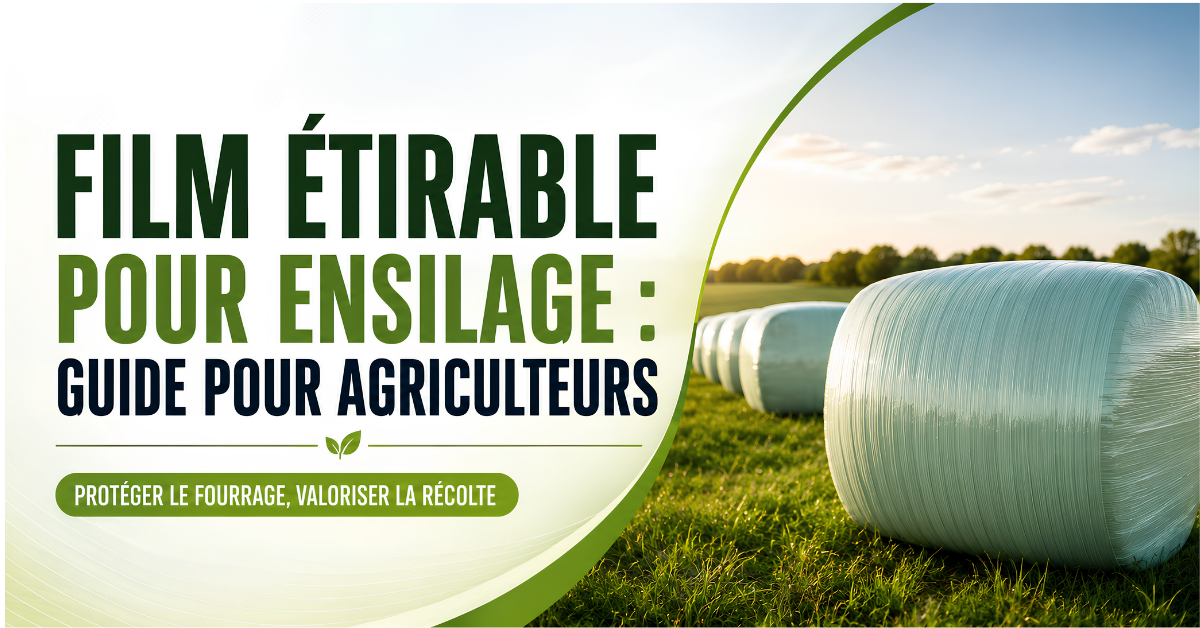
Forage quality is a key factor in herd health and farm profitability. However, even properly harvested silage can lose a significant portion of its nutritional value if it is inadequately protected during storage. Exposure to air, moisture, or climatic variations promotes mold growth, undesirable fermentation, and dry matter loss, increasing feed costs and reducing animal performance.
Stretch film for silage is one of the most effective solutions for preserving the quality of silage bales. By creating a barrier against oxygen and water, it promotes stable fermentation while protecting the forage during storage, transport, and handling. Its role is essential in maintaining the nutritional value of the forage until it is used.
Whether you are a cattle breeder, sheep farmer, or forage producer, choosing the right silage film is an important step. This guide explains how silage films work, their advantages, selection criteria, and best practices for optimal preservation.
Why silage quality is essential
Silage allows for the preservation of forage crops for several months to ensure a regular feed supply for livestock. However, this preservation is directly dependent on storage conditions. Inadequate protection promotes the penetration of oxygen and moisture, which can disrupt the fermentation process and accelerate forage spoilage.
Losses are not limited to the quantity of stored material. They also affect the nutritional value of animal feed. Deteriorated silage can lead to decreased herd performance, increased feed costs, and more waste on the farm.
This is why farmers pay particular attention to solutions that ensure the safe preservation of forage. Reliable packaging represents an investment that directly contributes to the long-term quality of the harvest.
How silage stretch film protects forage
Silage stretch film is designed to wrap bales evenly and provide durable protection against external elements. Its excellent stretch capacity allows for a tight wrap that effectively limits air circulation around the forage.
When applied correctly, the film reduces permeability to oxygen and water, two factors responsible for many quality losses. This protection promotes an environment conducive to the natural fermentation process, essential for good forage preservation .
Modern films also offer high resistance to punctures and tears. This allows the bales to be handled, transported, and stored with a reduced risk of damage. This resistance is particularly useful when the bales are moved several times between harvest and use.
Farmers wishing to discover different stretch film solutions for silage can choose products adapted to the needs of their farm and storage conditions.
The main applications in agriculture
Agricultural silage film is used on many livestock farms where forage quality is a priority. Its use goes beyond simply wrapping bales and contributes to better feed stock management.
Cattle farms
Dairy and beef cattle farms widely use silage bales to preserve forage for daily feeding. Effective protection helps maintain nutritional quality until the bale is opened.
Sheep and goat farming
Sheep and goat farmers also seek consistent quality forage throughout the year. Properly packaged silage minimizes losses and ensures a more regular feeding of the herd.
Long-term storage
When bales remain outdoors for several months, they must withstand climatic variations. A quality film helps protect the forage from moisture, rain, and UV rays, while maintaining the bale’s integrity throughout the storage period.
Transport and handling
Silage bales are frequently moved between fields, storage areas, and livestock buildings. Thanks to their good mechanical resistance and strong adhesion, stretch films help preserve the shape of the bales despite handling operations.
How to choose the right stretch film for silage
Choosing a stretch film for silage requires considering the specific needs of the farm. Not all forage crops, harvesting methods, and storage conditions are the same. Selecting a suitable film improves preservation quality while minimizing storage losses.
One of the first criteria to consider is mechanical strength . A film capable of withstanding the stresses associated with wrapping, transport, and handling reduces the risk of punctures or tears. This strength helps maintain the bale’s airtightness throughout its storage period.
Adhesion is also a key factor. Good adhesion allows the different film layers to remain perfectly bonded, ensuring uniform packaging and better protection against air leaks.
Finally, operators must take climatic conditions into account. A UV-stabilized film offers additional protection when bales are stored outdoors for several months, while low oxygen and water permeability promotes stable fermentation and better forage preservation.
Characteristics of a quality film
A high-performance silage film combines several technical properties that contribute to effectively protecting the forage.
The desired characteristics include:
- Excellent tensile and puncture resistance.
- Strong adhesion between the different layers of the film.
- Low permeability to oxygen and water.
- UV stabilizer for outdoor storage.
- Good stretchability for even packaging.
- Maintains the shape of the ball throughout the storage period.
These properties allow farmers to better preserve the nutritional quality of the fodder and limit losses related to storage conditions.
Best practices for optimizing forage preservation
Even with a high-quality film, results also depend on the methods used during wrapping and storage.
The bales should be wrapped quickly after harvest to limit the forage’s exposure to air. Regular application of the film with appropriate tension promotes even coverage and reduces the risk of oxygen infiltration.
Storage should be carried out on clean and stable ground to minimize the risk of punctures. It is also advisable to regularly inspect the bales for any damage and to take prompt action if necessary.
By combining a high-performance film with good agricultural practices, farmers sustainably improve the quality of their silage and reduce dry matter losses.
Common mistakes to avoid
Certain errors can reduce the effectiveness of agricultural silage film , even when it performs well.
The most frequent include:
- Using a film unsuitable for the storage conditions.
- Leave the balls exposed to objects that could cause perforations.
- Handling the bales excessively after wrapping.
- Neglecting to monitor the condition of the bales during storage.
- Delay packaging until after harvest.
Avoiding these practices helps to preserve the quality of the forage and to fully utilize the performance of the film.
Conclusion
Successful silage depends as much on the quality of the forage as on its storage conditions. Stretch film for silage is an essential solution for protecting bales from oxygen, moisture, and external factors, while promoting stable fermentation and better preservation of nutritional value.
By choosing a suitable film with good adhesion, high mechanical strength, and UV protection, farmers can reduce losses, improve forage quality, and optimize farm profitability. Combined with good wrapping and storage practices, a quality film represents a sustainable investment to ensure high-performing livestock feed year-round.