
Key points to remember
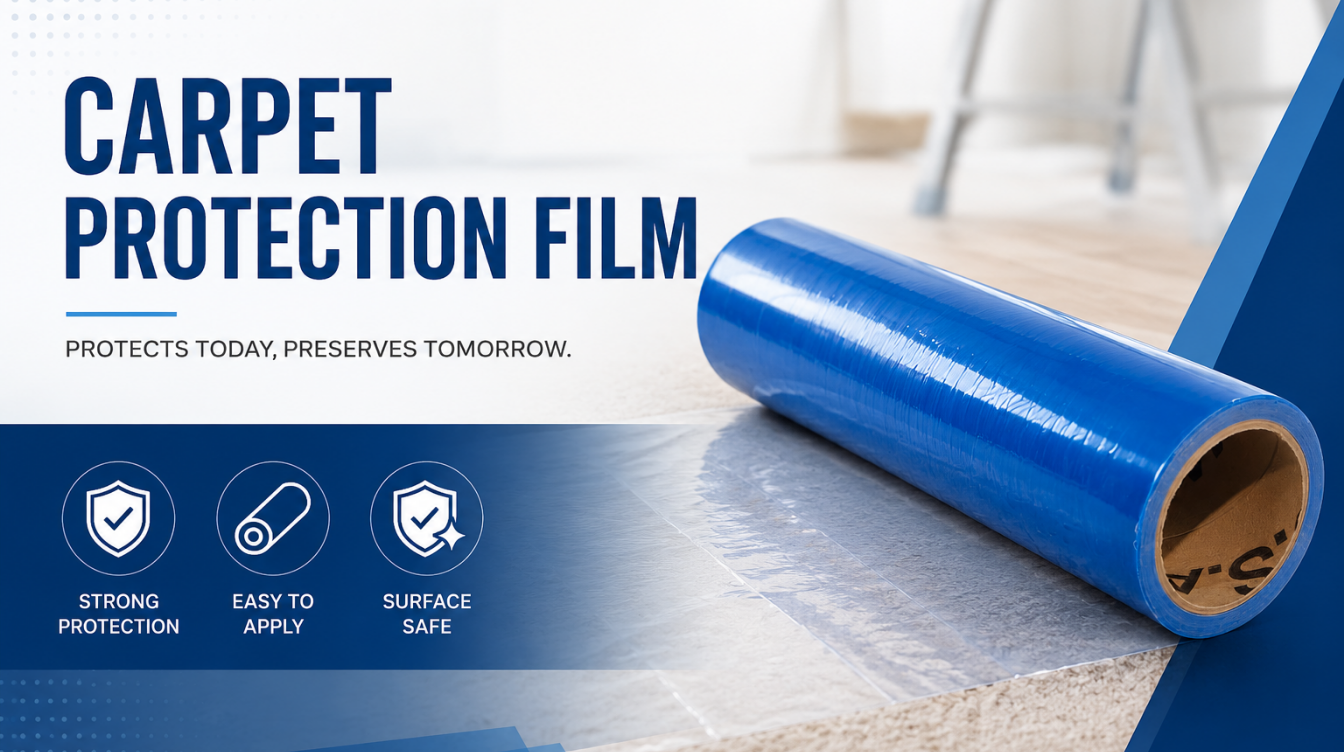
- A protective film for carpets is a temporary solution made of self-adhesive polyethylene, used during construction work, events, moves or renovation phases.
- It protects carpets, rugs and textile coverings against dirt, paint, liquids, dust, scratches and debris.
- Choosing the right thickness, adhesive, dimensions and duration of use limits the risks of glue residue, tearing or fiber detachment.
- Professional films, like those from Tilak Polypack, facilitate installation, withstand heavy traffic and allow for clean removal.
What is a carpet protective film and what is it used for?
Carpet protection films are temporary, self-adhesive coverings. They are primarily made of polyethylene, often low-density polyethylene, and are either transparent or slightly tinted. When applied to carpeted floors, the film creates a barrier against dirt, spills, scratches, and debris, while preserving the integrity and appearance of the carpet.
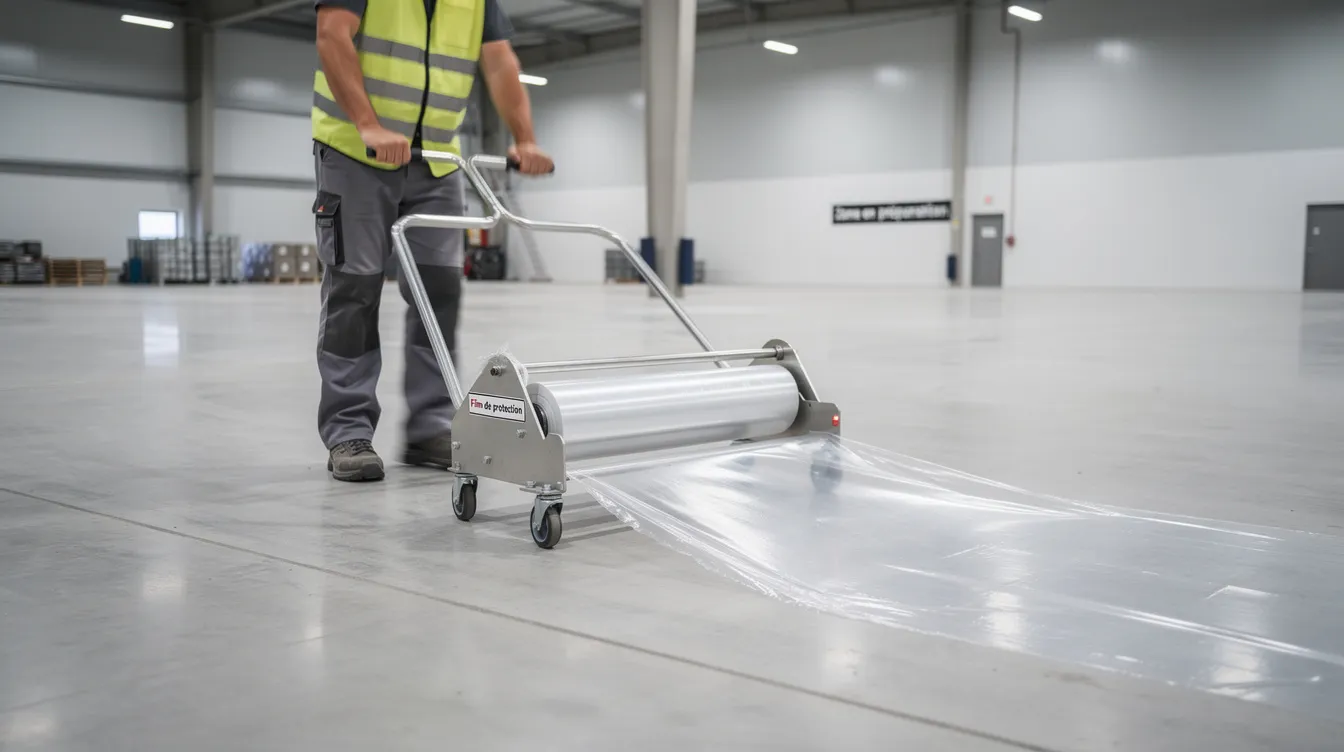
There are two main types: standard film, with the adhesive on the inside of the roll, and reverse film, with the adhesive on the outside. This second type is particularly practical when used with an applicator: the operator unrolls the film while walking backwards, which speeds up application on large surfaces such as corridors, halls, or staircases.
It is commonly used in construction, renovation, painting, maintenance, moving, and in living rooms. It also prevents footprints and premature wear during moves. Unlike protectors for tiles, parquet, or hard surfaces, carpet protectors use a softer adhesive, adapted to textiles.
The main types of carpet protective films
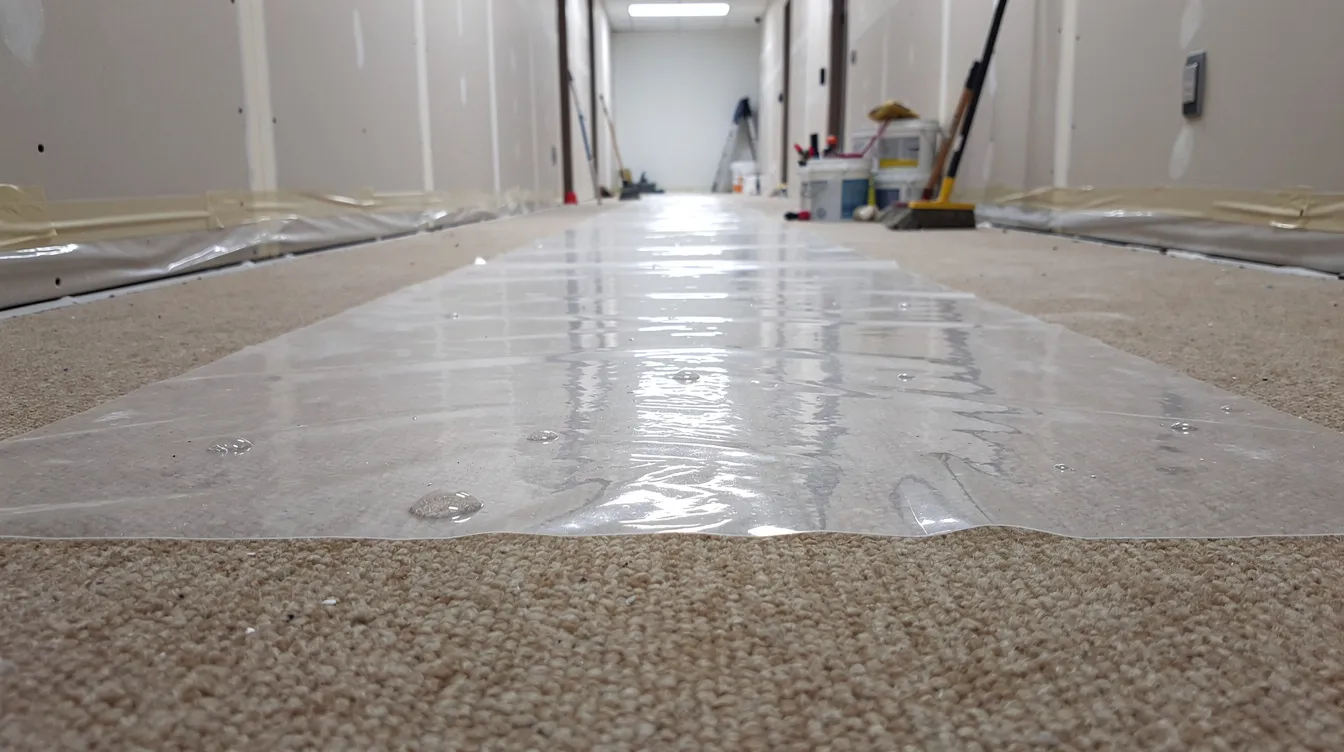
Standard LDPE protective film is suitable for most offices, homes, and medium-traffic areas. Its thickness typically ranges from 40 to 80 microns. It offers simple coverage, quick installation, and good stability for a single room or a short-term project.
High-strength film, on the other hand, is designed for high resistance to foot traffic. With a thickness of up to 100 to 120 microns, it better withstands trolleys, tools, heavy stands, and repeated foot traffic. Some products boast a mechanical resistance exceeding 45 newtons per millimeter; the Cobaguard film has a resistance of 45 N/mm.
The reverse-face carpet protection film , like the one offered by Tilak Polypack, is designed for long lengths and large rolls. Thanks to its external adhesive, it facilitates installation in hotels, convention centers, and high-traffic entrances. The films are specially formulated for needle-punched carpets used in trade shows.
There are also colored or printed films. A color can indicate a pathway, reduce the risk of falls, or enhance safety. Finally, some long-lasting films go beyond the standard: the Easydek film must be removed in 45 days, according to its product information sheet.
How to choose the right protective film for your carpets?
Start by identifying the type of carpet: loop pile, velvet, needle-punched, weighted tiles, wool, or synthetic. The more fragile or longer the fiber, the gentler the adhesive should be. Standard adhesion is 1 to 2 kg per 50 mm, which is often sufficient to hold the film in place without tearing the fibers.
Next, assess the traffic. For an apartment, a standard film may suffice. For offices occupied during painting work, choose a more durable option. For shopping centers, hotels, or events, opt for a heavy-duty product designed for high-traffic areas such as corridors and entrances.
Time is of the essence. It is recommended not to leave the films in place for too long. As a general rule, the film should be removed within 30 days of application, unless otherwise specified by the manufacturer.
Also check the conditions: temperature, humidity, and sun exposure. The maximum operating temperature is 60 degrees Celsius for many films. For logistics, choose appropriate dimensions: 60, 70, 100, or 120 cm depending on the width of the opening. Tilak Polypack offers rolls in various widths and lengths to adjust the quantity to your order.
Côté achat, comparez le prix, le stock, les délais, la livraison, l’expédition, le paiement et les remises selon quantité. À titre de repère marché, le prix d’un film de protection est de 67,14 €. Des remises sont disponibles selon la quantité commandée. Le film Cobaguard coûte 51,90 € HT pour 60 cm x 25 m ; le film Cobaguard mesure 60 cm x 100 m dans une autre référence. Le film Kip 357 est à 37,56 € avec une remise de 5% et le film Kip 357 a une largeur de 70 cm. Le film Easydek est proposé à 56,33 € après réduction et le film Easydek mesure 600 mm x 60 m.
Fiche pratique : comment poser correctement un film de protection sur moquette ?
- Aspirez soigneusement la moquette : retirez agrafes, gravats, poussière et débris. Le sol doit être sec, propre et à température ambiante, idéalement entre 15 et 25 °C, car une bonne utilisation du film dépend de cette préparation préalable.
- Mesurez la zone : longueur, largeur, obstacles, seuils et escalier. Prévoyez un recouvrement de quelques centimètres entre lés pour empêcher les infiltrations de peinture, laitance ou liquides.
- Déroulez le film sans tension excessive. Sur les petites zones ou dans un escalier, l’application peut se faire à la main. Appuyez à la main ou avec un balai propre pour chasser l’air, éviter les plis et assurer une adhérence régulière.
- Pour de grandes surfaces, utilisez un dévidoir applicateur. Cette aide améliore la tension, réduit les bulles et accélère la mise en place.
- Vérifiez la sécurité : aucun bord libre, aucune zone gondolée, aucune couche superposée inutilement. Un film mal posé augmente les risques de chute.
- Contrôlez chaque jour les zones sensibles. Remplacez tout lé percé afin d’éviter des dommages sur la moquette.
Retrait, entretien et erreurs à éviter avec un film de protection moquette
Retirez le film dès la fin des travaux salissants : ponçage, peinture, carottage ou transport. Commencez par un coin, tirez à angle constant et avancez sans à-coups. Les films de qualité se posent et s’enlèvent facilement sans laisser de résidus de colle.
Si le film reste trop longtemps, surtout derrière une baie vitrée chaude, l’adhésif peut vieillir, migrer ou laisser une trace. La plupart des films standards doivent être retirés sous 30 jours, sauf mention technique différente.
Évitez trois erreurs : poser sur moquette humide, utiliser un film pour surfaces dures, ou faire circuler des engins trop lourds sur un film non prévu pour cela. Pendant l’utilisation, balayez ou aspirez la surface pour éviter que gravillons et débris ne percent le polyéthylène.
Les films de protection Tilak Polypack sont conçus pour un retrait propre sans résidus lorsqu’ils sont utilisés dans la plage de durée, température et conditions recommandées.
Pourquoi choisir un film de protection pour moquettes de qualité professionnelle ?
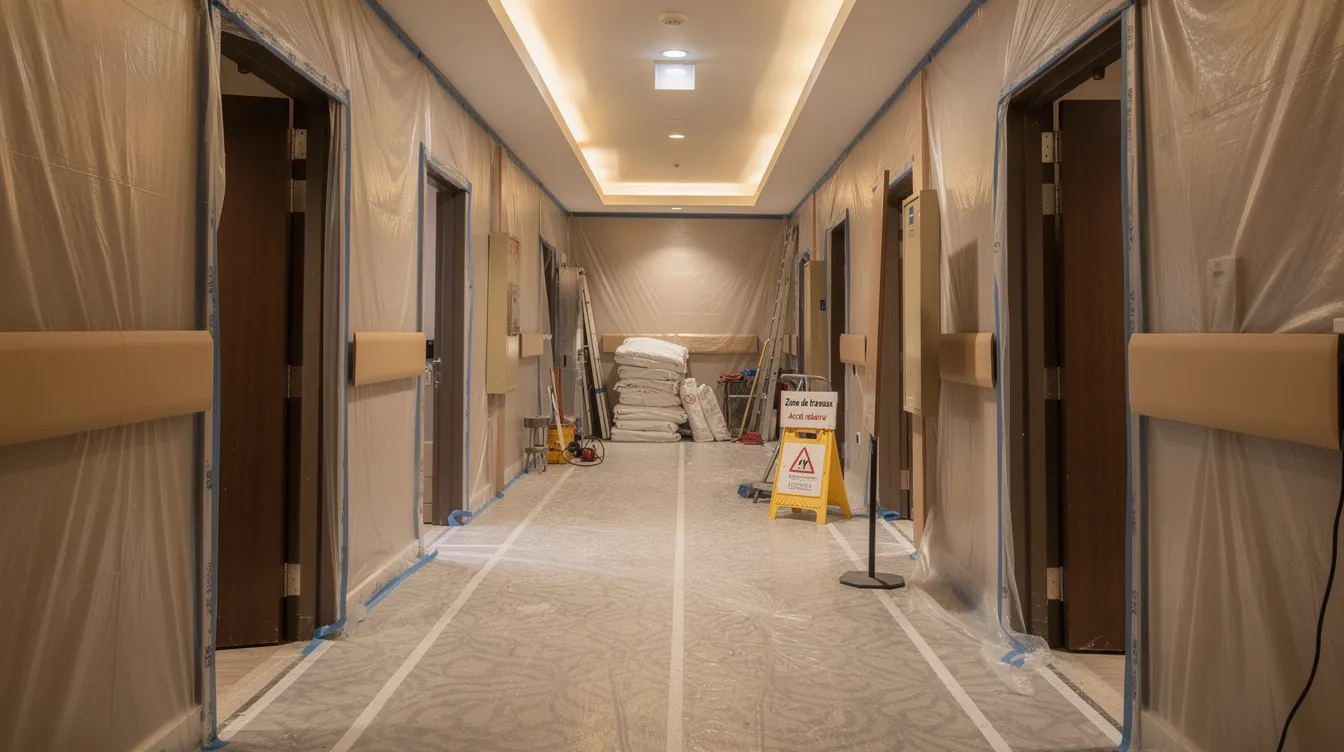
A basic film may seem economical, but thinness, unreliable adhesive, or poor stability can lead to tears, creases, and extra cleaning. In hotels, showrooms, or new buildings, the image of the space is just as important as protection.
Professional film offers real advantages: better puncture resistance, durability under foot traffic, one-piece removal, and less risk of sticking. The cost is calculated per square meter protected, not just per shopping cart.
Tilak Polypack manufactures films in rolls from 60 to 120 cm wide and from 25 to 100 m long, with characteristics adapted to demanding markets such as the USA, UK, Germany, Australia, and Canada. It’s a useful solution when the final quality of the project cannot be left to chance.
FAQ – Carpet Protection Film
How long can a protective film be left on a carpet?
Most standard films are designed to last approximately 30 days on clean, dry carpet. For a longer duration, choose a long-lasting film and follow the technical specifications.
Is there a risk that the protective film will damage or discolor the carpet?
A suitable film should not tear the fibers or leave any residue if the conditions are met. Always test a small area first, especially on wool, old carpets, or very light-colored carpets.
Can a carpet protective film be reused?
No, it is generally used only once. After removal, the adhesive becomes dusty and loses its properties, which reduces the protection.
How does this differ from a standard construction tarpaulin?
A tarpaulin shifts, wrinkles, and often requires tape. A carpet protection film adheres directly to the fabric, limiting water infiltration and reducing cleaning.
How do I calculate the required quantity?
Measure length x width, then divide by the surface area of one roll. Add 5 to 10% for overlaps, cuts, and thresholds before confirming your order. If you have any questions about calculating the surface area or choosing the format, it’s helpful to ask for advice before ordering.