
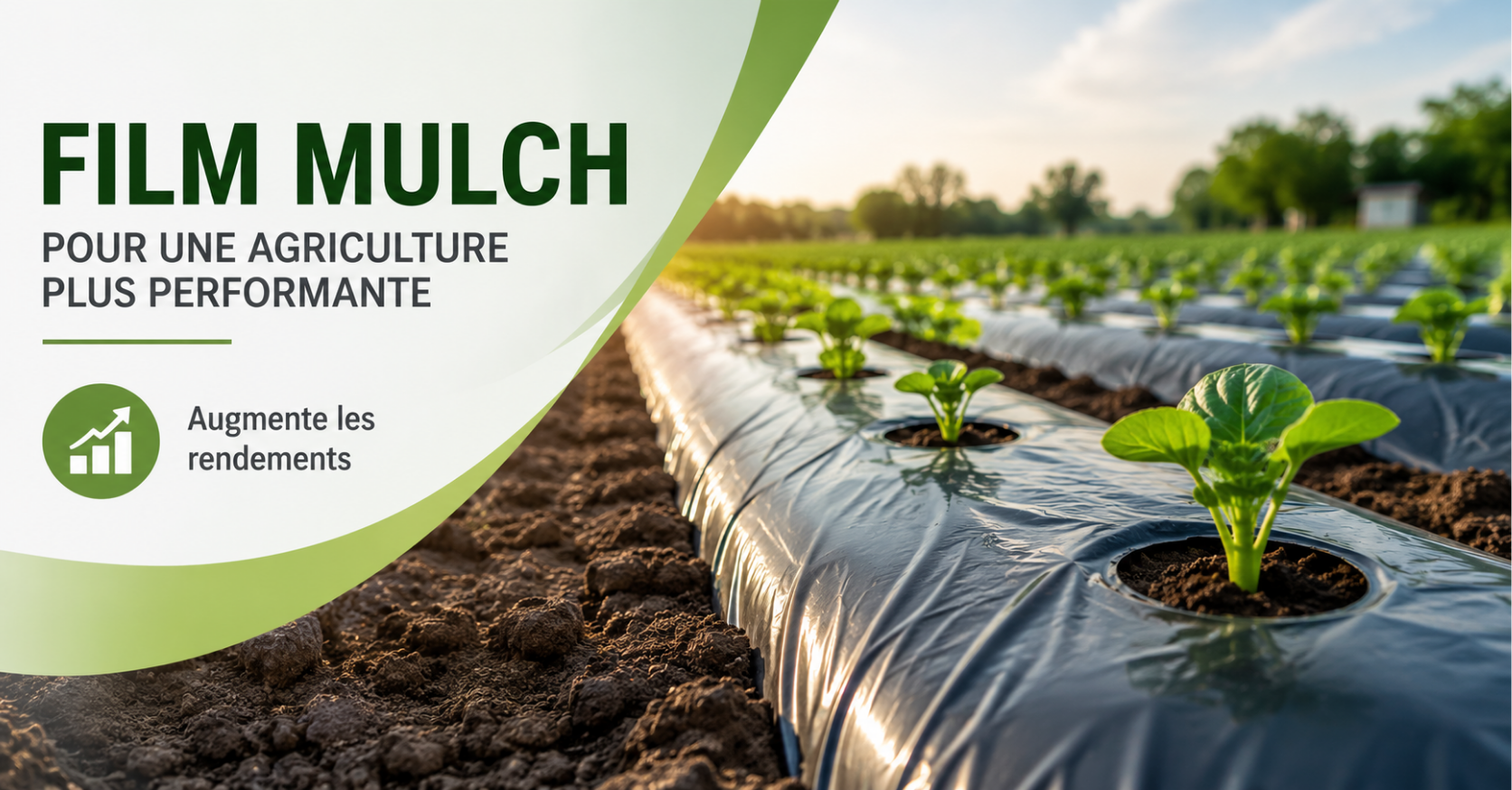
In an agricultural context where resource management, crop performance, and loss reduction have become essential, mulch film has emerged as an indispensable solution. Used on numerous farms worldwide, this modern mulching system is transforming how farmers manage soil, water, and crop growth. Far more than just a plastic film, it is a strategic tool that directly influences agricultural productivity and harvest quality.
In this article, we will explore in depth how agricultural film helps improve yields, optimize resources, and provide more stable and efficient growing conditions.
Understanding the film mulch and its role in modern agriculture
The term mulch film refers to a mulching film used to cover the soil to promote crop growth. This agricultural process is based on a simple yet extremely effective idea: protecting the soil by creating a physical barrier between the earth and the external environment.
The process of covering the soil to improve crops is called mulching. In this context, plastic mulch plays a central role, as it allows for the control of several essential parameters such as soil temperature, moisture, and light.
At Tilak Polypack, mulch film is designed to meet the diverse needs of farmers based on crops, climatic conditions, and agricultural cycles. Available in various thicknesses and colors, it adapts to a wide range of uses, from seasonal crops to long-life orchards.
How does mulch film work on agricultural soil?
The principle of mulch film is based on direct interaction with the soil. When installed, it acts as a protective cover that modifies the microclimate around the plants.
On the one hand, it significantly limits water evaporation, thus maintaining consistent soil moisture. On the other hand, it regulates temperature depending on its color and thickness. For example, a transparent film promotes a rapid temperature increase, ideal for accelerating germination, while a colored film can modulate heat according to the specific needs of the crops.
At the same time, the film prevents light from directly reaching the soil, thus blocking weed growth. This significantly reduces competition between cultivated plants and unwanted vegetation.
The different types of mulch film and their applications
The choice of agricultural film depends directly on production goals and environmental conditions. Mulch films are available in several variations, each offering specific advantages.
Transparent film is particularly suitable when the goal is to achieve maximum soil warming. It is often used to accelerate crop cycles and promote rapid germination.
Black film, on the other hand, is widely used for its effectiveness against weeds. It completely blocks light and also helps to maintain a stable soil temperature.
The white or silver film plays a different role. It reflects light and can help repel certain insects, while preventing the soil from overheating in areas with high sun exposure.
Finally, some combination films, such as red or silver-black films, are used to influence specific parameters such as flowering or advanced thermal management of crops.
Colored mulch film: a smart solution for optimizing crops
The colored mulch film developed by Tilak Polypack is designed to offer precise control of growing conditions. Each color directly influences the behavior of the soil and plants.
Black is used to warm the soil and promote vigorous growth. Red is often associated with stimulating flowering, which can be particularly useful for certain fruit or vegetable crops. White, on the other hand, is valued for its ability to reflect light and deter certain insect pests.
This color system allows farmers to adapt their strategy according to yield objectives, climate and crop type, making plastic mulch much more than just a simple protection tool.
The main advantages of mulch film for agricultural productivity
The use of mulch film offers numerous advantages that explain its increasing adoption in the agricultural world. These benefits affect both water management and crop quality.
One of the primary benefits is the reduction in herbicide needs. By blocking light, the film prevents weed growth, naturally reducing chemical use and associated costs.
Another major advantage concerns soil moisture retention. Thanks to reduced evaporation, crops benefit from a more stable water supply, which improves their development, even during hot periods.
Mulch film also allows for earlier harvests. By increasing soil temperature, it accelerates the plant growth cycle, which can offer a significant economic advantage to farmers.
Furthermore, fertilizer use becomes more efficient. The film helps limit losses and optimize nutrient absorption by plants, thus improving overall crop yields.
Finally, the micro-environment created under the film promotes better plant growth by conserving heat and carbon dioxide in the soil, a phenomenon often associated with a controlled greenhouse effect.
Impact of mulch film on vegetable crops and vegetables
Agricultural film is particularly beneficial for vegetable crops. Vegetables such as tomatoes, peppers, eggplants, and green vegetables directly benefit from its effects.
By improving soil stability and reducing water stress, the film results in stronger and more productive plants. Crops not only mature earlier but also become more uniform in quality.
This improved regularity of harvests is a major advantage for farmers seeking to meet constant market demand while optimizing their production costs.
Technical specifications of the Tilak Polypack mulch film
The films offered by Tilak Polypack are distinguished by their adaptability and manufacturing quality. They are available in different thicknesses to meet various agricultural needs.
Films of 15 to 20 microns are generally used for single-cycle crops. They offer an economical and efficient solution for seasonal production.
Films of 20 to 30 microns are suitable for two or three season crops, offering a better balance between durability and performance.
Finally, films of 50 microns and above are intended for long-term crops, particularly orchards, where resistance and longevity are essential criteria.
Available widths typically range from 600 mm to 1800 mm, allowing for great flexibility in use across different agricultural plots. Available colours include transparent, black, white, and combinations such as silver-black or red, depending on the specific needs of farmers.
The strategic role of mulch film in sustainable agricultural management
Beyond its technical performance, mulch film aligns with a logic of more sustainable and efficient agriculture. By reducing water consumption, limiting the use of herbicides, and optimizing yields, it contributes to better management of natural resources.
This approach allows farmers to reconcile productivity and respect for the environment, an increasingly important issue in modern agricultural practices.
Mulch film thus becomes a strategic lever to improve profitability while reducing the ecological impact of farms.
Tilak Polypack: a global player in mulch film
Tilak Polypack has established itself as a major international manufacturer and supplier of mulch film . Present in numerous countries, including the United States, Germany, Canada, Australia, and the United Kingdom, the company offers solutions tailored to the needs of farmers worldwide.
Thanks to advanced expertise and a wide range of products, Tilak Polypack supports farms in optimizing their yields and modernizing their farming practices.
Conclusion: Why mulch film is a key productivity lever
Mulch film is much more than just an agricultural tool. It represents a complete solution for improving productivity, reducing costs, and optimizing crop growth conditions. Through its effects on temperature, moisture, and soil protection, it fundamentally transforms modern agricultural practices.
By incorporating plastic mulch into their farming strategies, farmers can not only improve their yields, but also adopt a more sustainable and efficient approach to agricultural production.
In a sector where every detail counts, mulch film is proving to be an essential ally for achieving more efficient and better-controlled agriculture.