
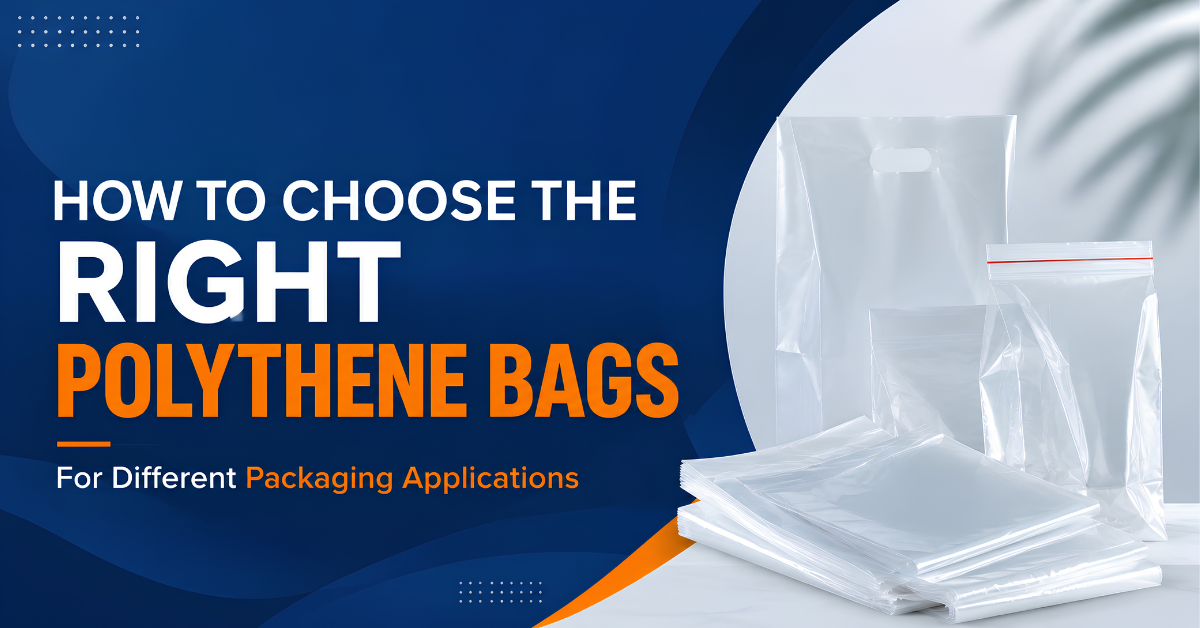
Choosing the right packaging material is important for protecting products during handling, storage, transportation, and display. Polythene bags are widely used across manufacturing, retail, food processing, pharmaceuticals, agriculture, and other commercial sectors because they are lightweight, flexible, moisture resistant, and available in different sizes and thicknesses. However, not every bag is suitable for every application. The right choice depends on factors such as the product being packed, required strength, bag dimensions, transparency, sealing method, and expected handling conditions. Understanding these factors can help businesses select polythene packaging that provides dependable protection while supporting efficient day-to-day operations.
Consider the Product Being Packed
The first step in selecting the right polythene bag is understanding the product that needs to be packaged. Lightweight products may require soft and flexible bags that can conform closely around their contents, while heavier or sharper products may need thicker material with greater resistance to punctures and tearing. Food products, retail merchandise, electronic components, pharmaceutical items, and industrial materials can all have different packaging requirements. For this reason, businesses should consider the size, shape, weight, surface characteristics, and sensitivity of the product before selecting a bag. Matching the bag material to the product helps reduce packaging failures and improves protection throughout handling and transportation.
Choose the Appropriate Bag Thickness
Thickness is one of the most important factors when selecting polythene packaging bags. Thinner bags can be suitable for lightweight products, internal packing, retail items, and applications where flexibility is more important than heavy-duty strength. Thicker bags are generally preferred for heavier products or applications where additional resistance to tearing and puncturing is required.
The appropriate thickness depends on the weight and characteristics of the packaged product as well as the expected handling conditions. Using material that is unnecessarily thick can increase material consumption, while insufficient thickness may reduce packaging performance. Businesses should therefore select a suitable thickness based on the actual demands of the application rather than choosing a standard option for every product.
Select the Right Bag Size
Bag dimensions should provide enough space for the product without creating excessive unused material. A bag that is too small can place unnecessary stress on the film and make sealing or filling difficult. On the other hand, an oversized bag can increase material usage and may make handling less convenient.
When determining the correct size, businesses should consider the product’s length, width, height, and shape. Additional space may also be necessary for folding, heat sealing, tying, or other closure methods. For businesses packaging products in consistent sizes, standardized bag dimensions can also help improve packing speed and reduce material waste.
Consider Transparency and Product Visibility
Transparency can be an important feature when products need to be identified or displayed without opening the packaging. Clear polythene bags allow customers, warehouse personnel, and distributors to see the contents easily. This can be particularly useful for retail merchandise, components, garments, spare parts, and other products where visual identification is valuable.
Opaque or colored bags may be more appropriate when businesses require additional privacy or want to reduce visibility of the packaged product. The choice between clear and opaque packaging should therefore depend on whether product visibility is an important part of storage, transportation, or presentation.
Evaluate Flexibility and Handling Requirements
Flexibility is another major advantage of polyethylene packaging. Flexible bags can accommodate products with different shapes while making filling, handling, and storage easier. LDPE is particularly valued for applications where softness, flexibility, and clarity are important.
For example, businesses handling lightweight merchandise may benefit from bags that can easily conform around the product. Flexible packaging can also simplify manual packing operations because the bag can be opened, filled, and closed without requiring complicated equipment. For applications involving repeated handling, the balance between flexibility and material strength should be considered carefully.
Think About Moisture and Environmental Protection
Packaging often needs to protect products from external conditions during storage and transportation. Polythene bags provide a useful barrier against moisture, dust, dirt, and other common contaminants. This makes them suitable for many products that need basic environmental protection during distribution.
For moisture-sensitive products, the packaging design and closure method are particularly important. A suitable bag combined with an appropriate sealing method can help limit exposure to external moisture and contamination. Businesses should also consider the environment in which the products will be stored or transported, including humidity, dust, and handling conditions.
Consider the Sealing Method
The way a bag will be closed can influence which type of polythene packaging is most suitable. Heat sealing is commonly used where businesses require a secure and consistent closure. Other applications may use ties, adhesive closures, self-sealing designs, or simply fold the bag around the product.
Heat-sealable polythene bags can be especially useful for commercial and industrial operations because sealing can create a consistent closure across large quantities of products. Businesses should consider their available equipment, production volume, required closure strength, and packaging workflow before selecting a specific bag design.
Match the Bag to the Industry
Different industries have different packaging priorities. Food businesses may require clean and suitable packaging for ingredients or finished products. Retail companies may prioritize transparency and presentation. Pharmaceutical and healthcare-related applications may place greater emphasis on cleanliness, consistency, and controlled packaging conditions. Manufacturing companies may need bags for components, finished products, spare parts, or internal material handling.
For industrial applications, the packaging may need to withstand repeated movement between production areas, warehouses, vehicles, and distribution facilities. Selecting bags according to the specific industry and application helps businesses achieve better protection and more efficient packaging operations.
LDPE or HDPE: Which Should You Choose?
LDPE and HDPE are both polyethylene materials, but their properties make them suitable for different applications. LDPE generally provides greater flexibility, softness, and clarity, making it useful for lightweight packaging, retail applications, product protection, and situations where the bag needs to conform easily around its contents.
HDPE has a denser structure and is generally selected when greater stiffness and strength are required. It can be suitable for applications involving heavier products or where a firmer bag structure is preferred.
The choice should therefore be based on the product and packaging requirements rather than simply selecting one material for every application. Businesses that prioritize flexibility and transparency may find LDPE particularly suitable, while applications requiring a more rigid structure may benefit from HDPE.
Consider Customization and Specific Requirements
Standard polythene bags can meet many common packaging needs, but some businesses require customized dimensions, thicknesses, colors, printing, or sealing configurations. Customization can help companies match their packaging more closely to their products and operational processes.
For example, a manufacturer may require a specific bag size to fit a particular component, while a retailer may require branded packaging for product presentation. Businesses should communicate their required dimensions, material type, thickness, closure method, and intended application when discussing customized packaging requirements.
Choose a Reliable Polythene Bag Manufacturer
Once the packaging requirements have been identified, selecting a dependable manufacturer is equally important. Consistent film thickness, accurate dimensions, reliable sealing, clean production, and stable material quality can all affect the performance of the finished bags.
An experienced manufacturer can also help businesses determine the appropriate material and specifications for their application. For companies sourcing polythene bags in Kenya, working with an established manufacturer and supplier can provide access to consistent packaging solutions suited to different industrial and commercial requirements.
Conclusion
Choosing the right polythene bag involves more than selecting a particular size or material. Businesses should evaluate the product weight, dimensions, required thickness, flexibility, transparency, moisture protection, sealing method, and handling conditions before making a decision. LDPE bags are particularly useful when flexibility, clarity, and lightweight protection are important, while other polyethylene options may be better suited to heavier or more demanding applications.
By matching the bag specifications to the actual packaging requirements, businesses can improve product protection, simplify handling, and create a more efficient packaging process. For companies looking for reliable packaging solutions, working with experienced polythene bag manufacturers can also make it easier to select suitable materials and specifications for different applications.