
For manufacturers, fabricators, and construction companies, product quality extends far beyond the production floor. Once a finished component leaves the manufacturing line, it is exposed to multiple stages of handling, storage, transportation, and installation before reaching the end user. Throughout this process, even minor scratches, abrasions, dust, or impact damage can affect the product’s appearance, increase replacement costs, and delay project completion.
This is why businesses across Kenya are increasingly using surface protection film as part of their quality control process. Designed to provide temporary protection, these films create a removable barrier that shields finished surfaces from damage while preserving their original appearance. Whether protecting stainless steel sheets, glass panels, painted metal, plastic components, or decorative surfaces, the right protective film helps ensure products arrive in excellent condition.
For companies operating in industries where surface finish directly influences customer satisfaction, investing in temporary protection is often more cost-effective than repairing or replacing damaged products. This article explains how surface protection film reduces product damage, where it is commonly used, and what commercial buyers should consider when selecting the right solution.
Why Surface Damage Creates Costly Problems
In modern manufacturing and construction projects, finished products rarely move directly from production to installation. Instead, they pass through several handling stages that include packaging, warehousing, loading, transportation, unloading, fabrication, and on-site installation. Every stage introduces opportunities for accidental surface damage.
Scratches, abrasion, dust contamination, and minor impacts may appear insignificant, but they can have serious commercial consequences. Premium products such as coated metal sheets, aluminium profiles, glass panels, architectural components, and finished appliances are often judged by their appearance. A cosmetic defect can result in rejected deliveries, customer complaints, or expensive rework even when the product remains fully functional.
For businesses, these issues translate into higher operational costs. Replacing damaged materials, repeating fabrication processes, and managing project delays all affect productivity and profitability. Protecting surfaces before damage occurs is therefore a proactive approach that supports both quality assurance and cost control.
How Surface Protection Film Helps Prevent Product Damage
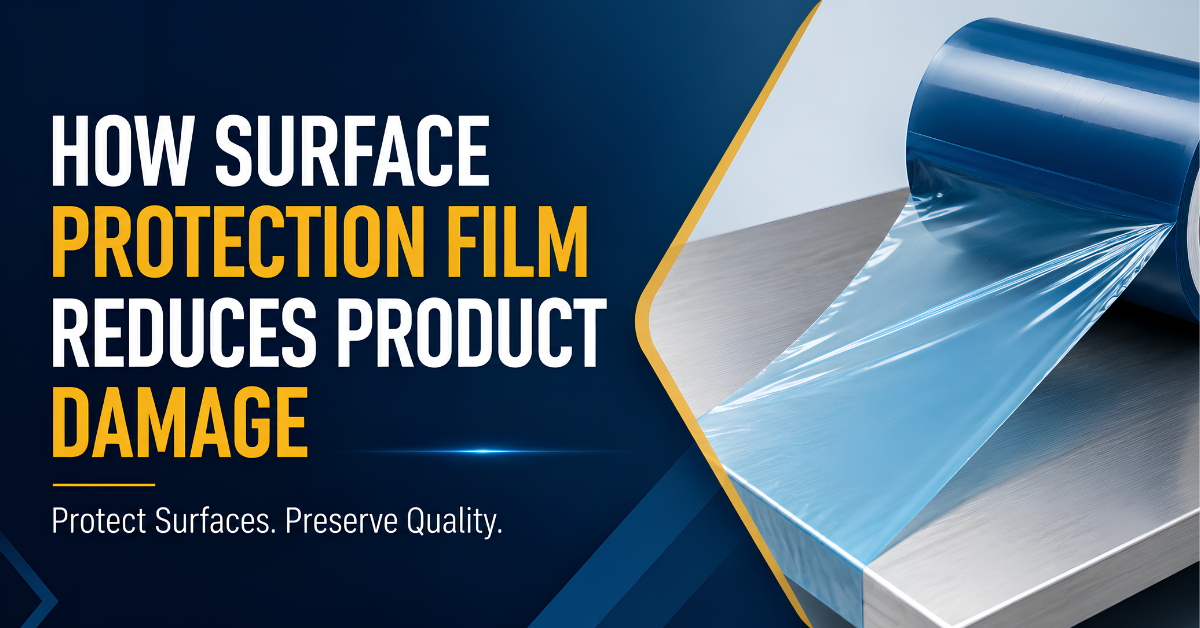
Surface protection film acts as a temporary shield between the finished product and external elements that could damage its surface. Applied during manufacturing or fabrication, the film remains securely attached throughout handling, storage, and transportation before being removed once the product is ready for installation or use.
One of its primary benefits is protection against scratches and abrasion. During movement through warehouses or construction sites, products often come into contact with pallets, machinery, tools, or other materials. The protective film absorbs this everyday wear instead of allowing the finished surface to become damaged.
The film also helps protect products from dust, dirt, moisture, and handling marks that commonly occur during transportation and storage. This ensures products remain clean and presentable when they reach customers or installation sites, reducing the need for additional cleaning or refinishing.
Many adhesive protection film solutions are designed to provide secure adhesion during normal handling while allowing clean removal without leaving residue. This balance is particularly important for businesses working with decorative, painted, coated, or polished surfaces where preserving the original finish is essential.
Commercial Applications Across Industries in Kenya
The versatility of surface protection film Kenya makes it suitable for a wide range of industries where maintaining surface quality is critical.
Manufacturing and Metal Fabrication
Manufacturers of stainless steel sheets, aluminium profiles, painted metal panels, and fabricated components use protective films to prevent scratches during production, packaging, and transportation. Since many products undergo multiple handling stages before delivery, temporary protection helps maintain a high-quality finish throughout the supply chain.
Construction and Infrastructure
Construction projects frequently involve finished materials such as glass, ACP panels, window frames, flooring, and decorative surfaces. During installation, these materials are exposed to tools, equipment, dust, and ongoing site activities. Protective films help preserve their appearance until construction work is complete, reducing the likelihood of repairs or replacements.
Automotive and Appliance Manufacturing
Automotive components and household appliances often feature painted or polished surfaces that require temporary protection before assembly or retail distribution. Surface protection film helps prevent cosmetic damage while products move through manufacturing facilities and logistics networks.
Interior Fit-Out and Renovation Projects
Renovation contractors and interior designers use protective films to safeguard newly installed countertops, decorative panels, finished flooring, and other visible surfaces. Keeping the protective layer in place until all adjacent work has been completed helps maintain a clean, professional finish for the client.
How to Choose the Right Surface Protection Film
Selecting the right surface protection film Kenya solution involves more than choosing a film with strong adhesion. Different materials have different surface characteristics, and using the wrong film can reduce protection or make removal more difficult. The best results come from matching the film to the product, its handling conditions, and the duration of protection required.
The first factor to consider is the surface material. Glass, stainless steel, aluminium, painted panels, plastics, and coated sheets all require different adhesive properties to achieve secure bonding without affecting the finish. Surface texture also matters. Smooth, glossy, matte, or embossed finishes interact differently with adhesives, making it important to choose a film designed for the specific application.
Commercial buyers should also evaluate the environment in which the product will be stored or transported. If materials are exposed to sunlight, moisture, or industrial chemicals before installation, selecting a film with suitable UV and chemical resistance helps maintain reliable protection. Finally, considering the expected protection period ensures the film performs effectively throughout manufacturing, logistics, and installation while remaining easy to remove when the project is complete.
Features That Add Value for Commercial Buyers
A high-quality surface protection film does more than protect against scratches. It contributes to smoother operations by helping businesses maintain product quality across every stage of the supply chain.
Key features to look for include:
- Resistance to scratches, abrasion, and impact during handling.
- Protection against dust, dirt, and moisture.
- Clean removal without adhesive residue.
- Resistance to UV exposure and certain chemicals where required.
- Durable film construction that resists punctures and tearing.
- Availability in different widths, thicknesses, and adhesive strengths to suit various applications.
These features help businesses protect valuable products without adding unnecessary complexity to production or installation processes.
Why Businesses Invest in Surface Protection Film
For manufacturers and contractors, preventing damage is only one part of the value that protective films provide. Reducing product damage also improves operational efficiency and supports better project outcomes.
When finished products arrive at their destination in excellent condition, businesses spend less time on repairs, refinishing, or replacing damaged materials. This helps reduce labour costs, avoid project delays, and improve customer satisfaction. It also supports stronger quality control by ensuring products maintain their original appearance from production through installation.
Surface protection films can also contribute to more sustainable operations. Preventing avoidable damage reduces material waste and minimizes the need to manufacture replacement components, making production processes more efficient over time.
For companies working on large construction projects or supplying premium finished products, temporary surface protection is an investment that helps safeguard both product quality and business reputation.
Best Practices for Maximum Protection
Applying a protective film correctly is just as important as choosing the right product. To achieve consistent results, manufacturers and contractors should incorporate protective films into their standard production and handling procedures.
Apply the film as soon as the finished surface is ready to minimize exposure to scratches or contamination before packaging. Ensure the surface is clean and dry before application so the adhesive bonds evenly across the material.
The protective film should remain in place throughout transportation, storage, and installation whenever possible. Removing it too early exposes the product to unnecessary risks, while removing it at the appropriate stage helps reveal a clean, undamaged finish.
Regularly reviewing handling procedures and storage conditions can also help identify areas where additional protection may be needed, allowing businesses to further reduce product damage and improve overall efficiency.
Common Challenges and How Surface Protection Film Helps
| Challenge | How Surface Protection Film Helps |
| Surface scratches | Prevents direct contact with finished materials during handling. |
| Abrasion during transport | Reduces wear caused by movement and friction. |
| Dust and dirt | Keeps products clean before installation. |
| Storage damage | Protects surfaces while products are warehoused. |
| Construction activities | Shields finished materials until project completion. |
| Rework and replacement costs | Reduces avoidable repairs and improves operational efficiency. |
Conclusion
Maintaining product quality requires protection throughout the entire supply chain—not just during manufacturing. Every stage, from storage and transportation to installation, presents opportunities for scratches, abrasions, dust, and handling damage that can affect both appearance and customer satisfaction.
Using surface protection film Kenya allows manufacturers, fabricators, and contractors to protect finished surfaces while reducing costly rework and delays. By creating a temporary barrier against physical damage and environmental exposure, these films help preserve the original finish until products are ready for final use.
Choosing the right protective film based on material type, surface texture, environmental conditions, and project requirements ensures reliable performance and clean removal. For businesses that value consistent quality, efficient operations, and satisfied customers, surface protection film is a practical solution that delivers long-term commercial benefits while supporting successful project outcomes.