
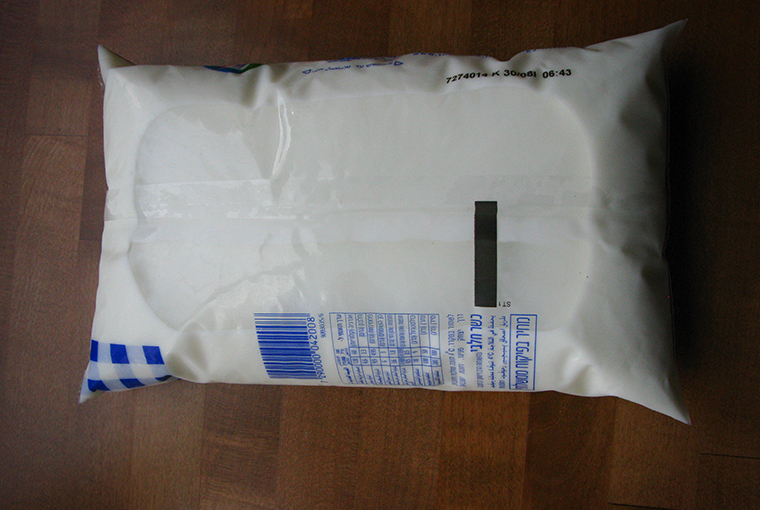
Dairy Packaging Materials Designed for Hygienic Liquid Distribution
Liquid dairy products require packaging materials that maintain strict hygiene standards while preventing leakage and contamination. Milk Packaging Film / Pouch solutions are widely used by dairy processors and beverage manufacturers because they provide a reliable, flexible, and cost-efficient packaging format for liquid milk distribution.
Milk is particularly sensitive to microbial growth and environmental contamination, which makes packaging integrity a critical requirement. Flexible milk pouch films are engineered to create a sealed barrier that protects the product throughout filling, storage, transportation, and retail handling. For dairy processors supplying supermarkets, wholesalers, and local distribution networks in Ethiopia, properly designed milk packaging pouches help ensure product safety and consistent shelf performance.
Tilak Polypack manufactures food-grade flexible films specifically developed for liquid dairy packaging systems.
Film Engineering for Hygienic Milk Containment
Milk packaging pouches are manufactured using polyethylene film structures that combine flexibility with strong sealing capability. The film forms a durable pouch that can withstand handling during filling operations and transport while maintaining product freshness.
The materials used for milk pouch production are selected to prevent leakage and provide stable sealing during high-speed packaging operations. These flexible films create airtight packaging that helps maintain the original quality of the dairy product from the processing facility to the consumer.
Because dairy packaging lines often operate at high speeds, the film must deliver consistent mechanical strength and sealing performance to prevent product loss and contamination.
Polyethylene Materials Used in Milk Pouch Films
Milk packaging films are typically manufactured using specialized grades of polyethylene that support flexible pouch formation and reliable sealing.
Low-density polyethylene (LDPE) is widely used due to its flexibility and excellent sealing properties. Linear low-density polyethylene (LLDPE) provides additional tensile strength and puncture resistance, making it suitable for packaging processes that require stronger film performance.
High-density polyethylene (HDPE) may also be used in certain applications such as ultra-high temperature (UHT) milk packaging where stronger barrier properties are required.
These polymer combinations allow manufacturers to create milk pouch films that balance durability, flexibility, and food safety compliance.
Functional Benefits of Flexible Milk Pouches
Flexible dairy packaging offers operational advantages for both manufacturers and distributors. Compared with rigid containers, milk pouches require less packaging material and reduce storage space requirements during transport and warehousing.
The flexible structure also allows dairies to package large quantities efficiently while maintaining reliable sealing performance. Once filled, the pouch protects the milk from external exposure and allows consumers to store the product conveniently.
Businesses choosing plastic bags for milk packaging often benefit from reduced logistics costs, improved storage efficiency, and faster packaging throughput.
Custom Printing and Branding Options
Packaging also plays a role in product identification and brand visibility. As a milk pouch film manufacturer, Tilak Polypack offers custom printing solutions that allow dairy brands to include logos, product information, and regulatory details directly on the film.
Advanced rotogravure and flexographic printing technologies are used to apply high-quality graphics to the film surface. These printing systems produce sharp text and vibrant colors while maintaining compatibility with automated pouch-forming machinery.
Custom printed milk packaging pouch films enable dairy brands to differentiate their products in retail environments while ensuring compliance with labeling regulations.
Technical Characteristics of Milk Packaging Films
Milk packaging films are engineered to support reliable performance during industrial packaging operations.
Key performance characteristics include:
- Waterproof and leak-proof film structure
• Food-grade material suitable for dairy products
• Strong sealing capability for hygienic packaging
• Durable film strength for transport and handling
• Compatibility with automated pouch filling machines
• Customizable sizes and printing options
These characteristics ensure that milk packaging pouches maintain product integrity across dairy supply chains.
Packaging Efficiency Compared With Bottled Milk
Flexible milk pouches have become a widely used alternative to rigid containers in many dairy markets. Pouch packaging uses less plastic material than bottles, reducing overall packaging weight and storage volume.
From a logistics perspective, milk pouches allow dairy processors to transport larger quantities per shipment because the packaging occupies less space. This improves distribution efficiency and lowers transportation costs.
Consumers also benefit from packaging that is easy to handle, store in refrigerators, and dispose of after use.
Environmental Considerations in Flexible Dairy Packaging
Sustainability has become an important factor in modern packaging design. Many milk pouch films are manufactured using recyclable polyethylene materials, which helps reduce environmental impact compared with heavier packaging formats.
Advancements in flexible film production allow manufacturers to reduce material thickness without compromising durability. This reduces plastic consumption while maintaining the barrier protection required for dairy products.
These improvements support environmentally responsible packaging systems for dairy operations serving growing urban markets.
Size Range and Packaging Specifications
Milk packaging films are available in multiple formats to support different dairy distribution requirements. Pouches can be manufactured for small retail quantities as well as larger packaging formats for commercial distribution.
Typical packaging sizes include:
- 250 ml milk pouch
• 500 ml milk pouch
• 1 liter milk pouch
• Larger capacity pouches for bulk distribution
Film thickness generally ranges from 50 to 80 microns, depending on the packaging system and performance requirements. Custom dimensions and color options can also be produced based on customer specifications.
Manufacturing Expertise and Export Supply
Tilak Polypack operates as an experienced milk pouch film manufacturer supplying flexible packaging materials to dairy processors and packaging distributors across international markets. The company utilizes advanced extrusion and printing technologies to produce food-grade films suitable for liquid packaging applications.
Our production facility supports large-scale manufacturing with strict quality control systems to ensure consistent film thickness, reliable sealing performance, and compliance with food safety standards.
Tilak Polypack supplies packaging materials across major African markets including South Africa, Nigeria, Tanzania, Kenya, Sudan, Uganda, Algeria, Ethiopia, Egypt, DR Congo, Angola, Morocco, and Ghana, maintaining a dependable regional supply network.
Through this distribution capability, dairy businesses in Ethiopia can source high-quality Milk Packaging Film / Pouch materials designed for reliable dairy packaging operations and commercial distribution.