
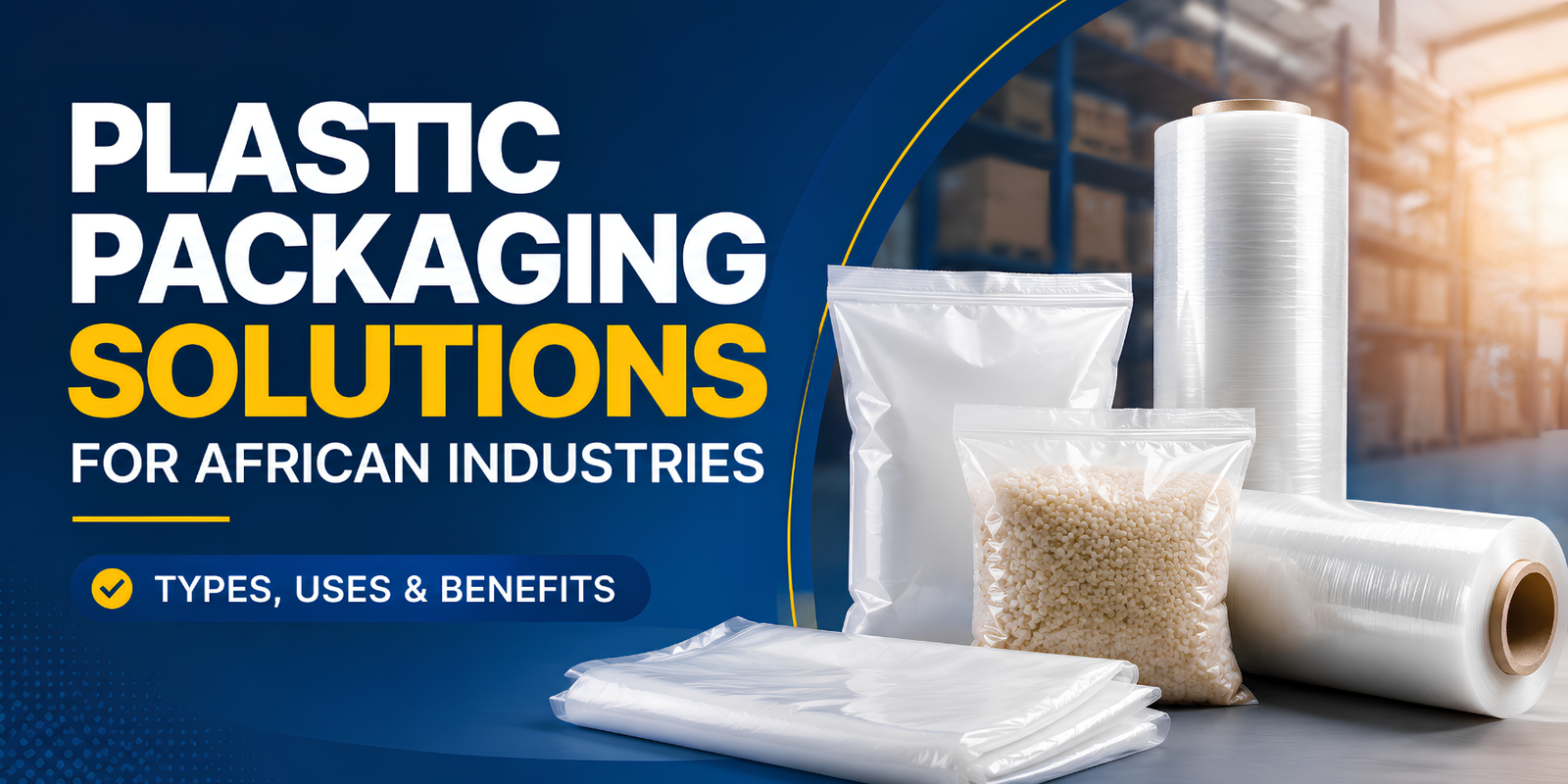
Plastic packaging plays an important role in protecting products as they move through African supply chains. Manufacturers, food processors, exporters, distributors, retailers, and industrial businesses rely on different types of plastic packaging to protect goods from moisture, dust, dirt, contamination, abrasion, and handling damage. From LDPE bags used for individual products and components to stretch film used for palletized shipments, the right packaging solution can make storage, transportation, and distribution more efficient.
Across African markets, packaging requirements can vary significantly depending on the product, industry, transportation route, climate, storage conditions, and destination market. A packaging bag used to protect textiles may require different characteristics from a food packaging film, while a logistics company moving palletized goods may need a strong and reliable stretch film. Understanding these differences helps businesses select packaging materials that provide the right balance of protection, performance, efficiency, and cost.
This guide explores the main types of plastic packaging solutions used by African industries, their applications, benefits, and the key factors businesses should consider when selecting packaging materials.
What Should African Businesses Know About Plastic Packaging?
Plastic packaging is not a single product. It includes a wide range of materials, films, bags, wraps, liners, and other formats designed for specific packaging applications. The most suitable solution depends on what is being packed, how the product will be handled, how far it will travel, how long it will be stored, and what level of protection is required.
For many African businesses, packaging must perform throughout a long and sometimes complex supply chain. Products may travel significant distances by road, move through ports and distribution centres, remain in warehouses for extended periods, or be handled multiple times before reaching the final customer. In humid coastal areas, moisture resistance can be particularly important, while businesses operating in hot environments may need to consider storage and transportation conditions when selecting packaging.
For B2B buyers, characteristics such as film thickness, strength, clarity, sealing performance, flexibility, puncture resistance, and printability are therefore important commercial considerations. Choosing the right specification can help businesses reduce packaging failures, improve handling, and maintain product presentation during distribution.
Good plastic packaging can also support operational consistency. When poly bags, LDPE bags, packaging films, and other formats are specified correctly, workers can pack products more efficiently, warehouses can organize goods more easily, and businesses can reduce losses caused by damaged or poorly protected products.
Main Types of Plastic Packaging Materials Used in African Industries
Plastic packaging covers many different formats, but flexible packaging is particularly useful for industrial and commercial applications because it can be produced in different sizes, thicknesses, and specifications. Its flexibility allows businesses to protect products ranging from small components and textiles to food products, agricultural materials, and palletized goods.
Poly Bags and LDPE Bags
Poly bags and LDPE bags are widely used for packing, covering, bundling, separating, and protecting products. LDPE is valued for its flexibility, softness, and moisture-resistant properties, making it suitable for a broad range of industrial and commercial packaging applications.
Manufacturers may use LDPE bags to protect components and finished products from dust and handling damage, while textile businesses can use clear poly bags to keep garments clean and organized during storage and shipment. Spare-parts distributors can also use individual bags to separate components, improve product identification, and reduce the possibility of products becoming mixed together during warehouse handling.
The required bag specification depends on the application. Lightweight products may require a different thickness from heavy or sharp-edged components. Businesses should therefore consider the product weight, dimensions, handling conditions, and transportation requirements before selecting an LDPE or poly bag.
Plastic Bags and Packaging Bags
Plastic bags and packaging bags are available in different sizes, thicknesses, colours, and sealing formats. They can be produced as plain bags for practical industrial applications or customized and printed for product identification and brand visibility.
For wholesalers, retailers, manufacturers, and distributors, packaging bags can provide both product protection and easier handling. A correctly specified bag can help reduce tearing, dust exposure, moisture-related problems, and repacking requirements during distribution.
In African wholesale and retail environments, packaging often needs to balance durability with material efficiency. Selecting a bag that is too thin may increase the risk of product damage, while using unnecessarily heavy packaging can increase material consumption and cost. The objective should therefore be to select a packaging bag that is appropriate for the product and its distribution conditions.
Packaging Film and Flexible Packaging
Packaging film is used for wrapping, covering, lining, bundling, sealing, and protecting products. Depending on the application, the film may need to provide clarity, flexibility, puncture resistance, sealing performance, moisture protection, or compatibility with printing and packing equipment.
Flexible packaging includes formats such as films, bags, wraps, pouches, and liners. These materials are used across food processing, consumer goods, agriculture, textiles, hygiene products, and industrial applications.
For example, a food manufacturer supplying products to supermarkets may require a flexible packaging film that provides reliable sealing and good product presentation. An industrial manufacturer may instead require plain protective film to shield finished products from dust, moisture, and handling during storage and transportation.
Because flexible packaging can be lightweight and compact before use, it can also provide practical advantages for businesses managing transportation and storage requirements across regional markets.
Stretch Film for Logistics and Pallet Protection
Stretch film is an important packaging material for warehouses, distributors, exporters, and logistics businesses. It is used to wrap palletized goods and hold cartons, sacks, bottles, containers, and other products together during storage and transportation.
The film stretches around the load and helps create stability without requiring heavy secondary packaging. This can be particularly useful when goods are transported over long distances by truck or moved through warehouses, distribution centres, ports, and retail facilities.
For African distributors and exporters, stable palletization can help reduce shifting, scuffing, product collapse, and handling damage. Stretch film can be used for beverages, FMCG cartons, agricultural inputs, construction materials, and other mixed warehouse loads.
Applications of Plastic Packaging Across African Industries
Different industries have different packaging requirements, and the same type of plastic packaging can sometimes serve several roles within the supply chain. The most effective approach is to consider packaging as part of the complete product journey rather than looking only at the final packing stage.
Agriculture and Agribusiness
Agricultural businesses use packaging for a wide range of products and materials, including seeds, fertilizers, dried agricultural products, animal-feed additives, farm supplies, and other inputs. Plastic packaging bags can help protect products from dust and moisture while making them easier to handle, store, transport, and distribute.
For businesses operating across regional or rural distribution networks, packaging durability can be particularly important. Products may move through several distribution stages before reaching farmers, retailers, or other end users.
Printed packaging can also help agricultural businesses identify products and improve brand visibility. A seed supplier, for example, may use printed outer packaging combined with smaller inner poly bags to protect and separate products during transportation and storage.
Food Processing and FMCG
Food packaging requires careful consideration because packaging must support product protection, hygiene, sealing, storage, and presentation. Depending on the product and application, food businesses may use packaging films, flexible packaging, liners, bags, and other plastic packaging formats.
A bakery may use clear plastic bags to protect finished products, while a snack manufacturer may use printed packaging film to create an attractive consumer-facing pack. Larger food processors may also use liners and secondary packaging to protect bulk ingredients during storage and transportation.
For food-related applications, businesses should always select materials according to the product, packing process, intended use, and applicable food-contact requirements.
Manufacturing and Industrial Packaging
Manufacturing businesses often use plastic packaging to protect components, spare parts, hardware, textiles, electronics accessories, printed materials, and finished goods. In these applications, strength, puncture resistance, size accuracy, sealing performance, and product visibility can be more important than decorative appearance.
LDPE bags and poly bags can help factories separate and organize components while protecting them from dust and handling damage. Clear packaging can also allow workers to identify products without opening each package, which can make warehouse operations and quality checks more efficient.
For manufacturers supplying multiple customers or assembly facilities, consistent packaging specifications can also support better inventory control and reduce confusion during dispatch.
Logistics, Warehousing, and Export
Warehouses, exporters, distributors, and logistics providers use stretch film, protective plastic bags, and packaging films to stabilize and protect products throughout transportation and storage.
Pallet wrapping is particularly important when goods move between factories, inland depots, ports, warehouses, and retailers. The right stretch film can help maintain load stability while making pallet preparation faster and more consistent.
Export packaging may also need to support inspection, identification, container loading, and handling requirements. Consistent wrapping and palletization can make goods easier to identify and handle throughout the export process.
Benefits of Choosing the Right Plastic Packaging
Plastic packaging can provide value beyond simply containing a product. When correctly specified, it can contribute to product protection, logistics efficiency, operational consistency, and professional product presentation.
One of the main benefits is product protection. Plastic bags, LDPE bags, and packaging films can help protect goods from dust, moisture, dirt, abrasion, and repeated handling. This is especially valuable when products travel through multiple stages of the supply chain.
The right packaging can also help reduce handling losses. A bag or film that is appropriately specified for the product can reduce tearing, spillage, repacking, and product damage. For businesses handling large volumes, even small improvements in packaging performance can have an impact on operating efficiency.
Plastic packaging can also improve logistics and transportation efficiency. Stretch film helps stabilize palletized products, while flexible packaging can provide a lightweight alternative to heavier packaging formats. This can make storage, handling, and transportation more practical for businesses distributing goods across regional markets.
Another advantage is brand visibility. Printed packaging bags and flexible packaging films can carry logos, product information, batch details, instructions, and other information required by businesses and customers.
Finally, plastic packaging provides format flexibility. Bags and films can be manufactured in different sizes, thicknesses, colours, and specifications, allowing businesses to select packaging according to their products and operational requirements.
How Do You Choose the Right Plastic Packaging Solution?
Selecting the right plastic packaging solution requires more than choosing the lowest-cost bag or film. Businesses should first understand the product, then consider the complete supply chain and the conditions the packaging will experience.
The product itself should be assessed for weight, dimensions, shape, sharp edges, moisture sensitivity, hygiene requirements, and packing method. A lightweight textile product may require a very different bag from a heavy industrial component.
The complete transportation journey should also be considered. Products may move from a factory to a warehouse, then by road to a port or distributor before reaching the final customer. Packaging that performs well at the factory may not be suitable if products are exposed to repeated handling, long-distance transportation, humidity, or extended storage.
Businesses should then select the appropriate format. Poly bags and LDPE bags can be suitable for individual products and components, packaging bags can be used for retail and bulk applications, packaging film can be used for wrapping or sealing, and stretch film can be used for pallet stabilization.
Thickness and strength should also be specified carefully. Under-specifying the packaging can result in tearing or product damage, while unnecessarily thick packaging can increase material use and cost. The goal is to find a specification that provides reliable performance for the actual application.
The packing process is another important consideration. Businesses should determine whether bags or films will be hand sealed, heat sealed, tied, taped, or used with manual, semi-automatic, or automated equipment.
Finally, businesses should consider printing, transparency, storage conditions, destination markets, and any applicable product or food-contact requirements before placing an order.
Practical Plastic Packaging Examples for African Markets
Consider a West African food processor supplying dry goods to wholesalers and retailers. The business may require printed food packaging for consumer-facing products while using larger LDPE bags or secondary packaging to group and protect units during transportation. The printed packaging supports product presentation, while the secondary packaging provides additional protection during distribution.
An East African textile or light-manufacturing exporter may use clear poly bags for individual products and stretch film for palletized cartons. The individual bags help protect products from dust and handling, while stretch film keeps the finished cartons stable during movement from the factory to a freight forwarder or distribution centre.
A Southern African household-products distributor may use packaging films to bundle multipacks and stretch film for warehouse dispatch. If products are distributed through both supermarkets and independent retailers, consistent packaging can help maintain presentation across different sales channels.
A North African industrial supplier may require heavier packaging bags for components or raw materials. In this situation, puncture resistance, accurate dimensions, and reliable sealing may be more important than decorative printing.
These examples demonstrate why businesses should select plastic packaging according to the actual application, transportation conditions, product requirements, and protection needs rather than considering price alone.
Building a Better Packaging Specification
Before contacting a packaging supplier, procurement teams can prepare a simple packaging specification. Providing accurate information can make the quotation process easier and help the supplier recommend a more suitable material and format.
The specification should describe the product, its application, required bag or film dimensions, approximate product weight, preferred material if known, required thickness or strength, printing requirements, transparency or colour, packing and sealing method, expected order quantity, and destination market.
Businesses should also describe any existing packaging problems. For example, if current bags are tearing, seals are failing, products are leaking, or pallet loads are becoming unstable, explaining the problem gives the supplier useful information for developing a better solution.
If some technical details are unknown, a packaging supplier can help refine the specification based on the product and intended application. However, providing as much practical information as possible can make it easier to identify the right packaging solution.
Responsible Use of Plastic Packaging
Businesses across Africa are increasingly considering how plastic packaging can be used more responsibly. This does not necessarily mean eliminating plastic from every application, particularly where product protection, hygiene, food safety, and long-distance distribution require effective packaging.
Responsible packaging starts with selecting the correct specification. Excessively thin packaging may fail and result in both packaging and product waste, while unnecessarily thick packaging can use more material than required.
Businesses can therefore focus on fit-for-purpose packaging, efficient material use, reduced product damage, and recyclable or optimized material options where suitable for the application.
The objective is to balance product protection, operational requirements, customer expectations, and responsible packaging practices.
Plastic Packaging Solutions for African Businesses
Plastic packaging is an important part of the supply chain for manufacturers, food processors, agricultural businesses, exporters, distributors, retailers, and logistics companies across Africa.
The right combination of plastic bags, poly bags, LDPE bags, packaging films, stretch film, food packaging, and flexible packaging can help businesses protect products, improve handling, maintain product presentation, and move goods more efficiently through regional and international supply chains.
The best packaging solution depends on the product, packing process, storage environment, transportation route, and destination market. Businesses should therefore evaluate their actual packaging requirements before selecting a material or specification.
For companies looking for reliable plastic packaging solutions for African markets, Tilak Polypack offers a range of packaging products and solutions for industrial, commercial, food, logistics, agricultural, and export applications.
Explore Tilak Polypack’s packaging solutions or contact the team to discuss your specific packaging requirements.