
Introduction
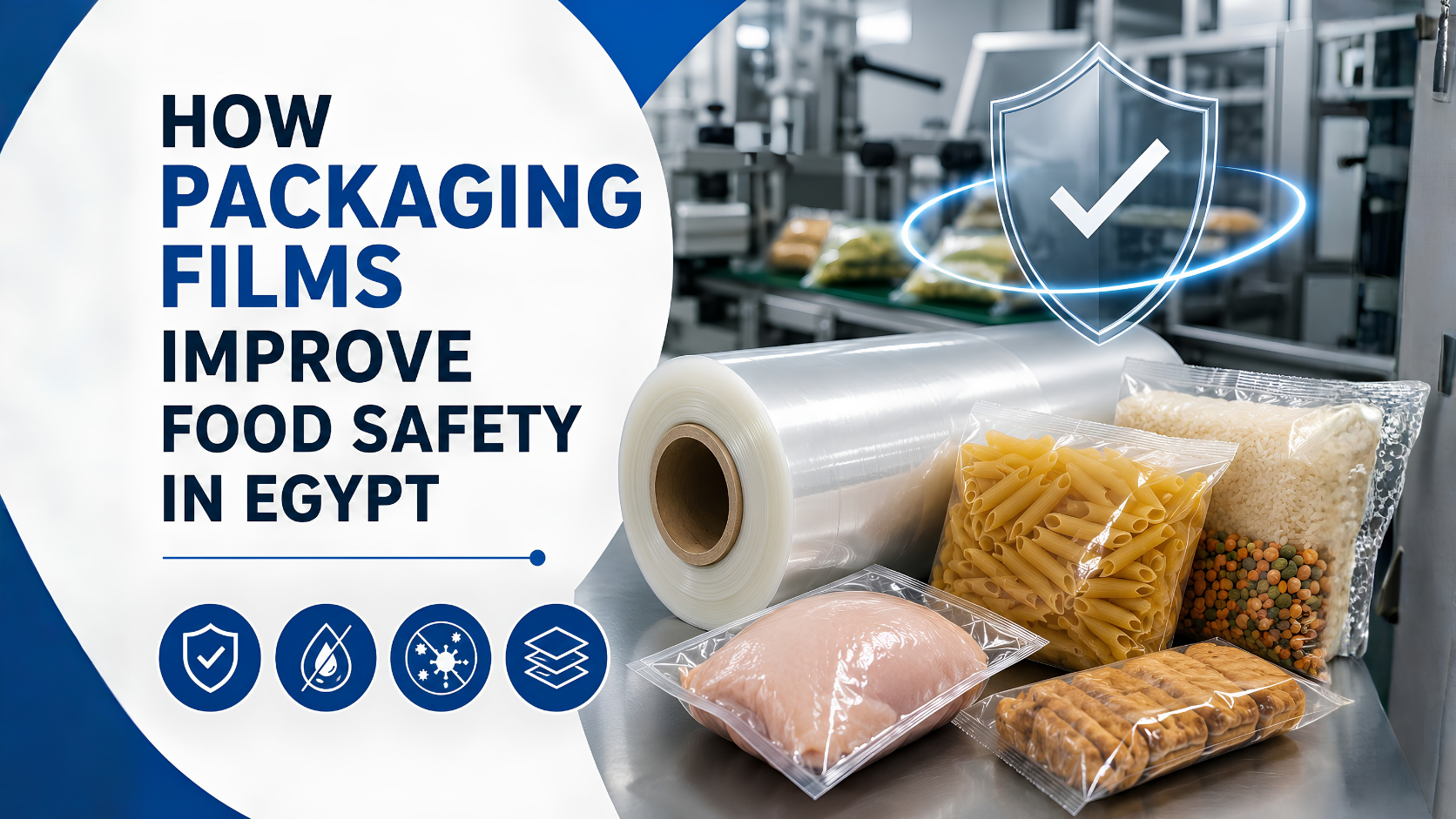
Food safety remains one of the most important priorities for food manufacturers, processors, exporters, distributors, and retailers throughout Egypt. From the moment a product leaves the production line until it reaches the consumer, it is exposed to various risks that can compromise quality, freshness, and safety. Environmental exposure, moisture, oxygen infiltration, contamination during handling, and transportation challenges can all affect food products if protective packaging is not properly designed. This is one of the primary reasons why demand for high-quality packaging films Egypt continues to grow across the food industry.
Packaging is no longer viewed simply as a method for containing products. Modern food packaging plays a critical role in preserving product integrity, extending shelf life, reducing waste, and maintaining consumer confidence. Manufacturers operating in competitive food markets must ensure that packaged products remain safe throughout warehousing, transportation, retail display, and final consumption. Packaging films provide an essential protective barrier that helps businesses achieve these objectives while maintaining efficient production and distribution operations.
Why Food Safety Depends on Packaging Performance
Food safety begins long before a product reaches supermarket shelves. Every stage of the supply chain presents potential risks that can affect product quality. Exposure to airborne contaminants, fluctuations in temperature and humidity, rough handling during transportation, and prolonged storage periods can all contribute to deterioration if products are not adequately protected.
Packaging films act as the first line of defense against these threats. By creating a controlled barrier between the food product and the external environment, films help preserve freshness and reduce the likelihood of contamination. In industrial food processing environments, packaging performance directly influences product stability, shelf life, customer satisfaction, and regulatory compliance.
Manufacturers understand that even minor packaging failures can result in significant product losses, recalls, customer complaints, and damage to brand reputation. As a result, selecting reliable food packaging film solutions has become an important component of food safety management systems throughout Egypt’s food manufacturing sector.
The Growing Importance of Food Packaging in Egypt’s Supply Chain
Egypt’s food industry serves both domestic consumers and export markets. Products often travel considerable distances between production facilities, warehouses, distribution centers, retail stores, and international destinations. These extended logistics networks create additional challenges for maintaining product quality.
Food products may encounter varying environmental conditions during transportation and storage. Changes in temperature, humidity, and handling conditions can accelerate spoilage if packaging materials fail to provide adequate protection. Flexible packaging films help manufacturers manage these risks by creating stable protective environments around food products.
As Egypt continues to expand food production capabilities and strengthen export activities, packaging materials have become increasingly important in ensuring products arrive at their destination in optimal condition. Reliable packaging solutions support supply chain efficiency while reducing losses associated with damaged or contaminated products.
How Packaging Films Create a Protective Barrier Against Contamination
One of the most significant contributions of packaging films to food safety is their ability to prevent contamination. Food products are vulnerable to dust, dirt, microorganisms, insects, and other environmental contaminants throughout the distribution process. Without appropriate packaging protection, these contaminants can compromise product quality and consumer safety.
Flexible films form a physical barrier that isolates products from external influences. Properly sealed packaging helps prevent foreign particles from entering the package while minimizing direct contact between food products and external environments. This protective function is particularly important for processed foods, ready-to-eat products, snacks, bakery items, dairy products, frozen foods, and other packaged goods that require controlled handling conditions.
Advanced film structures can also support hygienic packaging processes by maintaining consistent sealing performance across high-volume production lines. Reliable sealing minimizes vulnerabilities that could otherwise expose products to contamination risks during storage and transportation.
Moisture, Oxygen, and Light Control in Food Packaging
Environmental factors such as moisture, oxygen, and light can significantly impact food quality and safety. Different food products have varying sensitivities to these elements, making packaging design an important consideration for manufacturers.
Excess moisture can encourage microbial growth, alter texture, and reduce product stability. Oxygen exposure can accelerate oxidation, resulting in flavor deterioration, discoloration, and reduced freshness. Certain food products are also sensitive to light exposure, which may affect nutritional value, taste, and appearance over time.
Packaging films can be engineered with specific barrier properties that help control the transfer of moisture, oxygen, and light. By reducing exposure to these environmental factors, manufacturers can maintain product quality for longer periods while supporting food safety objectives. The ability to customize barrier performance makes flexible packaging a valuable solution across multiple food categories.
Extending Shelf Life Without Compromising Product Quality
Shelf life extension is often closely linked to food safety. Products that maintain their freshness and stability for longer periods are less likely to experience spoilage during storage and distribution. Effective packaging contributes significantly to this outcome.
Food packaging film solutions help preserve product characteristics by maintaining a controlled environment around the food item. This can help retain texture, flavor, aroma, and appearance while reducing exposure to conditions that encourage deterioration. For manufacturers and distributors, longer shelf life translates into improved inventory management, reduced product waste, and greater supply chain flexibility.
In export-oriented operations, shelf life becomes even more important because products may spend extended periods in transit. Packaging films help ensure products remain safe and marketable throughout transportation and storage cycles, supporting both domestic and international distribution requirements.
The Role of Packaging Films in Food Transportation and Storage
Food products encounter numerous handling and transportation activities before reaching consumers. Palletization, warehousing, loading, unloading, and retail stocking all introduce opportunities for physical damage or contamination if packaging materials are inadequate.
Industrial packaging systems rely heavily on flexible films to protect products throughout these processes. Packaging films provide containment, stability, and surface protection that help reduce damage caused by movement, vibration, compression, and handling stress. This protection is especially valuable for products distributed through large-scale logistics networks.
Well-designed industrial packaging solutions contribute to safer transportation practices while helping maintain product quality throughout the supply chain. By reducing packaging failures and product losses, manufacturers can improve operational efficiency and maintain consistent product standards.
Food Packaging Film Solutions for Different Food Categories
Different food products require different packaging characteristics. Fresh produce, frozen foods, dairy products, bakery goods, confectionery items, snacks, and dry food products each present unique preservation challenges. As a result, packaging film selection should be based on the specific requirements of the product being packaged.
For example, products with high moisture content may require films with enhanced moisture barrier performance. Oxygen-sensitive products often benefit from packaging structures designed to limit oxygen transmission. Frozen food applications require materials capable of maintaining flexibility and durability under low-temperature conditions.
Packaging manufacturers frequently develop customized film solutions to address these varying requirements. By matching film performance characteristics to product needs, food producers can improve safety outcomes while supporting efficient packaging operations.
Packaging Integrity, Sealing Performance, and Tamper Protection
Food safety depends not only on the film material itself but also on the integrity of the final package. Weak seals, inconsistent packaging quality, or damaged packaging can create pathways for contamination and product deterioration.
High-quality packaging films are designed to support reliable sealing performance across automated packaging systems. Consistent sealing helps maintain package integrity throughout production, transportation, and storage activities. Strong seals reduce the risk of leakage, contamination, and premature product degradation.
Tamper-evident packaging features can further enhance food safety by providing visible indications if a package has been opened or compromised. These features increase consumer confidence while supporting quality assurance programs within food manufacturing operations.
Supporting Compliance and Quality Standards in Food Manufacturing
Food manufacturers operate within increasingly demanding quality and safety environments. Regulatory requirements, customer expectations, retailer standards, and export market specifications often require businesses to implement comprehensive food safety controls.
Packaging materials play an important role in supporting these efforts. Reliable packaging systems contribute to product consistency, traceability, contamination prevention, and quality control. Manufacturers frequently evaluate packaging suppliers based on their ability to provide consistent material performance, manufacturing quality, and compliance with applicable standards.
By integrating high-quality packaging films into food safety programs, manufacturers can strengthen operational controls while supporting broader quality management objectives throughout production and distribution processes.
Choosing the Right Packaging Films for Food Safety Applications
Selecting the appropriate packaging film requires careful evaluation of product characteristics, distribution conditions, storage requirements, and production processes. Food manufacturers should consider factors such as barrier performance, sealing properties, durability, product compatibility, and packaging equipment requirements.
Working with experienced packaging suppliers can help businesses identify film structures that align with both food safety objectives and operational needs. A well-designed packaging solution should support product protection while maintaining packaging efficiency, cost control, and supply chain reliability.
Businesses seeking dependable packaging films Egypt solutions often prioritize consistency, customization capability, manufacturing expertise, and reliable supply availability. These factors contribute directly to maintaining food safety standards across modern food production environments.
Conclusion
Food safety is influenced by every stage of the supply chain, and packaging remains one of the most effective tools for protecting products from contamination, spoilage, and environmental exposure. High-performance packaging films help manufacturers maintain product quality, extend shelf life, improve transportation reliability, and support regulatory compliance across food production operations.
As Egypt’s food industry continues to grow and evolve, the importance of reliable food packaging film and industrial packaging solutions will only increase. Businesses that invest in appropriate packaging technologies can strengthen food safety performance, reduce waste, improve operational efficiency, and deliver greater value to customers throughout the supply chain.
For manufacturers seeking dependable and customizable packaging solutions, exploring specialized packaging films Egypt options can provide significant advantages in maintaining food safety and packaging performance.