
Specifications
• Lamination to polyester
• Width up to 2.25 meters
• Thickness: 18–300 microns
• Colours: Natural, White Opaque (custom on request)
Applications
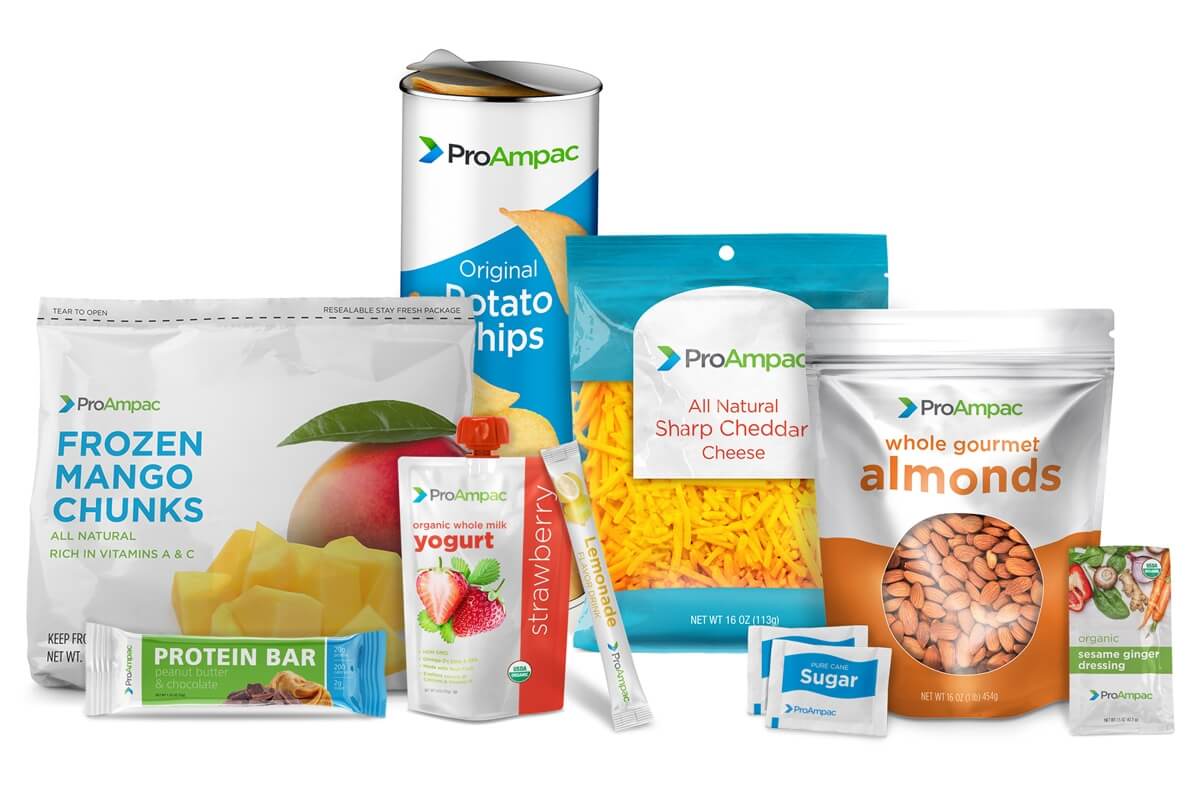
• Seeds Packaging
• Pesticide Packaging
• Dairy Packaging
• Vacuum Pouches
• Specialty Packaging Applications
Packaging Lamination Systems for Industrial Applications
Lamination PE Film is widely used in flexible packaging and industrial conversion processes where additional surface protection and barrier performance are required. Produced from polyethylene materials, this film is applied as a lamination layer over substrates such as paper, board, or other plastic films to improve durability and resistance to external conditions. In packaging operations supplying manufacturers and distributors in Morocco, lamination materials play an important role in maintaining product integrity throughout storage, transportation, and handling.
The film functions as a protective outer layer that strengthens packaging structures while maintaining flexibility and clarity. Businesses that rely on packaging for food products, pharmaceuticals, textiles, and consumer goods frequently integrate pe lamination film into their packaging systems to ensure long-term product protection and visual presentation.
Lamination Process in Flexible Packaging Production
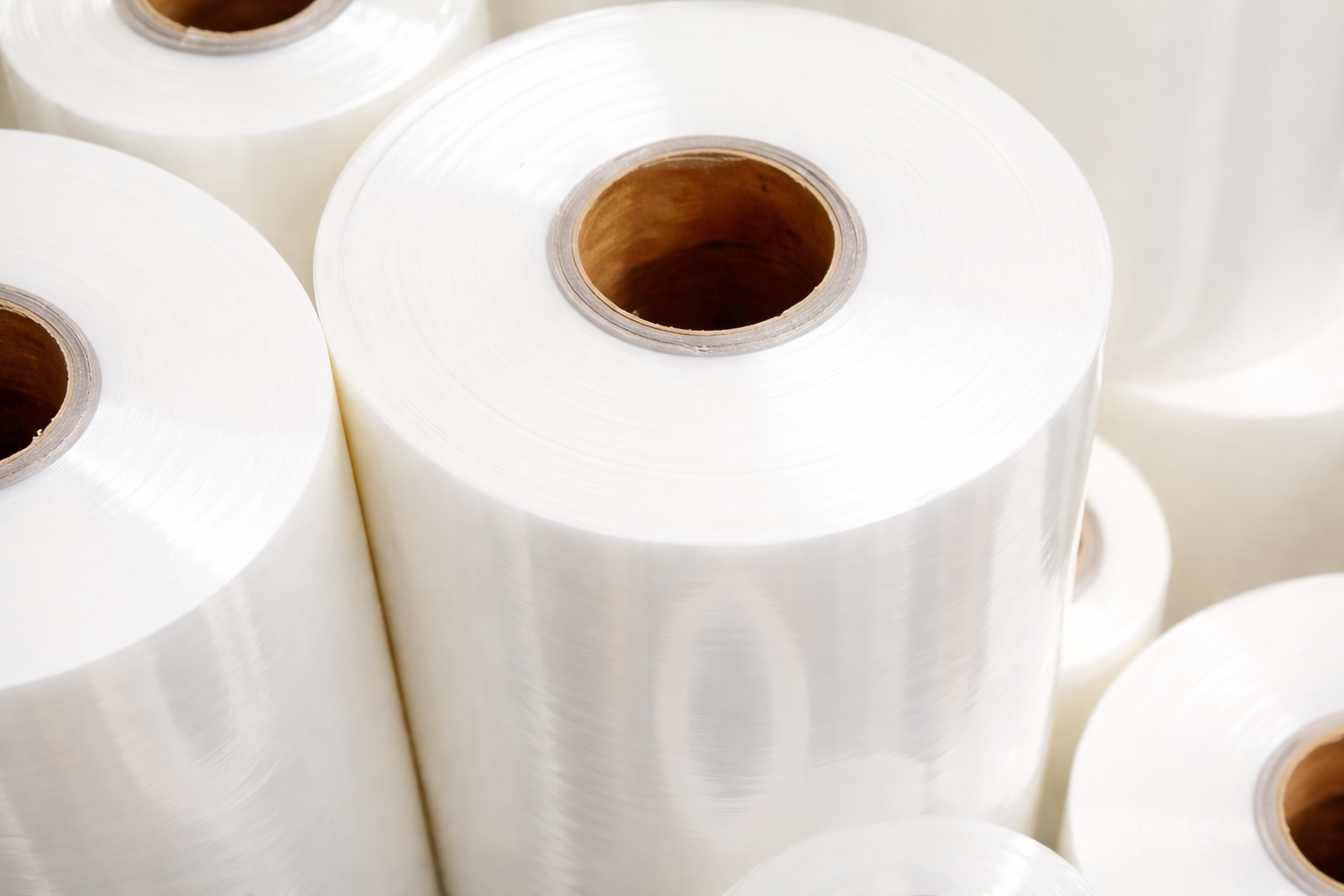
The lamination process involves bonding a lamination roll onto a substrate such as paperboard, plastic sheets, or composite packaging structures. This process creates a layered packaging material that offers improved resistance to moisture, contamination, abrasion, and environmental exposure.
Polyethylene film can also be combined with materials such as polypropylene or biaxially oriented polypropylene to achieve enhanced mechanical properties and barrier performance. In many industrial packaging environments, this multilayer structure is used to protect sensitive products during transportation and distribution.
Certain lamination films may include additional characteristics such as anti-static functionality. This feature is particularly useful when packaging electronic components or medical devices where electrostatic discharge could cause damage. Through the lamination process, packaging manufacturers are able to deliver stronger and more reliable packaging formats suitable for demanding supply chains.
Material Characteristics of Polyethylene Films
Polyethylene film exhibits several physical properties that make it suitable for lamination applications. It provides strong resistance to moisture, oils, and chemicals, helping protect packaged goods from environmental exposure. The material also offers electrical insulation properties and maintains stability in a variety of industrial packaging conditions.
Because polyethylene has a relatively low density, it is lightweight and highly flexible, making it adaptable to many packaging structures. This characteristic allows lamination films to be produced in a wide range of thicknesses without compromising strength or performance.
Polyethylene film can be manufactured in multiple forms. Low density polyethylene is known for its flexibility and transparency, which makes it suitable for applications requiring clear packaging surfaces and easy sealing. High density polyethylene provides greater structural strength and improved heat resistance, making it appropriate for heavier industrial packaging uses.
The molecular structure of polyethylene allows manufacturers to adjust film properties during production. By controlling film thickness and polymer composition, converters can produce lamination materials that match specific packaging requirements.
Manufacturing Capabilities for Lamination PE Film
A pe film manufacturer specializing in lamination materials supports packaging converters by producing films designed for flexible packaging, protective layers, and barrier applications. Through advanced extrusion and lamination technologies, manufacturers are able to produce barrier films, stretch films, and protective films that serve different industrial sectors.
These materials are widely used in industries including food processing, pharmaceutical packaging, industrial manufacturing, electronics packaging, and consumer goods distribution. Consistent quality control ensures that every lamination roll maintains reliable performance in terms of abrasion resistance, moisture protection, and structural stability.
Manufacturers often provide customized film solutions tailored to specific packaging requirements. Adjustments in thickness, polymer blends, and lamination compatibility enable packaging companies to develop efficient packaging systems with improved product safety and extended shelf life.
Tilak Polypack manufactures lamination PE Film using modern film extrusion systems designed for high-volume packaging production. The company supplies polyethylene films to packaging converters and industrial buyers across various sectors.
Its export distribution network includes South Africa, Nigeria, Tanzania, Kenya, Sudan, Uganda, Algeria, Ethiopia, Egypt, DR Congo, Angola, Morocco, and Ghana, supporting businesses across the African packaging market with reliable film supply.
Technical Specifications of Lamination PE Film
- Product Type: Lamination PE Film
- Material: Polyethylene, including LDPE and HDPE variants
- Format: Lamination roll designed for industrial lamination processes
- Key Properties: Moisture resistance, chemical stability, flexibility, and sealing compatibility
- Applications: Flexible packaging, labeling materials, industrial packaging, thermoformed packaging