
Specifications
• Lamination to polyester
• Width up to 2.25 meters
• Thickness: 18–300 microns
• Colours: Natural, White Opaque (custom on request)
Applications
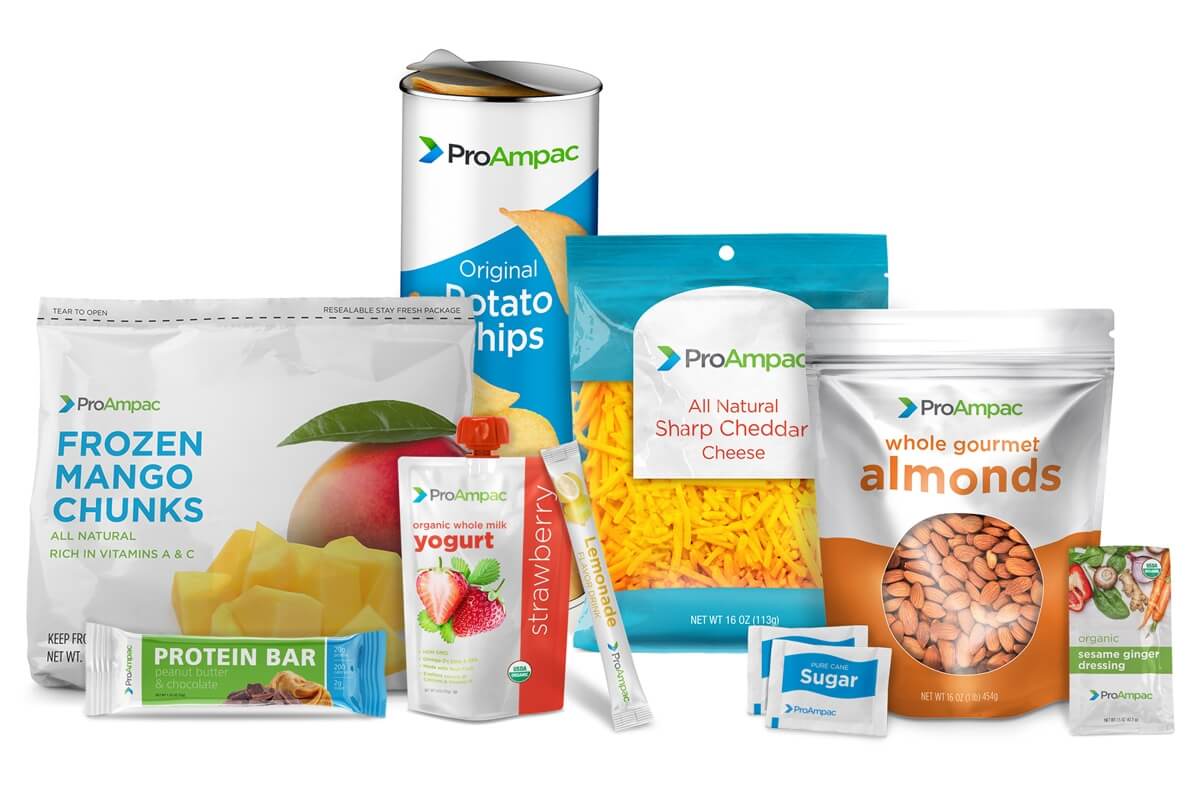
• Seeds Packaging
• Pesticide Packaging
• Dairy Packaging
• Vacuum Pouches
• Specialty Packaging Applications
Industrial Lamination Materials for Flexible Packaging Operations
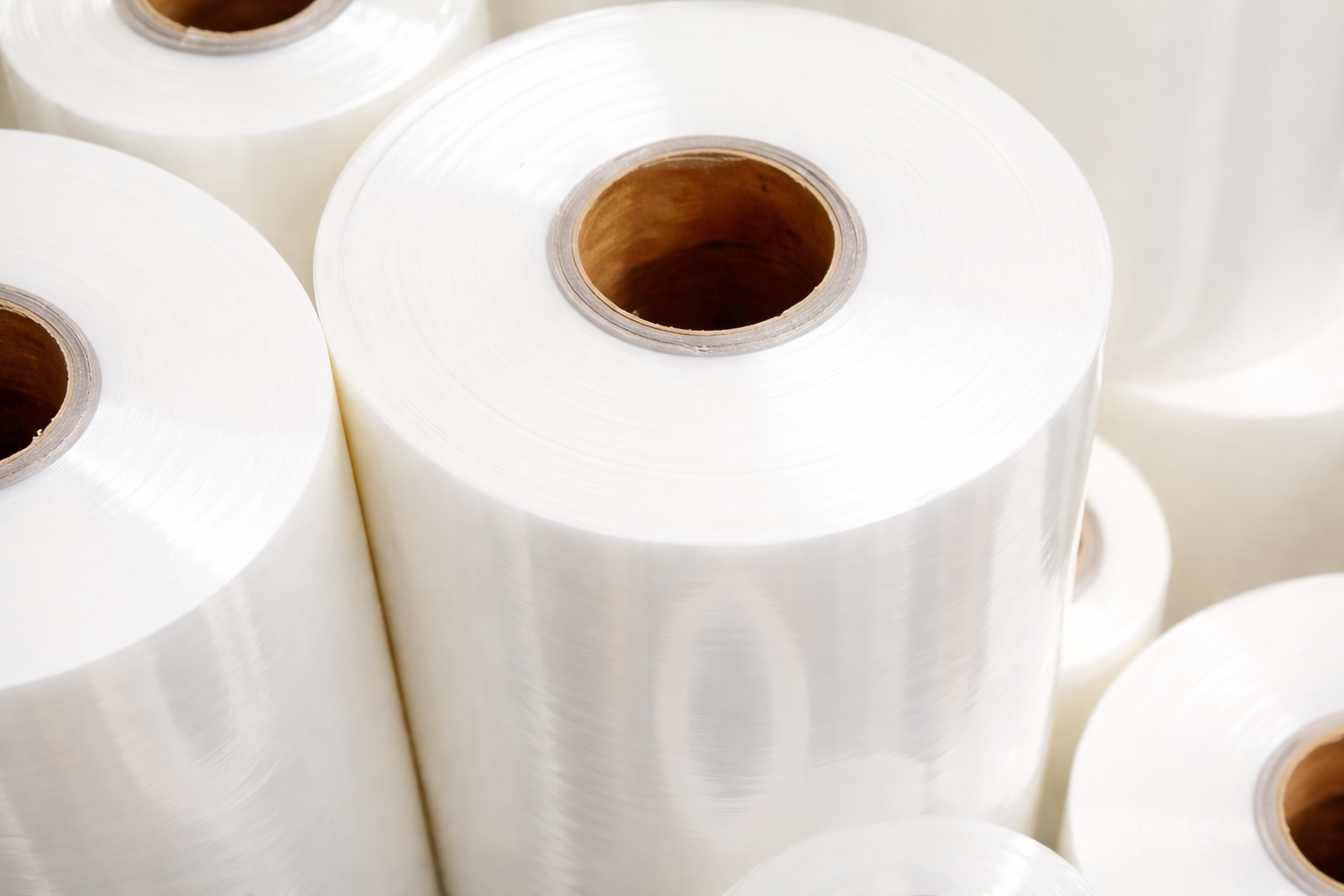
Manufacturers involved in flexible packaging, labeling, and product protection rely heavily on Lamination PE Film to strengthen packaging structures and improve durability during distribution. This film is produced from polyethylene and designed to function as a protective lamination layer across various packaging substrates.
In commercial packaging operations across DR Congo, businesses frequently apply pe lamination film to paper, cartons, and plastic surfaces to increase resistance against moisture, abrasion, and handling damage. The lamination layer improves packaging reliability while maintaining visual clarity and product presentation.
Because polyethylene film offers flexibility and strength, it is widely adopted in industrial packaging systems requiring protective coatings and barrier properties.
How Lamination PE Film Supports Packaging Performance
The lamination process integrates Lamination PE Film with materials such as paperboard, polypropylene sheets, or biaxially oriented polypropylene to enhance structural performance. Through lamination bonding techniques, the film creates a barrier that protects packaging from environmental exposure.
This protective layer plays an important role in supply chains where goods must remain secure during storage and transportation. Packaging producers working with lamination roll materials often apply them to labels, containers, and multi-layer packaging formats.
Additional film treatments may also introduce anti-static properties that help safeguard electronics, medical products, and other sensitive items.
Material Characteristics of Polyethylene Film
Polyethylene film used in lamination applications provides several technical advantages that support packaging reliability across multiple industries. The material structure delivers a balance between flexibility, strength, and chemical resistance.
Important functional characteristics include resistance to oils, moisture, and many industrial chemicals. The film also provides electrical insulation and minimal water absorption, allowing it to perform effectively in demanding packaging environments.
Two common material variations are used in pe lamination film manufacturing:
Low Density Polyethylene (LDPE) – flexible, soft, and highly transparent, making it suitable for applications where visual clarity is required.
High Density Polyethylene (HDPE) – offers improved strength and heat resistance, making it useful for packaging structures exposed to more demanding conditions.
These polymer structures are composed of repeating methylene units, which can be engineered during production to achieve specific thickness levels and mechanical performance.
Applications Across Industrial and Consumer Packaging
The adaptability of Lamination PE Film allows manufacturers to incorporate it into a wide variety of packaging solutions. Industries handling packaged goods often rely on laminated structures to extend product shelf life and maintain packaging integrity.
Typical applications include:
- Food and beverage packaging
- Pharmaceutical and medical packaging
- Textile and apparel packaging
- Industrial product wrapping
- Labels and thermoformed containers
Packaging companies and distributors operating in DR Congo frequently use lamination roll materials to strengthen flexible packaging structures and maintain consistent product quality.
Manufacturing Capabilities of a PE Film Manufacturer
A professional pe film manufacturer plays a critical role in producing lamination materials suitable for industrial packaging environments. Advanced extrusion technology and lamination processes enable manufacturers to develop film products with specific barrier and mechanical properties.
Production facilities typically manufacture multiple film variants including barrier films, stretch films, and protective packaging films. Each product type undergoes strict quality control to ensure consistency in thickness, durability, and performance.
For industries such as automotive components, electronics packaging, consumer goods, and pharmaceutical products, reliable lamination film supply is essential for maintaining packaging standards and regulatory compliance.
Tilak Polypack operates as a global pe film manufacturer capable of supplying flexible packaging films for industrial applications and export markets including DR Congo.
Advantages of Using Lamination Roll Materials
Businesses involved in packaging production often choose lamination roll materials because they enhance both packaging performance and manufacturing efficiency. These films integrate easily into automated lamination and conversion processes used by packaging manufacturers.
Key advantages include:
- Enhanced product durability and surface protection
- Reliable barrier against moisture, oxygen, and contaminants
- Compatibility with multiple lamination techniques
- Improved appearance and print protection
- Extended shelf life for packaged products
- Wide thickness range for customized applications
- Efficient processing in packaging production lines
- Compliance with industry manufacturing standards
The use of pe lamination film helps packaging companies deliver durable and visually appealing packaging solutions while maintaining efficient production workflows in DR Congo.